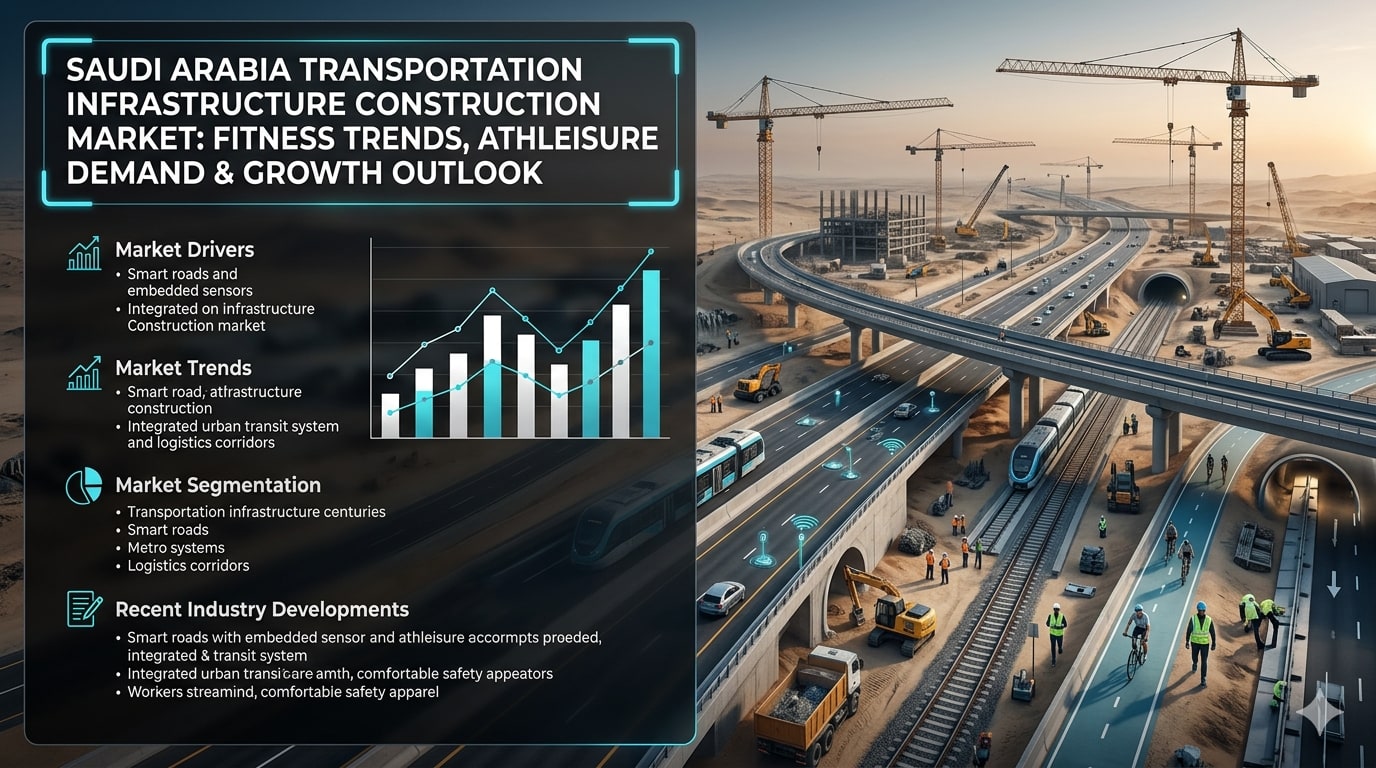

Saudi Arabia’s transportation infrastructure construction market stands at a critical inflection point, with IMARC Group data projecting growth from USD 9.9 billion in 2024 to USD 12.3 billion by 2033. This represents a compound annual growth rate of 2.20% through 2033, underpinned by unprecedented sovereign capital deployment through Vision 2030 and the National Transport and Logistics Strategy. The Kingdom’s USD 100 billion infrastructure commitment is not merely accelerating project delivery but fundamentally reshaping the competitive dynamics of the MENA region’s construction sector. Bangalore-based Tech Mahindra recently secured a contract to implement AI-driven traffic optimization systems for the Riyadh Metro, signaling growing cross-border venture capital flows into smart infrastructure solutions. Meanwhile, Samsung C&T’s deployment of automation and robotics in NEOM infrastructure projects demonstrates how advanced construction technology is reducing labor costs by up to 80%, creating new investment opportunities for regional and international PE firms.
The Kingdom’s public-private partnership framework has emerged as a catalyst for attracting foreign direct investment, with high-profile projects like King Salman International Airport leveraging Bechtel’s USD 1.2 billion partnership to deliver terminal infrastructure. This project structures set precedents for risk allocation and bankability that are drawing sophisticated institutional capital from offshore funds looking to capitalize on Saudi Arabia’s infrastructure boom. The Eastern Region, home to the Saudi Landbridge Railway’s critical logistics corridor, is seeing particular interest from infrastructure funds seeking exposure to freight and trade volumes that will be revolutionized by the USD 7 billion rail link connecting Jeddah to Dammam. As urbanization accelerates and populations in Riyadh alone approach 20 million by 2030, integrated mobility hubs combining airports, metro systems, and logistics facilities are attracting venture capital attention for their potential to drive multi-modal transportation efficiencies across the Kingdom.
Technological innovation is transforming project execution across all segments, from predictive maintenance systems deployed in highway infrastructure to computer vision quality control on airport expansions. The Saudi Landbridge Railway, once operational, will fundamentally alter regional trade routes connecting three continents, creating a step-change in demand for construction services and allied industries. Recent developments, including the Royal Commission for Riyadh City’s SAR 8 billion road development program and adoption of recycled construction materials in Al-Ahsa, demonstrate how sustainability and circular economy principles are being embedded into procurement and execution. These initiatives not only reduce project costs but position Saudi infrastructure portfolios for ESG-focused sovereign and institutional investors. With mega-projects like the Riyadh Metro costing SAR 90 billion and driving daily ridership into the millions, the Kingdom’s infrastructure market is delivering tangible returns on capital while establishing new benchmarks for transportation excellence across the Middle East and beyond.