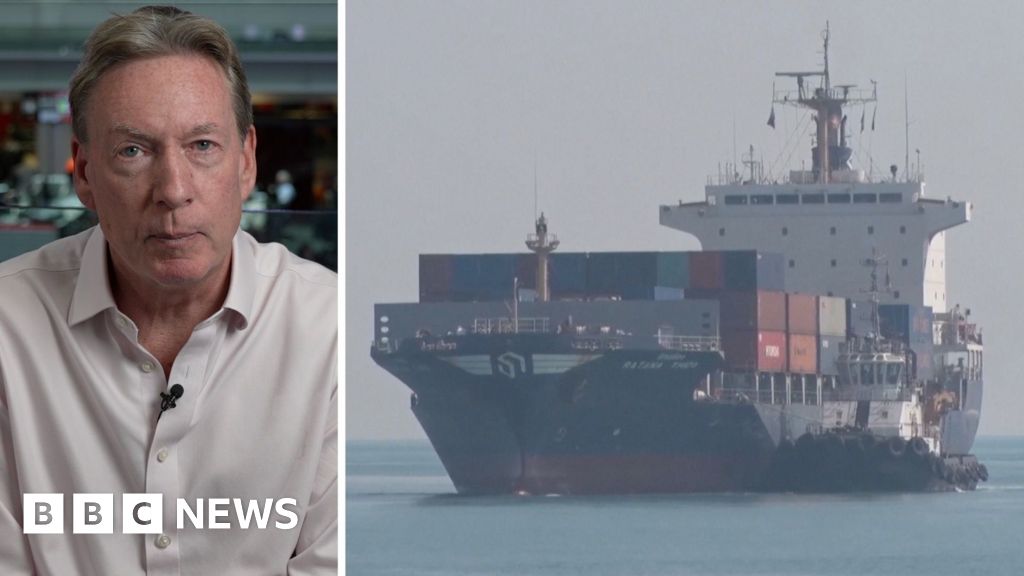

The United States’ decision to impose a naval blockade on Iranian ports marks a decisive escalation in regional geopolitics, reshaping the risk calculus for sovereign investors and venture capitalists across the Middle East and North Africa. By sealing off key Persian Gulf terminals, the U.S. effectively curtails Iran’s oil export capacity—an estimated 2.5 million barrels per day—thereby tightening global supply and prompting a bullish rebound in crude prices. For Gulf sovereign wealth funds, whose portfolios are heavily weighted toward energy assets, the immediate implication is a higher valuation baseline for oil‑linked equities, but also heightened exposure to sanctions‑related compliance costs and potential counter‑measures that could disrupt intra‑regional trade corridors.
Regional infrastructure projects, particularly those financed under the Belt and Road Initiative and China‑backed port development schemes, now face a dual‑front threat: operational delays from reduced maritime traffic and increased insurance premiums for vessels navigating contested waters. The blockage amplifies the strategic importance of alternative logistics hubs such as Dubai’s Jebel Ali and Saudi Arabia’s King Abdullah Port, accelerating capital inflows into their expansion programs. Consequently, construction firms and equipment suppliers positioned to service these ports stand to benefit, while firms reliant on Iranian freight corridors may experience contract cancellations and cash‑flow strain.
Venture capital activity in fintech, logistics, and energy‑tech sectors is likely to recalibrate as investors reassess geopolitical risk models. Funds with exposure to Iranian startups will confront heightened due‑diligence hurdles, potentially triggering a reallocation toward more insulated ecosystems in the UAE, Qatar, and Egypt. Simultaneously, the blockade underscores the urgency for regional digital‑trade platforms that can circumvent physical disruptions, spurring a wave of capital toward blockchain‑based supply‑chain solutions and sovereign‑grade cloud infrastructure.
In the broader MENA financial landscape, the blockade serves as a catalyst for diversification drives championed by state investors. By channeling resources into non‑oil sectors—renewables, advanced manufacturing, and smart city initiatives—sovereign wealth entities aim to insulate their portfolios from future geopolitical shocks. The unfolding scenario will test the resilience of the region’s capital markets, with liquidity flows, risk premiums, and cross‑border financing structures all poised to adjust to a new baseline of strategic uncertainty.