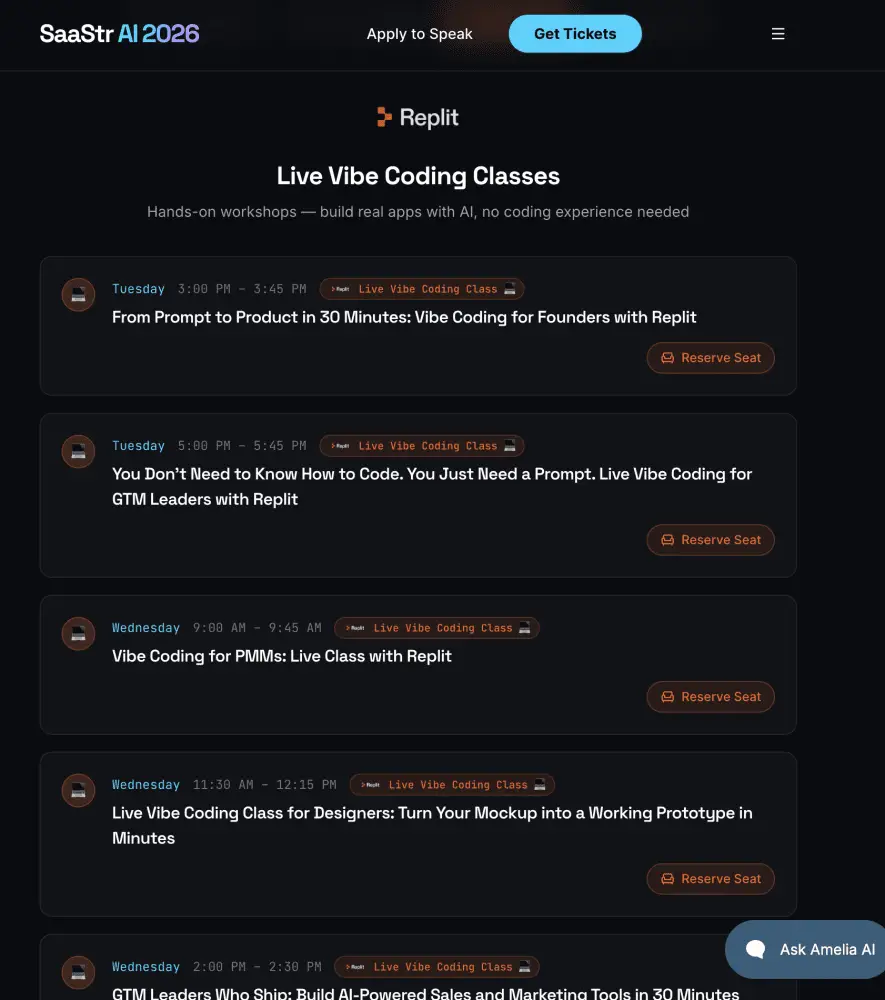

Team SaaStr’s recent deployment of AI-powered customer success and marketing agents on Replit illustrates a decisive shift in how Middle Eastern and North African startups can accelerate product development without scaling traditional engineering headcount. By converting natural‑language prompts into functional prototypes within a half‑hour, firms can compress time‑to‑market for GTM‑oriented tools from quarters to weeks, thereby unlocking capital efficiency at a stage when sovereign‑fund allocations are increasingly earmarked for AI‑centric ventures.
The business impact reverberates through sovereign wealth budgets that now allocate dedicated tranches to local AI platform builders, recognizing that rapid prototyping reduces the risk premium associated with early‑stage AI investments. Venture capital firms across the Gulf are consequently restructuring term sheets to reward “vibe‑coding” competency as a proxy for technical agility, allowing portfolio companies to self‑service internal tooling and external APIs without outsourced engineering pipelines.
This paradigm also reshapes regional infrastructure priorities, compelling governments and sovereign‑backed tech parks to subsidize low‑latency compute clusters and hybrid cloud services that can host large language models locally. Such investments mitigate dependence on foreign data‑center providers and position the MENA ecosystem to host sovereign AI workloads, thereby aligning with national digital sovereignty strategies and attracting further foreign direct investment into data‑center and GPU‑as‑a‑service expansions.
For senior operators, the imperative is clear: mastering prompt‑driven development is no longer optional but a prerequisite for compounding competitive advantage before 2027. Those who embed rapid‑iteration capabilities into their operational DNA will secure the next wave of AI‑driven growth, while counterparts who remain dependent on external engineering queues will cede market share to more nimble rivals.