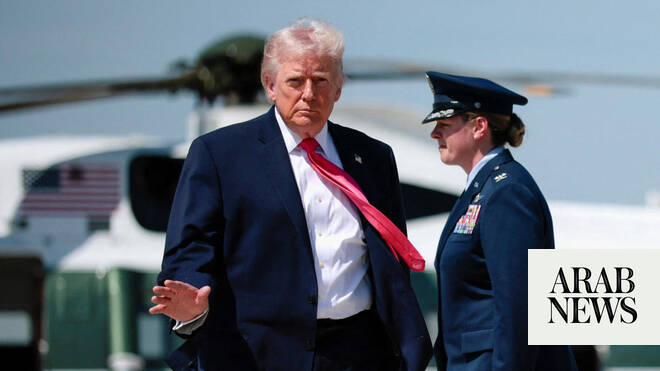

Following six weeks of escalating hostilities that have paralyzed Middle East energy corridors and roiled global oil markets, the United States and Iran have disclosed tentative progress toward de-escalation, with Tehran agreeing to surrender its enriched uranium stockpile. US President Donald Trump, speaking from Washington, signaled a potential breakthrough that would mark a decisive shift in decades of strategic rivalry. This development arrives as Saudi Arabia and the UAE—both heavily dependent on hydrocarbon shipments through Hormuz—watch for clarity on how maritime restrictions may be lifted and what concessions will be secured to stabilize regional trade flows.
The offer to surrender “nuclear dust,” as Trump describes the fissile material, emerges against the backdrop of sweeping US sanctions targeting Iran’s energy elite and a naval blockade that has severed Persian Gulf trade links. CENTCOM reports the interception of 13 outbound vessels and a suspension of 20 percent of the world’s seaborne crude traffic. While Iran’s envoy to the UN described negotiations as “cautiously optimistic,” Tehran’s military leadership has warned that any attempt by Washington to police the Strait of Hormuz could trigger direct confrontation at sea. Such a scenario poses acute risks to UAE ports, Bahraini financial infrastructure, and Saudi industrial zones dependent on uninterrupted logistics networks.
The geopolitical stakes are underscored by complementary ceasefire talks between Israel and Lebanon, pointing to a widening diplomatic umbrella underwritten by American mediation. For regional sovereign wealth funds and venture capital hubs in Abu Dhabi, Riyadh, and Doha, prolonged instability has stalled capital deployment in tech corridors such as Dubai’s DIFC and NEOM’s innovation projects. A measurable reduction in kinetic risk and sanctions relief could restore investor confidence, enabling multi-billion-dollar infrastructure commitments and accelerating cross-border scaleups funded by both state-backed and private risk capital. Conversely, failure to secure a meaningful accord risks prolonging capital flight and delaying critical digitalization and renewable projects aligned with sovereign diversification strategies.