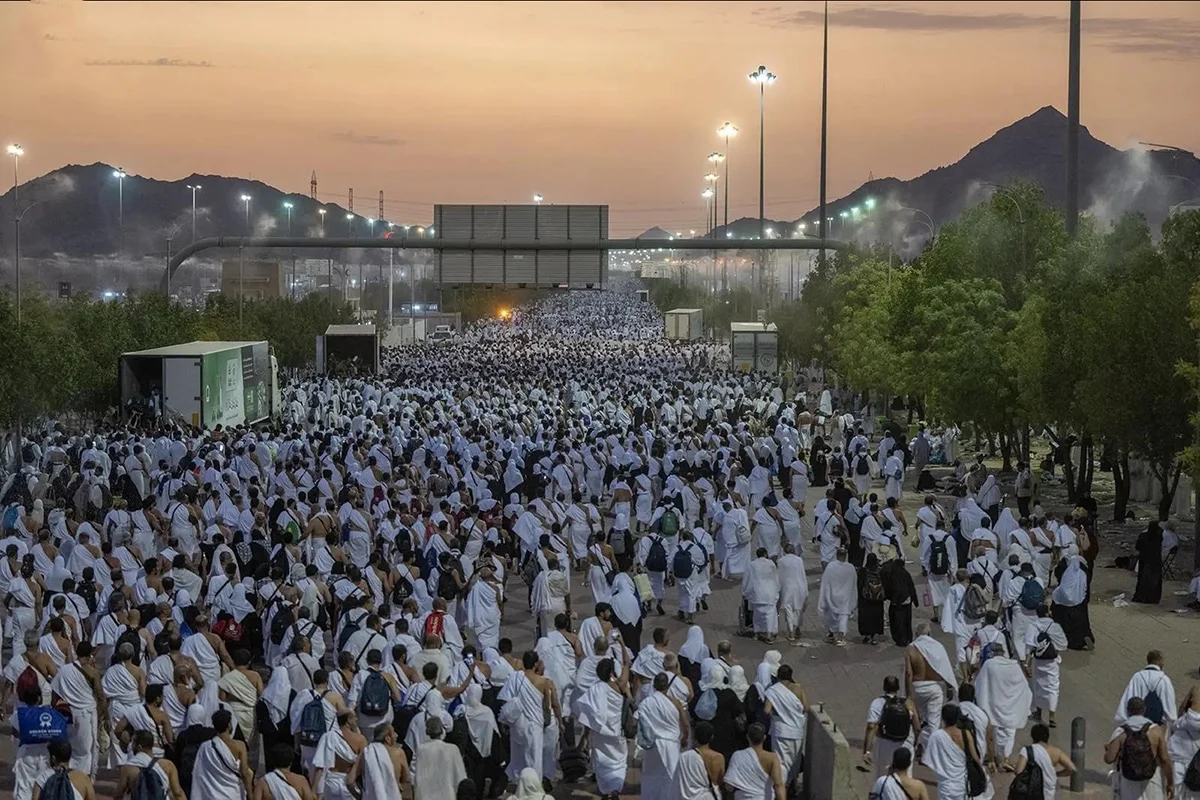

Saudi Arabia’s Ministry of Hajj and Umrah has issued a stern reminder that all pilgrims must secure official permits to perform Hajj rituals for the 1447 AH season, reinforcing the Kingdom’s commitment to managing religious tourism with the same precision it applies to sovereign financial operations. The move underscores Riyadh’s broader strategy of aligning religious infrastructure with Vision 2030 objectives, ensuring that the pilgrimage—a cornerstone of both spiritual life and economic activity—remains safe, organized, and sustainable. By tightening permit regulations, Saudi authorities are not only controlling crowd management but also safeguarding the Kingdom’s reputation as a global leader in orchestrating large-scale, high-integrity events. This administrative rigor mirrors the Kingdom’s growing emphasis on transparency and efficiency across all sectors, from sovereign capital deployment to the vetting of venture investments in smart city initiatives like NEOM.
The enforcement of strict penalties for unauthorized pilgrims reflects a calculated balance between accessibility and control, a principle that resonates deeply in Saudi Arabia’s approach to public-private partnerships. Just as the state meticulously oversees religious permits, it extends similar oversight to strategic investments in technology, infrastructure, and human capital—critical pillars for maintaining its position as the region’s economic powerhouse. The Kingdom’s ability to leverage its unique religious position, coupled with substantial sovereign wealth reserves, has enabled it to attract significant venture capital inflows into sectors ranging from fintech to logistics. This juxtaposition of spiritual stewardship and economic pragmatism is emblematic of a broader MENA trend where governments combine cultural authenticity with modern governance to drive both reverence and returns.
Regionally, Saudi Arabia’s management of Hajj serves as a model for other Gulf states seeking to optimize their own religious and cultural assets within the framework of diversified, tech-driven economies. The centralized permit system, enforced through digital platforms and backed by legal deterrence, exemplifies the kind of institutional coherence that MENA leaders cite as essential for unlocking large-scale foreign and domestic investment. As venture capital continues to flow into the Kingdom’s nascent ecosystems, the integration of backend compliance mechanisms—whether for pilgrimage or for business—will be a decisive factor in attracting the calibre of investors who value both opportunity and certainty. In this light, the Hajj permit crackdown is less an isolated policy decision than a visible expression of Saudi Arabia’s enduring commitment to disciplined growth, sovereign capital efficiency, and regional influence.