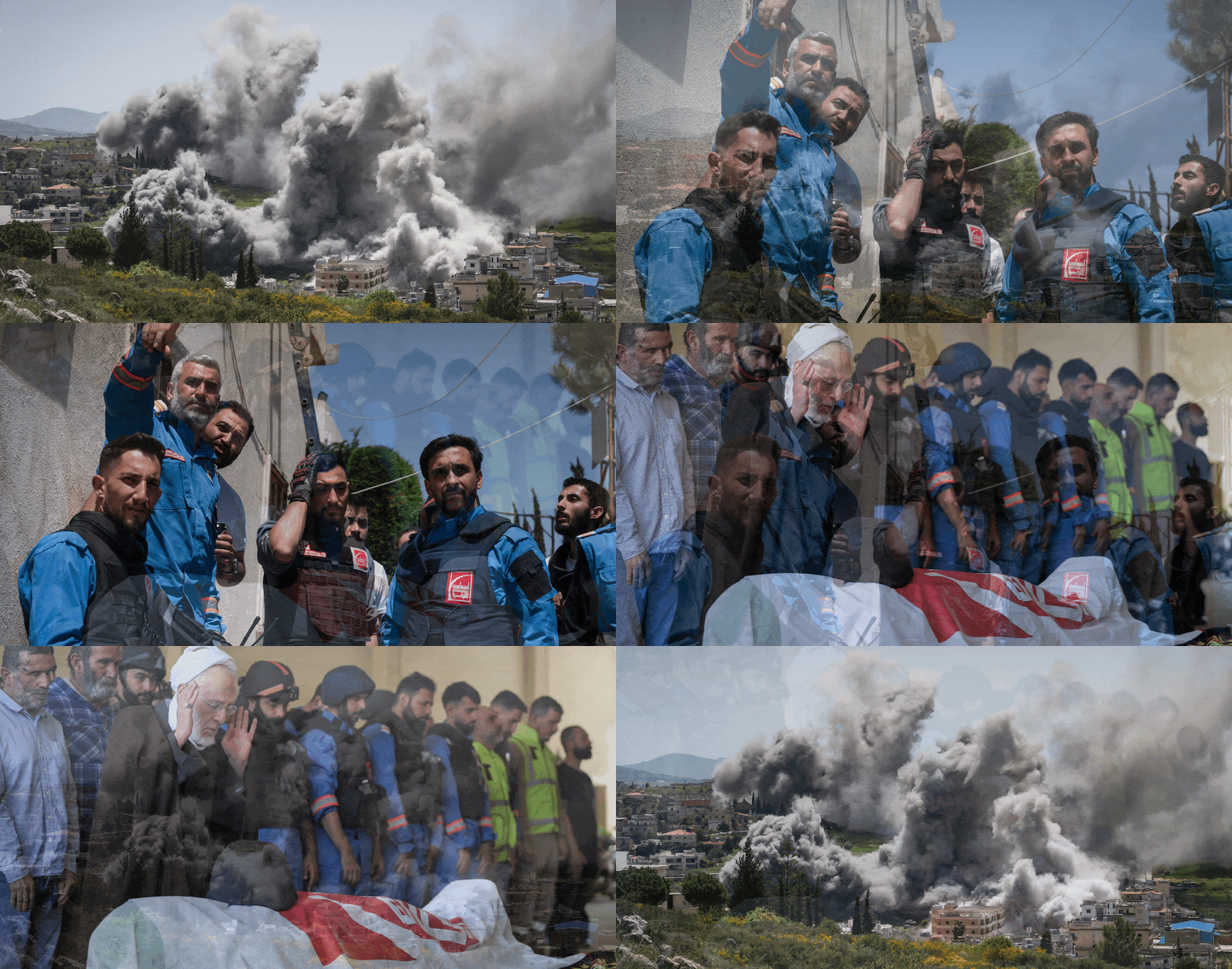

The recent quadruple‑tap strike in Nabatieh has crystallised a risk premium that is being priced into regional insurance markets, sovereign risk spreads, and cross‑border investment mandates. For multinational insurers, exposure to Израиль‑Lebanon flashpoints is now reflected in markedly higher premiums for civil‑security and medical‑response coverage, eroding profit margins for operators that rely on predictable loss ratios. Sovereign wealth funds in the GCC and the Levant have responded by tightening allocation rules for infrastructure projects that lack hardened emergency‑response layers, signalling to the market that fiscal exposure will be concentrated on assets that can be retrofitted with redundant communication and de‑confliction protocols.
Strategic sovereign injections are increasingly channelled into dual‑use technologies that blend medical triage with battlefield‑grade resilience. State‑backed venture vehicles in Saudi Arabia, the UAE, and Qatar are scaling early‑stage funds focused on AI‑driven threat‑mapping, autonomous drone surveillance, and tele‑medicine platforms capable of operating under contested electromagnetic conditions. These allocations are not merely philanthropic; they are calibrated to protect sovereign health‑care ecosystems and to preserve the operational continuity of critical supply chains that feed into energy, logistics, and construction sectors across the MENA corridor.
Venture capitalists, traditionally cautious in conflict‑prone zones, are now integrating geopolitical risk overlays into their term‑sheets, demanding clauses that tie capital deployment to the adoption of hardened infrastructure standards. Capital is being earmarked for resilient power‑grid micro‑stations, modular water‑treatment units, and edge‑computing nodes that can withstand intermittent strikes, thereby safeguarding the continuity of economic activity in peripheral economies that depend on uninterrupted utilities.
From an infrastructure policy perspective, the episode underscores an urgent need for regional coordination on emergency‑response architecture. Initiatives that embed multi‑agency interoperability—linking civil defence, sovereign health ministries, and private sector logistics hubs—are gaining traction as non‑negotiable preconditions for future infrastructure financing. Institutional investors are therefore recalibrating portfolios to favour projects that embed built‑in redundancy, cyber‑secure command‑and‑control layers, and pre‑approved evasive‑action protocols, thereby turning risk mitigation into a core value proposition for sovereign and private capital alike.