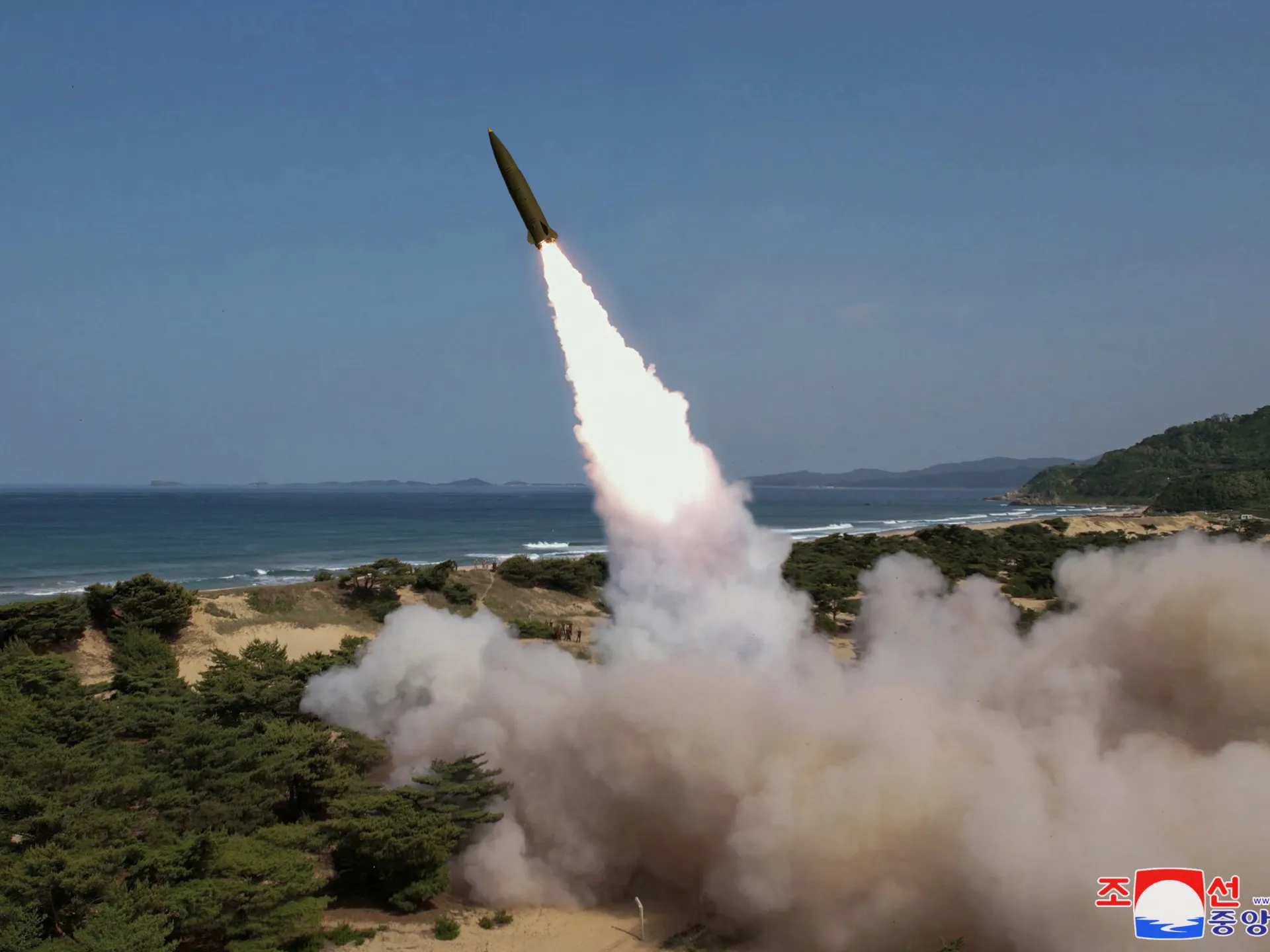

The repeated ballistic missile launches by North Korea, now escalating to a seventh test in 2026, represent a seminal development with profound implications for sovereign capital flows and regional stability in the Middle East and North Africa (MENA). While the immediate geopolitical focus remains on East Asia, the broader volatility triggered by these tests could disrupt sovereign wealth fund allocations across MENA, where risk appetite is already fragile amid existing macroeconomic pressures. The intersection of North Korea’s defiance of UN resolutions and the impending China-US summit in mid-May may recalibrate regional investment strategies, as sovereign entities in MENA prioritize capital preservation over high-risk exposures. This context could further constrain venture capital inflows into MENA’s technology and infrastructure sectors, which rely on stable capital markets and predictable geopolitical environments.
The strategic calculus of sovereign capital in MENA may shift decisively in response to North Korea’s provocations. Countries such as Saudi Arabia, the UAE, and Qatar, which have diversified their sovereign assets into global tech and energy ventures, might adopt more conservative postures, favoring short-term liquidity over long-term bets in volatile regions. Concurrently, venture capital ecosystems in MENA, particularly those focused on fintech or defense-adjacent technologies, could face headwinds as investors reassess risk profiles. While North Korea’s nuclear program itself does not directly threaten MENA’s infrastructure, the cascading effects of heightened regional tensions could divert capital from innovation-driven sectors to defensive industries. This realignment underscores the fragility of MENA’s ambition to attract global VC, which increasingly hinges on geopolitical stability and policy coherence in partner nations.
Regional infrastructure development in MENA may also face indirect repercussions from North Korea’s military escalations. The prioritization of homeland security by regional governments could divert public and private capital toward defense-oriented infrastructure, such as border monitoring systems or cyber-resilience frameworks. Moreover, the diplomatic isolation of North Korea and its defiance of international norms may embolden similar permissive stances in MENA states, complicating efforts to harmonize regional infrastructure standards or attract foreign direct investment. In this climate, the integration of North Korea-related risks into sovereign risk assessments for MENA projects—particularly in energy or telecommunications—could delay initiatives or inflate cost estimates. The upcoming China-US summit, therefore, represents a potential inflection point, with outcomes likely to influence both sovereign capital strategies and regional infrastructure planning across the MENA landscape.