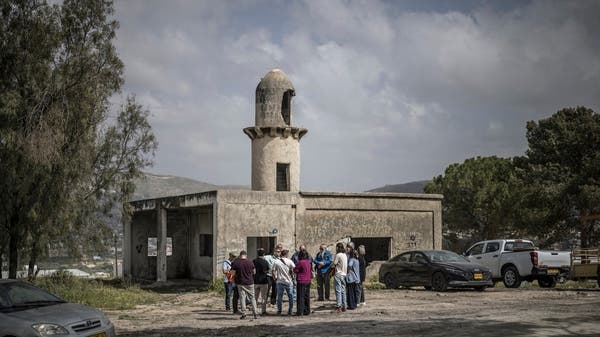

Israel’s decision to reopen Sa-Nur, a settlement evacuated two decades ago, underscores a strategic pivot toward economic consolidation in the West Bank, with profound implications for sovereign capital flows and regional investment climates. The move, framed as a “historic correction” by Finance Minister Bezalel Smotrich, reflects a concerted effort to leverage state-backed infrastructure projects as catalysts for private investment. By prioritizing settlement expansion—a policy now emboldened by the far-right coalition government—Israel aims to create a durable economic base in contested territories, potentially inflating claims to territorial legitimacy while diverting sovereign capital from Palestinian-administered areas. This approach risks exacerbating tensions with international financial institutions and donor states, many of which have historically tied aid to compliance with international law, thereby complicating Israel’s access to global capital markets and jeopardizing sovereign creditworthiness.
The resurgence of settlement development also signals a recalibration of private-sector risk appetites, particularly in venture capital sectors geared toward Israeli innovation hubs. While the immediate focus remains on defense and infrastructure, the revival of settlements like Sa-Nur could attract niche investors seeking untapped markets for construction materials, energy solutions, and agricultural technology tailored to arid regions. However, the polarized geopolitical landscape presents a double-edged sword: while tech conglomerates may exploit the region’s underdeveloped infrastructure as a low-cost growth frontier, the escalation of territorial disputes could deter institutional investors wary of ESG compliance risks. Notably, Smotrich’s vision of Gaza as a “security belt” hints at a broader economic militarization strategy, conflating sovereignty with militarized economic zones—a model that could distort regional trade networks and deter cross-border investment.
At the macro level, Israel’s settlement-driven infrastructure investments carry spillover effects for the broader Middle East and North Africa (MENA). The prioritization of housing, energy, and logistics in occupied territories redirects resources toward inward-looking projects, potentially sidelining transnational initiatives aimed at economic integration or climate resilience. Moreover, the normalization of such policies may erode regional stability, diverting capital away from collaborative ventures that rely on cross-border trust. As MENA nations navigate the dual imperatives of domestic development and geopolitical alignment, Israel’s assertive settlement agenda serves as a cautionary lens for evaluating the sustainability of economic nationalism in a region still grappling with post-colonial fragmentation and resource-driven conflicts.