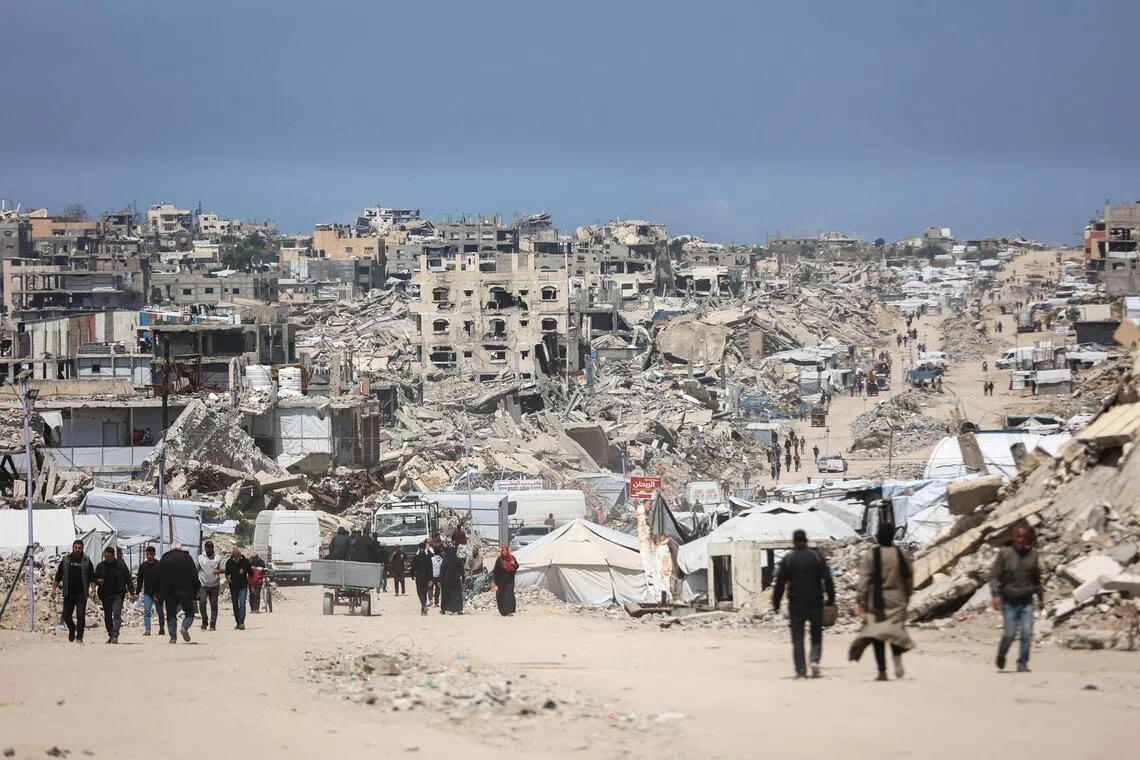

Dubai’s DP World has reportedly entered high‑level talks with a U.S.‑backed peace board to oversee logistics and infrastructure projects in Gaza. The discussions, allegedly driven by former President Trump’s “New Gaza” vision, seek to extend private‑sector supplies and cargo operations into a region still under strict Israeli controls. Should the proposal proceed, it would position DP World – already responsible for roughly one‑tenth of global trade – to play a pivotal role in a delicate humanitarian corridor, potentially influencing sovereign policy and regional supply‑chain dynamics.
The proposed framework would include secure, traceable cargo systems, warehousing, and a new free‑trade zone, possibly centred on a Gaza port or the adjacent Egyptian Mediterranean coast. From a financial standpoint, these initiatives could unlock a substantial share of the estimated $71.4 billion reconstruction fee identified by the EU, UN, and World Bank, providing a ready market for Middle East and North Africa (MENA) infrastructure investors. Yet the venture carries geopolitical risk: sovereign power is still anchored in Israeli military oversight, and any private‑sector engagement risks undermining local governance structures and inflating costs for Palestinian stakeholders.
For regional venture capital, the opportunity sits at the intersection of humanitarian logistics, maritime infrastructure, and post‑conflict economic development. MENA funds with exposure to Gulf logistics operators may view the initiative as a chance to diversify portfolios while aligning with broader Gulf strategic objectives. However, critical observers warn that bypassing United Nations mechanisms could entrench vendor‐run systems at the expense of local‑owned enterprises, eroding potential for genuine Palestinian economic empowerment and triggering displacement concerns.
Ultimately, the real business impact hinges on diplomatic reconciliation, rigorous regulatory frameworks, and transparent oversight. Without clear sovereign guarantees and an inclusive investment model that prioritises Palestinian participation, the project risks becoming a high‑cost, low‑impact exercise. For MENA’s infrastructure community, the scenario underscores the necessity of balancing commercial ambition with geopolitical realities, ensuring that reconstruction and growth in Gaza are both financially viable and socially responsible.