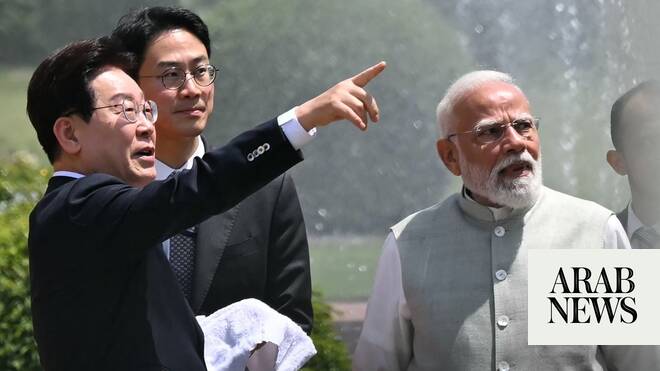

The recent diplomatic engagement between India and South Korea, culminating in a state visit from South Korean President Lee Jae Myung, underscores a strategic realignment in the MENA region’s energy and technological landscape. The renewed focus on deepening economic ties – formalized through an upgraded Comprehensive Economic Partnership Agreement (CEPA) and the establishment of a ministerial-level Industrial Cooperation Committee – represents a deliberate effort to enhance supply chain resilience and diversify critical inputs, particularly in the context of escalating geopolitical instability. This is crucial given the recent disruption to energy flows through the Strait of Hormuz, a chokepoint vital for global trade and reliant on the stability of the Middle East.
The business impact of this partnership extends beyond mere trade volume targets. Both nations recognize the symbiotic relationship between energy security and technological advancement. The agreement specifically prioritizes critical minerals, nuclear energy, and clean energy collaborations, positioning India as a strategic partner for South Korea in securing the raw materials necessary for its rapidly evolving advanced manufacturing industries – notably semiconductors and petrochemicals. India’s expanding refining capacity further strengthens its potential as a reliable naphtha supplier to South Korea, addressing a key feedstock for its petrochemical sector. Furthermore, the initiative to launch the India-Korea Digital Bridge highlights a recognition of the burgeoning opportunities in areas like AI and IT, fostering future investment and collaboration across the technological spectrum.
Sovereign capital and venture capital flows are expected to be significantly influenced by these bilateral partnerships. The upgraded CEPA will incentivize greater investment in joint ventures and infrastructure development, creating opportunities for both governments and private sector entities. Moreover, the emphasis on critical minerals is likely to attract increased venture capital investment focused on developing and optimizing supply chains for these essential materials. The projected growth in bilateral trade – from $27 billion to $50 billion by 2030 – signifies a long-term commitment to mutually beneficial economic growth, potentially triggering further investment across diverse sectors. This trend is particularly pertinent given the finite nature of certain resources and the increasing complexity of global supply chains, necessitating strategic diversification and localization initiatives.
Beyond bilateral benefits, the India-Korea partnership carries significant implications for regional infrastructure development in the Middle East and Indo-Pacific. By strengthening energy security and supply chain resilience, the alliance indirectly mitigates risks associated with geopolitical volatility in the region, thereby fostering a more stable and predictable environment for investment. The focus on infrastructure projects across sectors like energy and technology, facilitated by increased trade and investment, will contribute to the overall economic development of the region. Moreover, the collaborative exploration of alternative energy sources and technologies could pave the way for a more sustainable energy transition in both India and South Korea, potentially influencing policies and investments across the MENA region, which is itself undergoing significant energy transition efforts. This partnership serves as a potent signal of the evolving power dynamics and strategic alignments shaping the future of global trade and investment in the decades to come.