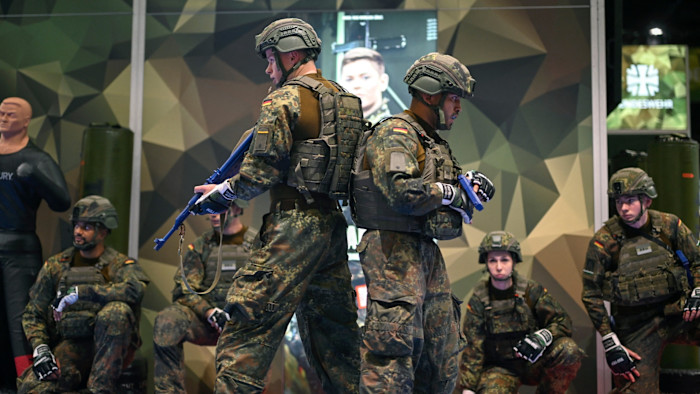

Germany’s unveiling of its inaugural post-war military strategy, “Responsibility for Europe,” signals a profound geostrategic recalibration with cascading implications for regional capital flows and sovereign defense spending across the MENA sphere. This watershed document, released by Defence Minister Boris Pistorius, propels Berlin toward its stated goal of becoming Europe’s preeminent conventional military power—a shift carrying tangible ripple effects for defense contractors, technology innovators, and infrastructure developers in the Middle East and North Africa.
The strategy emerges amid unprecedented German military expenditure—Berlin has emerged as Ukraine’s largest arms supplier following Washington’s retrenchment under the Trump administration. This defense industrial ramp-up creates fertile territory for MENA sovereign wealth funds and venture capital syndicates seeking strategic diversification beyond hydrocarbons. The strategy’s emphasis on autonomous weapons systems, artificial intelligence integration, and rapid technological adoption mirrors developments in UAE’s EDGE Group and Saudi Arabia’s SAMI Corporation, suggesting opportunities for European-German defense partnerships to complement existing US security arrangements in the Gulf.
Critical military shortfalls identified in the document—specifically Europe’s intelligence, reconnaissance capabilities, and long-range precision strike systems—present direct investment vectors for MENA infrastructure players. The Emirates’ ADASI autonomous systems program, Qatar’s Barzan Holdings, and Oman’s newly established Defence Industries subsidiary all possess the capital reserves and strategic incentives to fill these capability gaps through technology transfers and joint industrial ventures. The strategy’s classified elements, particularly regarding industrial policy, may conceal opportunities for bilateral defense production agreements that would position MENA manufacturers as Tier 1 suppliers to a rearmed Europe.
This German defense pivot arrives as MENA states orchestrate their own military modernization campaigns, with GCC nations projected to spend over $100 billion annually on defense procurement through 2030. Germany’s willingness to assume a prominent European security role creates negotiating leverage for regional capitals seeking advanced weapon systems outside traditional US supply chains. The document’s acknowledgment of America’s Indo-Pacific reorientation effectively codifies a power vacuum MENA sovereign investors are well-positioned to exploit through strategic acquisitions of European defense equities and technology startups specializing in next-generation warfare capabilities.