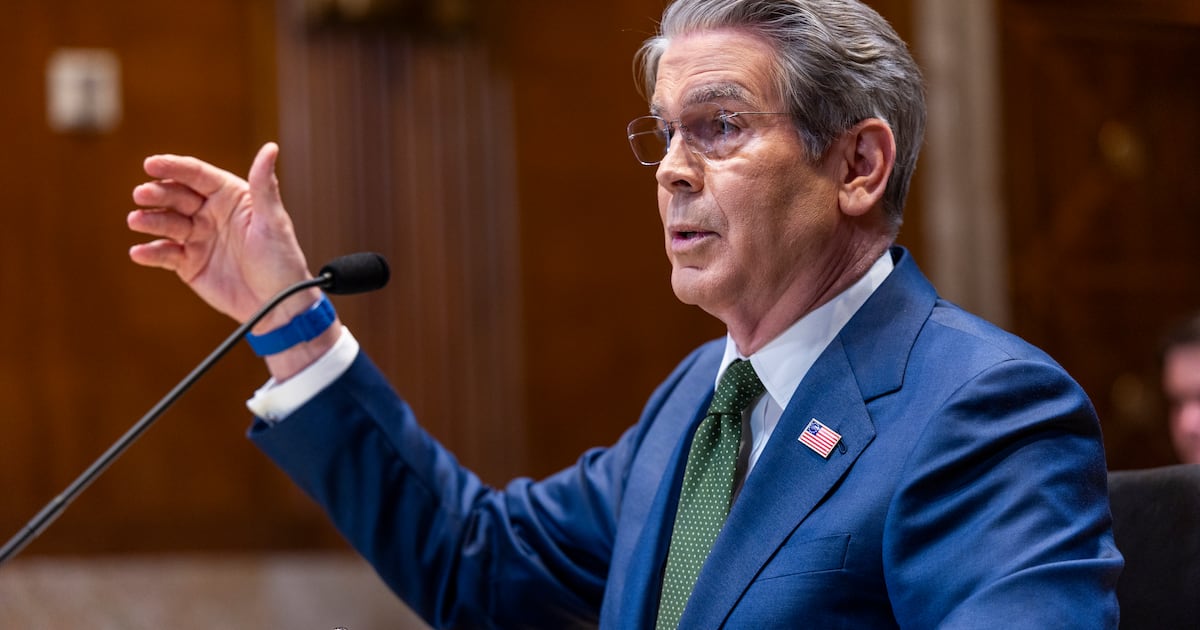

US Treasury Secretary Scott Bessent revealed Wednesday that several Gulf Cooperation Council states and Asian allies have formally requested currency swap lines with Washington to mitigate financial market volatility stemming from the escalating US-Iran conflict. During testimony before the Senate, Bessent emphasized that such arrangements—whether administered through the Federal Reserve or the Treasury—serve critical functions in maintaining dollar funding liquidity and preventing disorderly asset liquidations. The requests signal growing concern among regional sovereign wealth funds and central banks regarding potential spillover effects on capital markets, particularly as hydrocarbon price fluctuations threaten to disrupt investment portfolios across the MENA region.
The UAE, which has emerged as the focal point of these discussions, possesses sovereign investment assets exceeding $2 trillion, foreign currency reserves of more than $300 billion held by the Central Bank, and a banking sector with approximately $1.5 trillion in deposits. UAE Ambassador to Washington Yousef Al Otaiba explicitly characterized the currency swap notion as a “misreading of the facts,” underscoring that the emirates’ financial architecture requires no external stabilization mechanism. Nevertheless, the mere consideration of such arrangements reflects broader strategic calculations among Gulf monarchies regarding risk mitigation and dollar liquidity maintenance amid regional geopolitical upheaval.
The implications for regional infrastructure and venture capital ecosystems are substantial. Currency swap lines would provide Gulf sovereign wealth funds—particularly the Abu Dhabi Investment Authority, Qatar Investment Authority, and Kuwait Investment Authority—with enhanced flexibility to manage foreign exchange exposures without liquidating US-denominated assets at distressed prices. This structural protection is vital for ongoing megaprojects spanning logistics, energy transition, and digital infrastructure across the GCC. Furthermore, venture capital flows into MENA startups, which have increasingly relied on dollar-denominated fundraising, stand to benefit from reduced currency volatility should swap facilities materialize.
The precedent established by Washington’s $20 billion currency swap with Argentina last year—widely viewed as a political instrument to bolster President Javier Milei’s ruling coalition ahead of midterm elections—casts a shadow over current negotiations. While Bessent asserted that swap arrangements would benefit both the UAE and the United States, the strategic dimension cannot be dismissed. For Gulf states, the calculus involves balancing financial pragmatism against perceptions of dependency, all while navigating an increasingly fragmented Middle East where sovereign capital deployment may prove decisive in shaping post-conflict regional economic architecture.