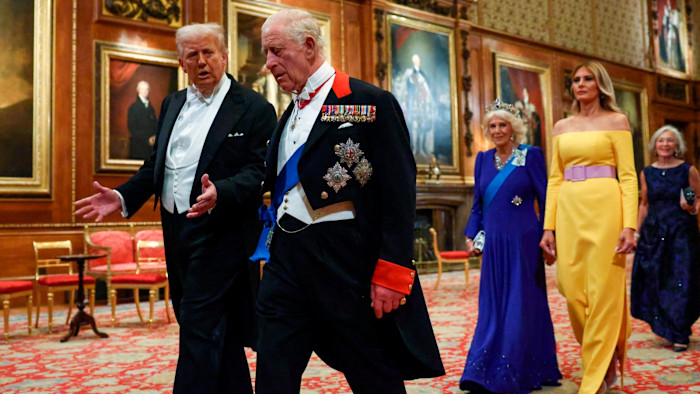

The visit of King Charles III to the United States, set against the backdrop of a destabilised global political environment, carries profound implications for sovereign capital flows and private venture activity across the Middle East and North Africa (MENA). A smooth dialogue between the monarch and Washington’s leadership would signal a robust trans‑Atlantic partnership, encouraging the Middle East’s Gulf‑state sovereign wealth funds (SWFs) to maintain or even increase allocations to U.S. technology and infrastructure assets. The Oran‑Cairo Vice‑Presidency recently projected a 12‑year corridor for $30 billion of sovereign loan‑backed investments in digital‑rights management and urban‑mobility platforms; a high‑profile endorsement of institutional stability in Washington would reinforce confidence in that pipeline.
From a venture‑capital perspective, MENA fund managers have been cautious because of tight capital conditions and heightened scrutiny over political risk. A firmer U.S. stance on free‑market principles, implicitly reinforced by a state‑level diplomatic visit, would likely lift the volatility index around tech and fintech valuations in the region. This, in turn, expands the due‑diligence window for cross‑border syndicates such as 500 Start‑ups Arab‑US and Middle East Innovation Fund, which seek portfolio add‑ons in blockchain and AI‑driven logistics. The climate that ensues could make the MENA region a more attractive hub for frontier‑tech incubators, thereby reducing the talent drain to Gulf or European cities.
Infrastructure demands—particularly in broadband, renewable‑energy, and smart‑city corridors—remain a critical lever for long‑term economic resilience. High‑profile engagements at the Belt‑and‑Road or the Africa Growth Initiative are likely to receive a boost if strategic alliances across the Atlantic appear cohesive. This could translate into a tangible increase in co‑financing arrangements, where U.S. multilateral development banks such as the World Bank and the International Finance Corporation align with MENA sovereign entities to unlock capital for grid decentralisation and water‑harvesting schemes in arid zones.
In sum, the outcome of King Charles’s speeches in Washington will ripple through sovereign‑capital allocations, venture‑capital appetites, and infrastructure‑driven growth trajectories in the MENA region. An amicable, bipartisan dialogue that reaffirms shared democratic and free‑market values will likely catalyse both public and private investment, narrowing the funding gap for critical tech and infrastructure projects across the Arab world.