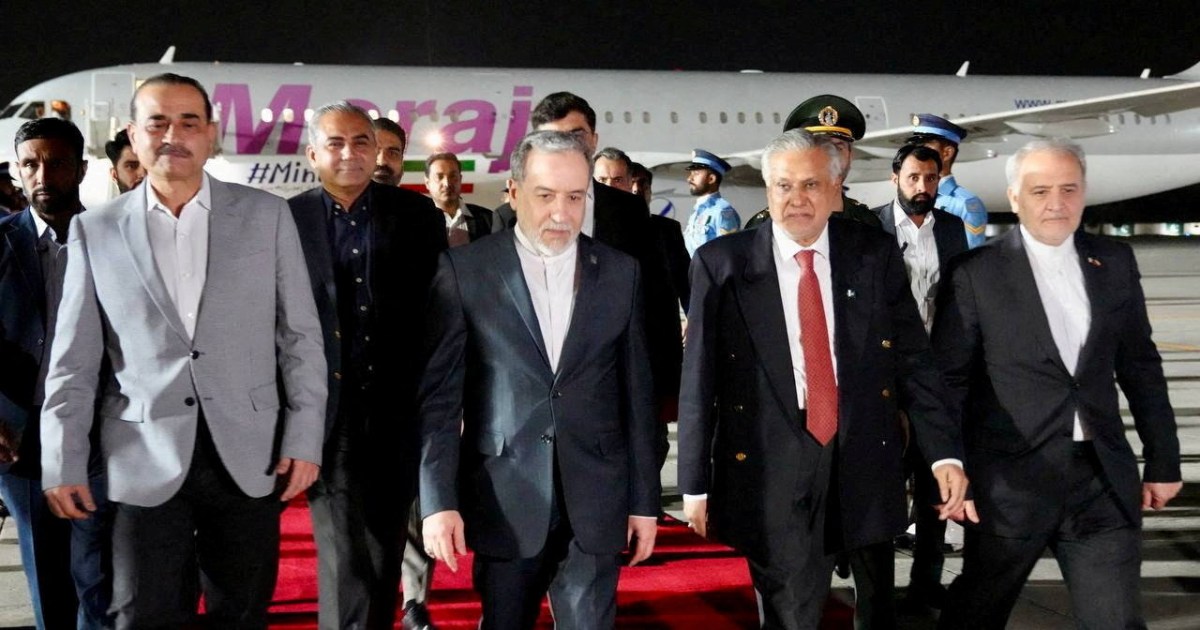

The recent development involving Abbas Araghchi underscores the escalating strategic stakes in the MENA region, particularly as Iranian diplomatic efforts pivot toward Moscow while simultaneously contending with international pressure. In a calculated move, Araghchi departed Islamabad on a journey that included not only Pakistan’s capital but also Muscat, reflecting the intricate choreography of regional power dynamics. His itinerary revealed a network of high-level contacts, as senior officials from multiple capitals converged on diplomatic venues across the Middle East and North Africa. This maneuvering underscores a broader ambition to sustain channels of communication at critical junctures, even amid broader geopolitical tensions.
The implications for both sovereign capital markets and venture capital ecosystems in the region are profound. As major investors recalibrate exposure to emerging economies, the shifting diplomatic calculus signals a recalibration of risk assessments and capital flows. Furthermore, the ongoing contest for diplomatic leverage through intermediaries like Pakistan places fresh uncertainty over the potential for renewed engagement between Iran and the United States. This scenario amplifies the significance of regional infrastructure initiatives, which have long served as linchpins in fostering connectivity and economic resilience. The interplay of statecraft and investment strategy will define the next phase of growth in this vital market bloc.
Renewed diplomatic activity, even under conditions of suspended direct dialogue, illustrates the region’s persistent drive to manage volatility. For regional investors, this necessitates a continued focus on contingency planning and a granular analysis of sovereign credit signals. Meanwhile, the strategic positioning of emerging players—from Pakistan’s mediation to Iran’s recalibrated outreach—remains a decisive factor in shaping the economic future. The MENA landscape, therefore, stands at a critical crossroads, where the convergence of diplomacy and capital investment will determine stability and prosperity in the coming years.
Regional infrastructure remains central to this evolving equation, underpinning efforts to buffer against external shocks while positioning markets for sustainable recovery. The careful orchestration of such elements will ultimately discern whether resilience emerges in the wake of uncertainty or if the region remains trapped in cycles of reactive strategy.