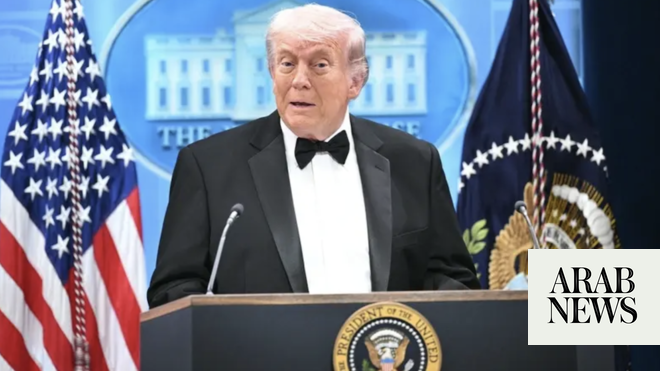

The attempted assassination of a U.S. official at the White House Correspondents’ Dinner underscores the escalating security risks tied to global power dynamics, with direct implications for the Middle East and North Africa (MENA) region. While the incident appears isolated, it highlights the destabilizing effects of political polarization and extremist ideologies, which could exacerbate existing tensions in MENA. For businesses operating in the region, heightened geopolitical uncertainty may deter long-term investments, particularly in sectors like energy, infrastructure, and technology, where stability is critical for capital deployment. Sovereign capital flows, already strained by global inflation and shifting U.S. monetary policies, could face further erosion if U.S. domestic instability deters international investors from committing to MENA projects. This could delay or derail initiatives tied to regional economic diversification, such as those under Saudi Vision 2030 or Egypt’s NEOM, which rely on cross-border partnerships and foreign capital.
The incident also raises concerns about the resilience of sovereign capital structures in MENA, where many governments are heavily reliant on U.S. financial systems. A prolonged U.S. political crisis, as suggested by the escalating rhetoric and security challenges, may trigger capital flight from the region, reducing access to international funding. This could hinder sovereign debt restructuring efforts, particularly in countries like Lebanon, Sudan, and Tunisia, which are grappling with economic collapse. Moreover, U.S. Treasury policies, such as sanctions or interest rate adjustments, may become more erratic, affecting MENA’s ability to manage external debt. The interplay between U.S. domestic turmoil and MENA’s sovereign financial health highlights the region’s vulnerability to external shocks, necessitating diversified financial strategies and regional coordination to mitigate risks.
Venture capital activity in MENA, which has seen a surge in post-2020 investments, may also be impacted by the broader geopolitical fallout. Investors are increasingly prioritizing stability and exit strategies, and heightened security threats in the U.S. could signal deeper systemic vulnerabilities, reducing appetite for regional tech startups or fintech ventures. This could slow down the growth of innovation hubs in cities like Dubai, Tel Aviv, and Amman, which depend on cross-border collaboration and U.S. funding. Additionally, the incident may shift investment focus toward sectors perceived as less volatile, such as agriculture or renewable energy, rather than high-risk tech or media ventures. However, the MENA region’s unique position as a nexus for global energy and defense contracts could offset some losses if U.S. military and industrial procurement policies remain intact.
Regional infrastructure development in MENA, already a priority for both governments and international partners, may face indirect setbacks due to the incident’s ripple effects. A U.S. reluctance to engage in large-scale foreign military or economic commitments could delay infrastructure projects tied to security cooperation, such as joint logistics hubs or cyber-defense systems. Conversely, the event might spur increased investment in regional security infrastructure, as MENA nations seek to enhance their own defensive capabilities in response to perceived U.S. instability. This dual dynamic—both a potential drag on cross-border cooperation and a catalyst for localized security spending—underscores the complex interdependencies between U.S. domestic affairs and MENA’s development trajectory, requiring careful recalibration of regional and global economic strategies.