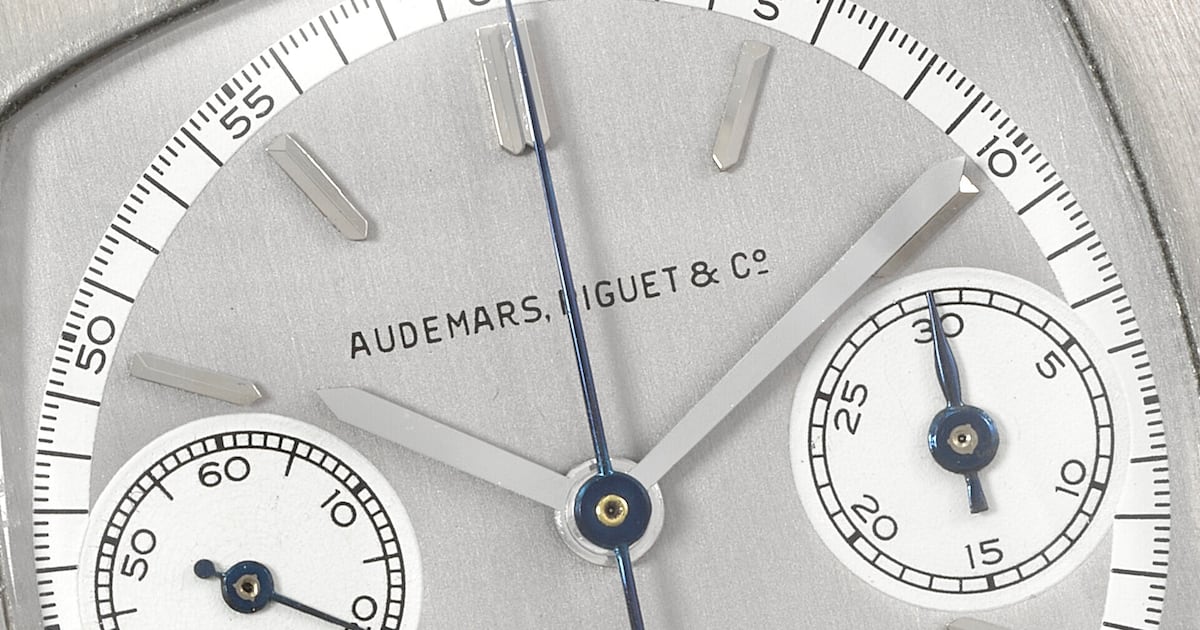

Two back-to-back Geneva auctions in May, hosted by Christie’s and Sotheby’s, will serve as a critical barometer for MENA sovereign capital and ultra-high-net-worth (UHNW) allocation into tangible alternative assets, a segment that has seen 39% year-on-year growth in regional deployment since 2022. Christie’s May 11 horology sale features a 1930 Audemars Piguet “Coussin Tortue” single-button chronograph, one of only three pieces ever produced with just two known survivors, estimated at $260,000 to $510,000, alongside an early FP Journe Tourbillon Souverain from the coveted Reference T series ($638,000 to $1.3 million) and a rare 1971 Paul Newman Daytona reference 6262 with tropicalised dial ($255,000 to $511,000). Sotheby’s May 12 High Jewellery Sale follows with a 6.03-carat internally flawless fancy vivid blue diamond sourced from South Africa’s Cullinan Mine, carrying a $9 million to $12 million estimate, a matched pair of 18.38-carat D-colour flawless diamonds ($2.8 million to $3.5 million), a 14.19-carat Colombian emerald ring with no clarity enhancement ($300,000 to $600,000), and a 102.40-carat untreated cushion-cut Ceylon sapphire known as the Peacock of Ceylon ($1.3 million to $1.9 million).
Sovereign wealth funds across the Gulf, which collectively manage $4.2 trillion in assets under management, have driven much of this demand, allocating an average of 4.7% of their portfolios to tangible alternatives in 2024, up from 1.2% in 2019, as part of broader diversification mandates away from hydrocarbon-linked assets. Regional UHNW allocators and royal family offices now account for 21% of global premium auction turnover, per Bain’s 2024 Luxury Study, with most high-value lots acquired as portable strategic reserves rather than discretionary luxury purchases. The 6.03-carat blue diamond and 1930 Audemars Piguet chronograph are primary targets for Gulf-based family offices acting as proxies for sovereign capital, seeking assets with near-zero correlation to listed equities and sovereign debt, while offering high liquidity in secondary private markets across the MENA region.
Venture capital flows into MENA’s luxury tech ecosystem are reinforcing this shift: regional VC firms including STC Ventures, MEVP and BECO Capital have deployed $187 million since 2023 into startups building blockchain-based provenance tracking, AI-driven asset valuation models, and Sharia-compliant digital auction platforms tailored to institutional buyers participating in offshore sales such as the May Geneva auctions. Concurrently, sovereign-backed infrastructure investment totaling $12 billion across the UAE and Saudi Arabia has accelerated the development of dedicated luxury auction and storage hubs in Dubai, Abu Dhabi and Riyadh, with both Sotheby’s and Christie’s expanding on-ground advisory teams in the GCC to capture institutional demand. This infrastructure buildout has doubled secondary market turnover for high-value collectibles within the GCC since 2021, reducing reliance on European auction houses and retaining more transaction fee revenue and capital appreciation within the region.
The business impact extends beyond capital allocation to regional financial services growth: Dubai International Financial Centre (DIFC) firms launched 14 new regulated alternative asset funds tied to luxury collectibles in 2024, offering institutional investors structured exposure to assets such as those in the May Geneva sales. Even mid-tier lots with pop-culture provenance, including the Rihanna co-created Chopard demi-parure in Sotheby’s sale estimated at $260,000 to $380,000, are seeing increased demand from regional VC-backed luxury marketplaces targeting younger Gulf UHNW cohorts, who now account for 34% of the region’s luxury spending. For MENA sovereign and institutional allocators, these Geneva auctions represent not just discretionary purchasing opportunities, but a test of the portability and liquidity of hard assets amid ongoing global financial fragmentation.