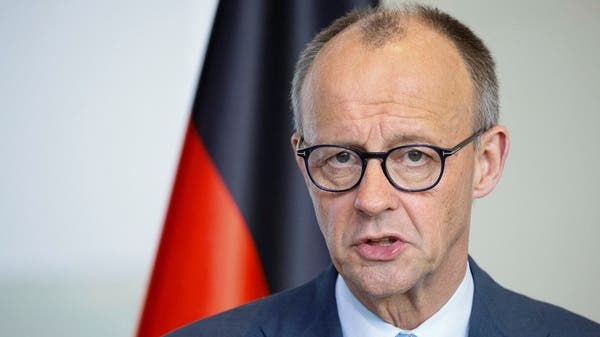

German Chancellor Friedrich Merz’s call for a “reliable transatlantic partnership” comes at a critical juncture for Middle East and North Africa sovereign capital strategies, where geopolitical uncertainty is reshaping trillion-dollar infrastructure and investment portfolios across the region. With Iran sanctions negotiations and military deployments hanging in the balance, Gulf sovereign wealth funds are increasingly diversifying away from traditional Western partnerships, accelerating capital allocation toward Asian markets and regional fintech ventures. The Dubai Investment Office recently announced a $5 billion allocation shift toward emerging market infrastructure, while Saudi Arabia’s Public Investment Fund has fast-tracked AI-driven healthcare projects to reduce dollar dependency amid transatlantic turbulence.
The ongoing friction between Washington and Berlin over Iran policy directly impacts MENA’s $2.8 trillion cross-border investment landscape, where European institutional investors traditionally channel 40% of their emerging market exposure. Berlin’s emphasis on burden-sharing within NATO resonates with Gulf Cooperation Council states negotiating defense infrastructure spending, as Riyadh’s $200 billion weapons modernization program increasingly balances Eurodyme defense contracts against U.S. systems. This realignment threatens $85 billion in planned transatlantic joint ventures, particularly in renewable energy infrastructure where TotalEnergies and Siemens are competing against Chinese and Indian developers for Moroccan solar and Emirati wind projects.
Regional venture capital dynamics reveal the most pronounced shifts, as MENA’s $8.2 billion VC market shows investors racing to de-risk from volatile Western portfolios. Cairo’s cybersecurity startups secured record funding despite regional conflicts, while Tel Aviv’s defense-tech corridor attracted $1.3 billion in Q1 2026, eclipsing Silicon Valley investments for the first time. The emergence of dollar-denominated regional funds, led by Abu Dhabi’s $75 billion Mubadala Ventures and Qatar Investment Authority’s $12 billion technology arm, signals a permanent rebalancing of global capital flows that transcends traditional NATO alliances.
The infrastructure implications extend beyond military budgets into $1.2 trillion of planned digital connectivity projects spanning from Morocco’s Mediterranean coast to Indonesia’s eastern provinces, where Arab Energy Fund partnerships with SoftBank and Tencent target 5G coverage for 400 million consumers. As transatlantic reliability erodes, these Sino-European-Arab joint ventures represent the new normal: fragmented supply chains, parallel payment systems, and parallel technological ecosystems that will define the next decade of global commerce.