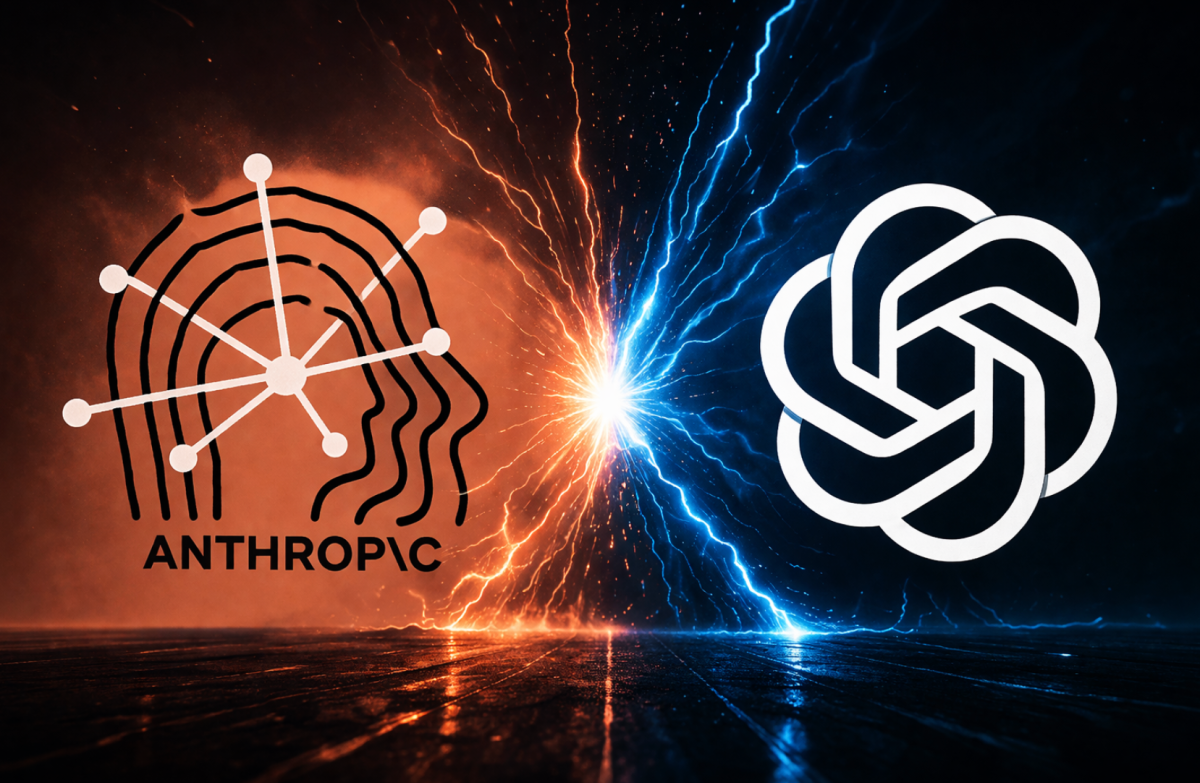

The formation of Anthropic’s $1.5 billion enterprise AI joint venture, anchored by Blackstone, Hellman & Friedman, and Goldman Sachs, marks a strategic pivot in Silicon Valley’s approach to scaling generative AI infrastructure, with profound implications for global capital flows. The structure mirrors OpenAI’s parallel initiative with The Development Company—a venture valued at $10 billion and backed by TPG, Brookfield, and Bain Capital—highlighting a bifurcation in institutional investment strategies. For the Middle East and North Africa (MENA), this convergence of sovereign wealth funds, private equity, and tech incumbents signals a growing appetite for AI-driven enterprise solutions, which could catalyze localized disruption in sectors reliant on legacy systems, from oil and gas logistics to fintech. Such ventures may position MENA governments, keen to diversify economies away from hydrocarbons, to align with global AI ecosystems via sovereign capital deployment into regional digital infrastructure or AI-as-a-Service (AIaaS) partnerships.
Anthropic’s $300 million financial commitment, matched by Blackstone and Hellman & Friedman, underscores a trend where alternative asset managers seek vertical integration into high-margin tech designated zones. For MENA, this presents a dual opportunity: first, attracting comparable institutional capital inflows into its own fintech, proptech, or energy tech ecosystems through co-investment vehicles; second, leveraging these ventures’ client networks to source regional regulatory compliance and localization expertise. However, the lack of overlap between Anthropic’s and OpenAI’s investor networks suggests a bifurcation of AI investment markets—a divide MENA states may exploit by fostering neutral arbitration hubs for investors seeking jurisdictional arbitrage, or by aligning with high-profile investors like GIC (a Singapore sovereign fund actively courted by Anthropic) to bridge global South-North capital transfers.
The underlying “forward-deployed engineer” model—whereby client teams embed AI developers directly into workflows—poses infrastructural demands that MENA cannot ignore. Deploying such models at scale necessitates robust data center networks, edge computing redundancies, and localized cloud partnerships, particularly in GCC states where data sovereignty laws are tightening. Sovereign wealth funds, increasingly active in regional infrastructure, may prioritize investments in AI-optimized datacenters or national supercomputing hubs to capture returns from both AI service efficiency gains and geopolitical diversification shifts. Meanwhile, venture capital firms in the region, emboldened by the $50B+ valuation scenarios unfolding in AN zumo AI, may adopt riskier bets on AI startups targeting niche sectors like agritech or smart cities, anticipating spillover effects from global LP interest.
Ultimately, these joint ventures redefine the MENA region’s role in the global AI value chain, transforming it from a peripheral market into a strategic demand generator. Panels of Silicon Valley’s venture capitalists convening with Abu Dhabi’s sovereign investors at Davos next year must focus on two inflection points: one, operationalizing MENA-centric AI solutions that address hyperlocal regulatory and cultural nuances without compromising global scalability; two, structuring joint ventures that repatriate profits to sovereign capitals via IP joint ventures or equity carve-outs tied to energy transition—or security—agendas. The race is no longer just for AI dominance but for control over the energy, data, and governance levers that will power the next decade’s digital infrastructure.