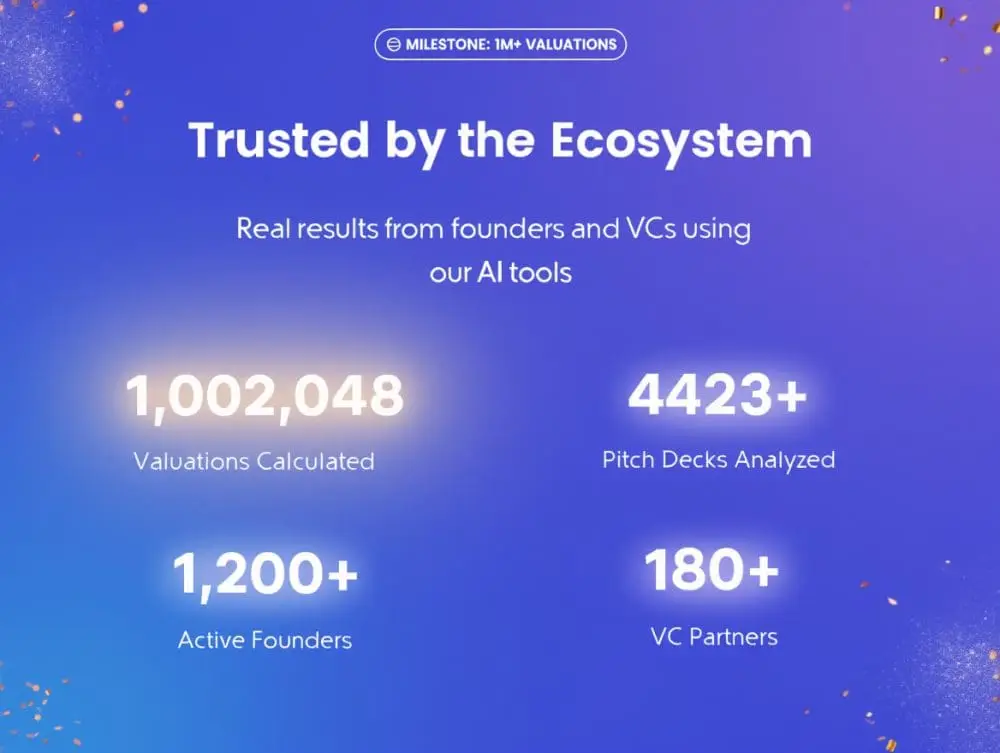

SaaStr’s suite of AI-driven founder tools has surpassed 1,002,048 startup valuations run, 4,423 pitch deck analyses completed, and 2.75 million conversational interactions via its “Digital Jason” chatbot, with 1,200 active founders and 180 venture capital partners now using the platform, per the latest public update from the Silicon Valley accelerator. While the toolkit is designed for global founders, its core value proposition—closing the information gap between early-stage teams and institutional investors—holds acute relevance for the Middle East and North Africa, where a surge in sovereign capital deployment into tech startups has outpaced the maturation of local valuation benchmarking infrastructure. The region’s top allocators, including Saudi Arabia’s Public Investment Fund (PIF), UAE’s Mubadala and ADQ, and Qatar’s Qatar Investment Authority (QIA), have collectively committed more than $100 billion to regional and global tech over the past 36 months, yet founder expectations of valuation remain largely untethered to regional market comps, driven instead by outdated US benchmarks or ad-hoc feedback from a still-nascent local VC ecosystem.
Insights extracted from SaaStr’s 1 million+ valuation runs underscore critical misalignments already visible across MENA startup cap tables. SaaStr’s data confirms founders consistently overvalue high-growth cohorts while underpricing solid-but-slower-growth ventures—a dynamic amplified in the Gulf, where state-backed startup incentives and easy early-stage liquidity have distorted founder expectations of fair market value. The SaaStr finding that growth rate outpaces absolute ARR as a valuation driver aligns with regional sovereign direct investment patterns: PIF and Mubadala have repeatedly prioritized 100%+ YoY growth ventures over larger, stagnant incumbents in recent MENA edtech, fintech and logistics deals. Meanwhile, the narrow “AI premium” identified by SaaStr—where only true AI-native, revenue-generating startups command multiple uplifts, while bolt-on AI features yield no premium—should serve as a corrective for regional founders rushing to rebrand legacy SaaS products as AI plays to chase sovereign and VC capital. The SaaStr data further reveals a material share of founders globally cannot accurately report core SaaS metrics including net revenue retention, gross margin and magic number—a gap that is even more pronounced in MENA, where standardized financial reporting frameworks for startups remain voluntary across most jurisdictions.
The SaaStr model—offering free, unbiased valuation and diligence tools to build trust with founder ecosystems—presents a blueprint for regional sovereign and infrastructure players looking to optimize capital deployment across MENA’s fragmented startup markets. Gulf sovereigns have already committed billions to physical tech infrastructure, including Riyadh’s $9 billion King Abdullah Financial District tech hub, Dubai’s Dubai Internet City expansion, and Egypt’s $3 billion New Administrative Capital tech zone, but digital benchmarking infrastructure remains underinvested. Localized adaptations of SaaStr’s toolkit, trained on MENA-specific deal comps from regional VC databases and sovereign direct investment disclosures, would reduce costly valuation mismatches that have delayed or killed more than $2 billion in regional startup rounds over the past 24 months, per preliminary data from the MENA Venture Capital Association.
SaaStr’s planned rollout of diligence simulators, board prep tools and term sheet analyzers will further erode information asymmetries that disproportionately disadvantage MENA founders, who face a more concentrated investor base than their US or European peers. With 70% of late-stage MENA startup capital originating from just 12 sovereign and quasi-sovereign entities, transparent, standardized valuation frameworks are critical to preventing toxic cap tables and misaligned term sheets that can stifle regional startup scalability. As Gulf states accelerate their economic diversification agendas away from hydrocarbons, closing the founder-investor information gap will be as vital to the region’s tech ecosystem as physical infrastructure investments—making the SaaStr milestone a timely signal for MENA policymakers and capital allocators to prioritize digital benchmarking tools alongside traditional tech hubs.