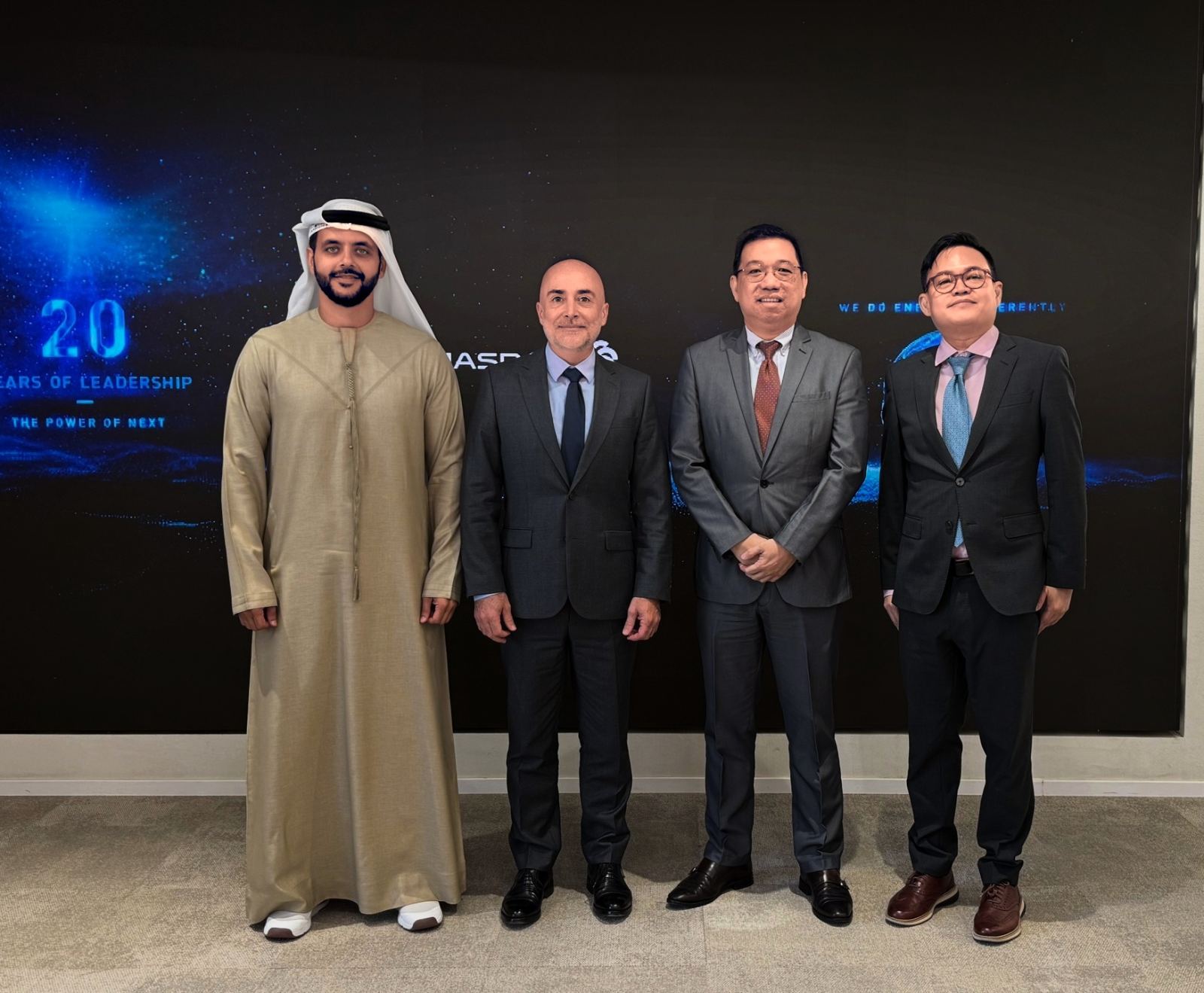

Accelerate Infrastructure Opportunities, backed by CBRE Investment Management, has closed a $630 million primary capital raise, lifting total committed equity to $1.26 billion. The new funding, sourced from sovereign investors including Abu Dhabi’s Mubadala Investment Company and the Australian Retirement Trust, underscores a growing appetite among MENA sovereign wealth funds for stable, long‑duration infrastructure assets that underpin digital connectivity, renewable generation and mobility. By securing capital that spans both public and private sources, Accelerate positions itself to lock in low‑cost financing for projects that align with the Gulf’s diversification agendas under Vision 2030‑style strategies.
With a portfolio now exceeding 400 sites across 47 U.S. states, the platform offers a scalable template for replicating similar infrastructure assemblages in the Middle East and North Africa. Investors from the region can leverage Accelerate’s disciplined acquisition model—aggregating under‑utilized real‑estate into income‑producing digital towers, solar farms and transport corridors—to accelerate the rollout of 5G back‑haul, green power and electric‑vehicle charging networks that are essential for the digital transformation of GCC economies. The demonstrated ability to generate predictable cash flows will be attractive to regional pension funds and sovereign wealth entities seeking inflation‑hedged returns.
From a venture‑capital perspective, the capital raise signals a convergence of institutional and growth‑stage capital at the intersection of tech‑enabled infrastructure. The involvement of CBRE’s global platform provides a pipeline for MENA‑based tech startups to access Tier‑1 sites for data‑center colocation, edge‑computing, and renewable‑energy storage projects. This creates a virtuous cycle: venture investors gain real‑world deployment venues, while Accelerate benefits from the innovation pipeline that enhances asset utilization and revenue per square foot.
Strategically, the infusion of sovereign capital into Accelerate’s U.S. footprint could pave the way for cross‑border co‑investment structures, enabling MENA governments to acquire stakes in critical infrastructure abroad while channeling expertise back to domestic projects. Such partnerships would bolster regional infrastructure resilience, diversify revenue sources for sovereign balance sheets, and reinforce the broader geopolitical goal of securing supply‑chain independence in digital and energy domains.