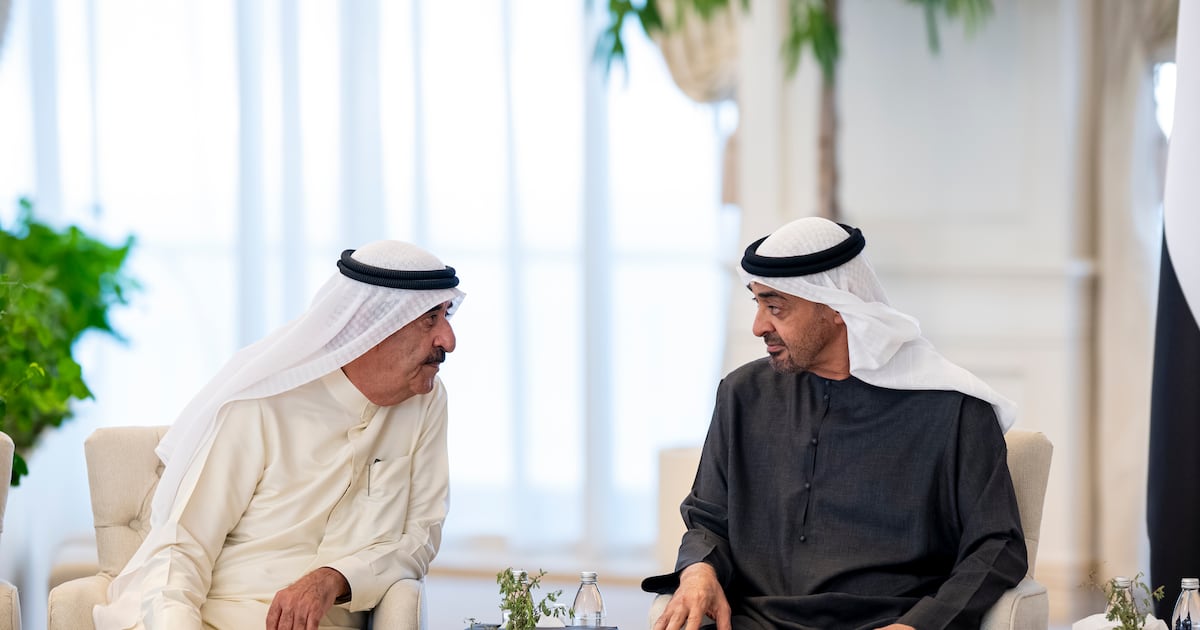

President Sheikh Mohamed bin Zayed Al Nahyan convened senior leadership from Umm Al Quwain, including Ruler Sheikh Saud bin Rashid Al Mualla, Crown Prince Sheikh Rashid bin Saud Al Mualla, and Deputy Ruler Sheikh Ahmed bin Saud Al Mualla, to deliberate strategic national priorities. The discussion underscored a deliberate policy shift toward embedding citizen participation in economic development, signaling a recalibration of governance that aligns social inclusion with the UAE’s broader ambition to transition from oil‑centric growth to a knowledge‑driven, high‑value economy.
This strategic pivot carries immediate implications for sovereign capital allocation. Abu Dhabi’s sovereign wealth fund, Abu Dhabi Investment Authority (ADIA), is poised to redirect a portion of its US$800 billion war chest toward domestic infrastructure projects that enable digital finance, renewable energy, and logistics corridors. By aligning sovereign investment with citizen‑centric initiatives, the UAE aims to lock in long‑term, low‑cost financing for megaprojects that reinforce regional supply chains and attract foreign direct investment, thereby bolstering the nation’s geopolitical leverage across the MENA region.
From a venture capital perspective, the emphasis on citizen empowerment is expected to accelerate the formation of a home‑grown startup ecosystem. Policy incentives—such as equity‑free seed grants, tax‑optimized innovation zones, and streamlined licensing for youth‑led enterprises—will lower entry barriers for nascent tech firms. Early‑stage capital is likely to flow from a hybrid model combining sovereign‑backed funds, family office ventures, and regional VC networks, creating a multiplier effect that fuels scaling of fintech, agritech, and health‑tech solutions tailored to local market dynamics.
Infrastructure implications are equally profound. The integration of advanced digital platforms, 5G rollouts, and smart‑city frameworks will be accelerated to support the anticipated surge in cross‑border e‑commerce and digital services. Investment in broadband penetration, port modernisation, and logistics hubs will enhance connectivity between the Gulf Cooperation Council (GCC) economies, facilitating a more seamless flow of capital, talent, and goods across the MENA corridor. This infrastructural upgrade positions the UAE as the logistical and financial gateway for the wider region, amplifying its role as a conduit for sovereign and private capital seeking exposure to high‑growth markets.