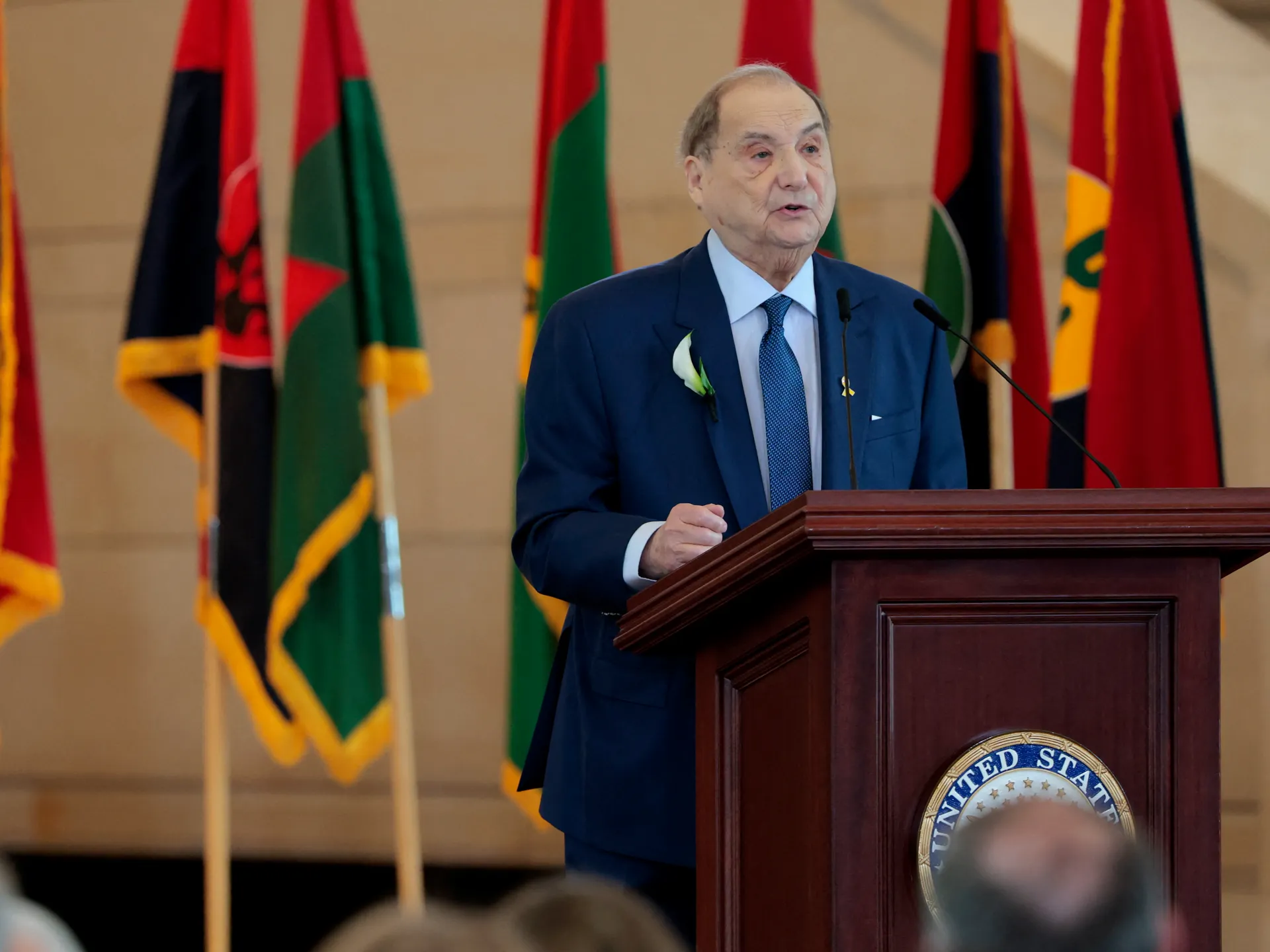

Abraham “Abe” Foxman, who led the Anti-Defamation League for 28 years until his death at 86, played a pivotal role in shaping U.S. foreign policy discourse that directly influences capital flows and investment dynamics across the Middle East and North Africa. His unwavering advocacy for Israeli policies, particularly during the recent escalation in Gaza and the U.S.-led strikes on Iran, has reinforced Washington’s strategic alignment with Tel Aviv—a relationship that sovereign wealth funds from the Gulf Cooperation Council (GCC) and North African states must now navigate with heightened scrutiny. As Foxman warned in 2025, the declining public sentiment toward Israel in the U.S. poses risks to the $200 billion in annual bilateral trade between Israel and MENA nations, potentially impacting joint infrastructure ventures, particularly in defense technology and water security sectors.
The ADL’s intensified campaign against Palestinian dissent under Foxman’s leadership has increasingly polarized Western capital allocators, with pension funds and sovereign investors weighing divestment pressures against strategic partnerships. This dynamic is most pronounced in venture capital corridors like Dubai and Riyadh, where early-stage funding in AI, cybersecurity, and cleantech is projected to reach $8.7 billion by 2026. However, concerns over reputational exposure have led to a tightening of ESG compliance protocols, particularly for startups with dual-use technologies that could face export restrictions if linked to contested regional conflicts. GCC funds, including Mubadala and Saudi Ventures, are recalibrating their portfolio allocations to align with shifting U.S. policy signals, prioritizing sectors that insulate capital from geopolitical volatility.
Foxman’s influence also reverberates through the region’s infrastructure development agenda, where U.S.-Israeli cooperation in energy and transportation has accelerated under the guise of regional security. Projects such as the Eastern Mediterranean Gas Pipeline and the proposed Red Sea-Dead Sea conduit—an initiative championed by both Jerusalem and Washington—are emblematic of how advocacy-driven alliances shape billion-dollar civil works programs. Conversely, Palestinian Authority calls for boycotts of Israeli-linked infrastructure have stalled prospective partnerships in the West Bank and Gaza corridor, forcing Arab sovereign capital to redirect investments toward Sudan and Jordan. This fragmentation undermines the World Bank’s stated goal of a $50 billion infrastructure pipeline connecting the MENA region, as political headwinds complicate cross-border capital mobilization.
The institutional landscape in MENA is thusNavigating Foxman’s legacy amid evolving capital mobility frameworks. His successors at the ADL, under Jonathan Greenblatt, have escalated lobbying efforts to codify anti-BDS legislation across U.S. states—a move that could entrench regulatory barriers for Arab and Muslim-majority investors seeking entry into U.S. capital markets. Meanwhile, the normalization accords of the Abraham Accords have, in part, depended on the quiet endorsement of advocacy groups like the ADL, which provided intellectual cover for GCC states to forge ties with Israel. As regional policymakers recalibrate their engagement with Washington, Foxman’s tenure underscores the outsized weight of diaspora advocacy in determining the contours of sovereign capital deployment.