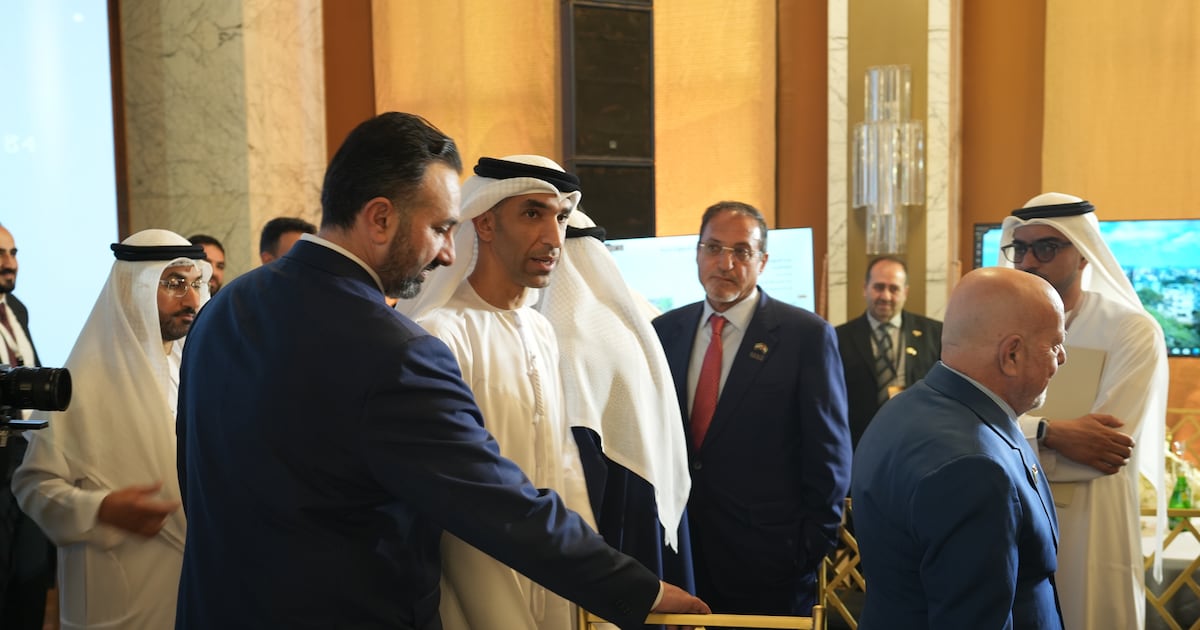

The convening of the inaugural UAE-Syria business forum in Damascus marks a defining inflection point for capital flows across the post-conflict Levant. With Washington’s executive order terminating the Syria sanctions programme in mid-2025, the subsequent repeal of the Caesar Act, and Brussels’ wholesale lifting of EU economic restrictions, the legal architecture that severed Damascus from global finance for over a decade has been systematically dismantled. Syria’s central bank is now actively pursuing its first sovereign credit rating — a prerequisite for international capital market access — while SWIFT connectivity has been restored and a dormant account at the Federal Reserve Bank of New York reactivated for the first time since 2011. For Gulf sovereign allocators and regional institutional investors, the calculus has shifted fundamentally: Syria is no longer a pariah market but an emerging reintegration play with measurable entry points.
Emirati state-backed capital is leading the charge. DP World’s 30-year concession to manage and modernise the Port of Tartous, backed by an $800 million investment commitment, signals Abu Dhabi’s strategic intent to establish a logistics corridor linking a reconstituted Syrian economy to broader Eastern Mediterranean trade flows. Sharjah’s Dana Gas has moved on a preliminary agreement to redevelop gasfields near Homs, a play on Syria’s pre-war hydrocarbon output of 380,000 barrels of oil equivalent per day — output that collapsed by roughly 80 percent during the conflict. The Ministry of Energy’s $30 billion rehabilitation roadmap for oil, gas, electricity, and water infrastructure represents the most capital-intensive opportunity set in the post-Assad landscape, and Gulf sovereign wealth vehicles are positioning to capture it. Over $28 billion in cross-border investment, predominantly from Gulf Cooperation Council states, deployed across Syrian sectors during 2025 alone, following amendments to foreign investment law permitting full foreign ownership — a regulatory concession designed to accelerate capital inflows.
The infrastructure deficit defines both the scale of the opportunity and the execution risk. The World Bank’s estimate places total reconstruction costs at approximately $216 billion — nearly tenfold Syria’s 2024 GDP — with physical infrastructure accounting for nearly half of the $108 billion in documented destruction. For regional venture and infrastructure funds, the addressable market spans port modernisation, energy grid rehabilitation, telecommunications rebuild-out, and residential construction at a scale rarely seen outside post-conflict Southeast Asian or Eastern European recoveries. Visa and Mastercard’s resumption of card-processing services in late 2025, with Qatar National Bank among the first regional acquirers to activate, lays the rails for a nascent fintech and digital payments ecosystem — an early-stage vertical where MENA-focused venture capital has demonstrated strong deployment momentum.
The strategic implications for the MENA region’s capital allocation architecture are substantial. A rehabilitated Syria integrated into Gulf-financed supply chains and connected to Mediterranean shipping lanes reshapes competitive dynamics for Beirut, Aqaba, and Haifa as regional transhipment nodes. However, the absence of a comprehensive multilateral debt-restructuring framework, the fragile trajectory of domestic institutional reform, and residual geopolitical risk — including the presence of non-state actors and competing external security interests — temper the near-term investment thesis. Institutional allocators are watching for the sovereign rating outcome and the World Bank’s first formal disbursement cycle as signal events. What is clear is that the Emirati delegation’s presence in Damascus is not ceremonial; it represents a calibrated sovereign bet on Syrian reintegration as a long-duration infrastructure and capital-markets theme with direct consequences for the broader MENA investment landscape.