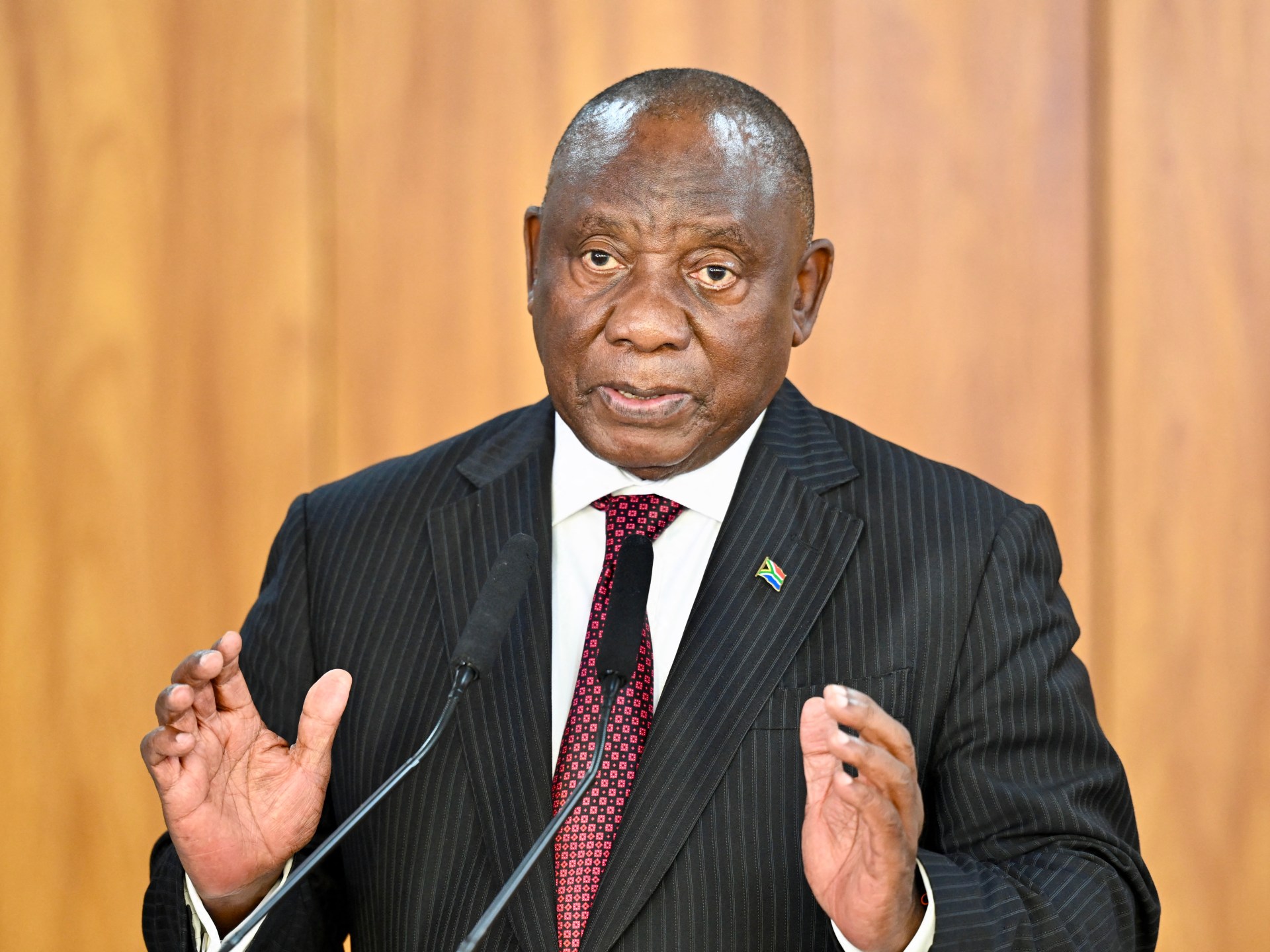

The Constitutional Court of South Africa’s decision to revive impeachment proceedings against President Cyril Ramaphosa over the Phala Phala farm scandal is not merely a domestic political crisis—it is a signal event for sovereign wealth managers, sovereign investment vehicles, and institutional capital allocators across the MENA corridor. South Africa remains the anchor of African fixed-income and equity exposure for Gulf sovereign funds, most notably the Public Investment Fund, ADIA, and Mubadala, all of which maintain multi-billion-dollar allocations to South African Treasuries, JSE-listed equities, and infrastructure debt instruments. Any credible threat to executive stability in Pretoria introduces repricing risk into what has been one of the most liquid frontier markets in Africa, and capital committees in Riyadh, Abu Dhabi, and Muscat will be recalibrating downside scenarios within days. The impeachment committee’s formation, ordered by the country’s highest court and set to convene over the coming months, effectively suspends political risk until at least mid-2027—a horizon that overlaps with critical sovereign budget cycles and infrastructure bond roll-overs in the GCC.
For MENA venture capital and private equity operators with exposure to South African technology platforms and financial services infrastructure, the near-term damage is contained but the medium-term signal is concerning. South African fintech, renewable energy, and digital infrastructure firms have been emerging as acquisition targets for Gulf-based PE funds seeking portfolio diversification beyond energy and real estate. The ANC’s refusal to cede a two-thirds parliamentary majority means Ramaphosa survives the lower house vote, but the political tailwinds that made South Africa’s regulatory environment attractive to foreign direct investment are eroding. Regional infrastructure implications extend beyond capital flows: Gulf-backed logistics, telecoms, and port development projects in East and Southern Africa routinely route through South African legal and financial infrastructure, and institutional uncertainty at the sovereign level introduces friction into cross-border project finance pipelines.
What matters most for the MENA region is not the procedural mechanics of the impeachment committee but the precedent it sets for constitutional governance in post-colonial states under sovereign capital scrutiny. The Constitutional Court’s ruling that parliament acted unconstitutionally in blocking the inquiry four years ago is a judicial assertion of institutional supremacy that will resonate across Africa—and Gulf investors are watching closely for contagion risk. If South Africa’s political risk premium widens by even 50 basis points, it cascades into adjacent markets including Nigeria, Kenya, and Egypt, where sovereign wealth vehicles and regional infrastructure funds are increasingly interlinked. The ANC’s emergency National Executive Committee session, the EFF’s public demand for resignation, and Ramaphosa’s decision to challenge the independent misconduct panel report all point to a protracted, legally contested standoff. For MENA capital allocators, the strategic takeaway is blunt: de-risk South African exposure now, reassess constitutional stability in H2 2026, and treat any resurgence in anti-corruption rhetoric from Gulf sovereigns as a potential re-rating catalyst for the broader African frontier.