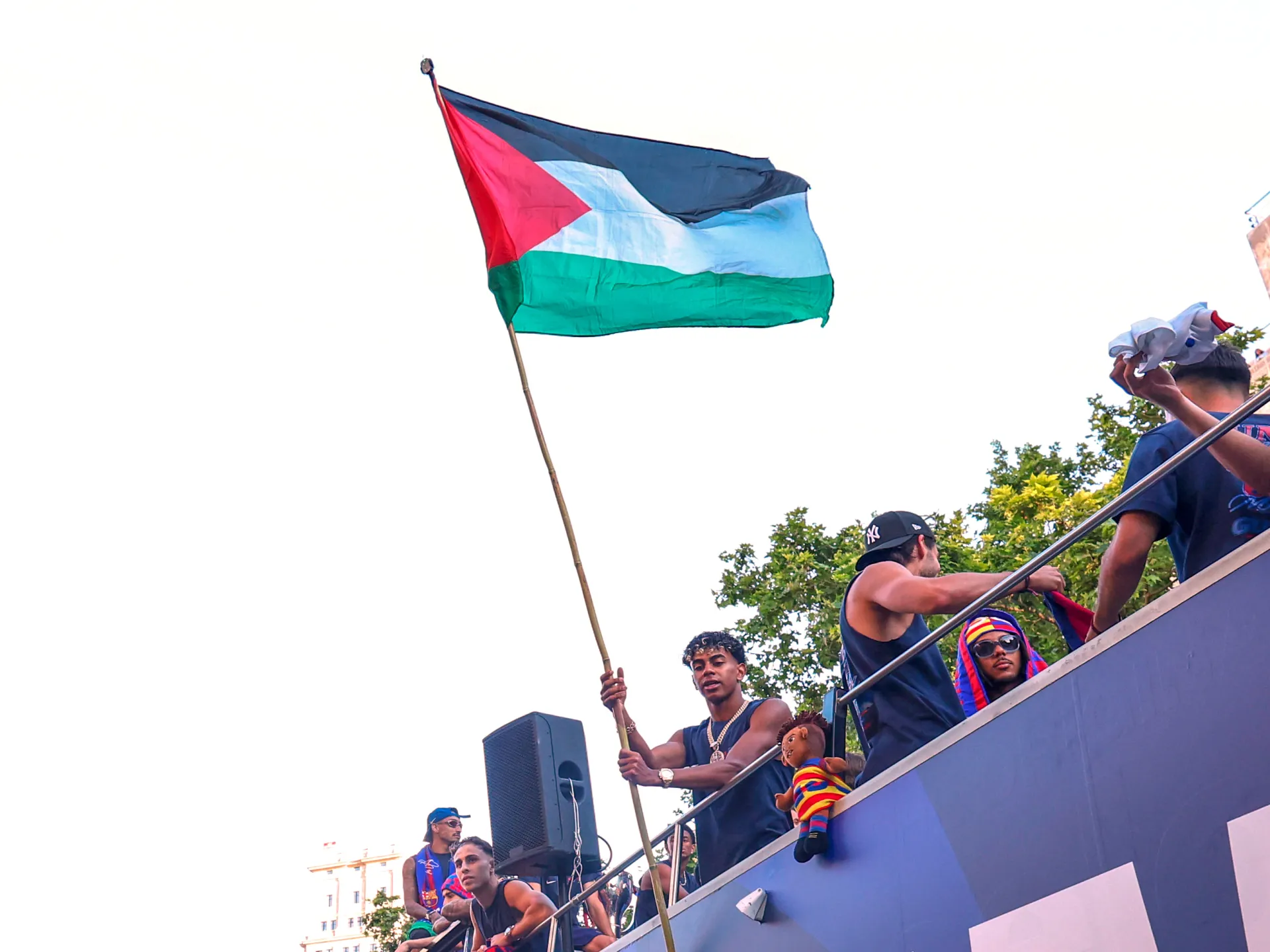

When Spanish club champions FC Barcelona celebrated their second consecutive La Liga title in Barcelona, eight‑year‑old star Lamine Yamal seized the moment to wave a Palestinian flag during the open‑top bus parade. The gesture, captured on video and amplified by Yamal’s 44 million‑strong social‑media following, instantly became a focal point for discussion across the MENA region, illustrating how sports diplomacy can reverberate through sovereign governance, capital markets and cross‑regional infrastructure initiatives.
For MENA‑based sovereign funds and development banks, Yamal’s act is a reminder that public sentiment can influence investment decision‑making. Governments that have earmarked billions for regional infrastructure projects—particularly in renewable energy, smart‑city logistics, and digital communication—must weigh the political ramifications of aligning with or distancing from contentious geopolitical narratives. The viral clip has already prompted calls from pro‑Palestine investors for increased sovereign‑warehousing and risk‑adjusted exposure in Istanbul, Riyadh, and Doha, where asset‑management firms are scouting for local‑led ventures that can navigate social‑political pressures while delivering long‑term returns.
Venture capital pulses on narrative as much as on fundamentals. Early‑stage fintechs and e‑commerce platforms operating across MENA have reported a surge in capital commitments from diaspora‑influenced investors who see Yamal’s visibility as a signal that social responsibility can coexist with growth. Seed and Series A rounds for companies championing digital inclusion, such as mobile banking in Jordan or health‑tech startups in Egypt, have accelerated, with fund‑raising campaigns emphasizing community impact in partnership with national development agendas. The upshot is a tightening of due diligence frameworks that now routinely assess a firm’s alignment with broader civic and human‑rights discourses.
Infrastructure policy, too, is re‑calibrated through the prism of soft power. As European Union partners allocate aid for MENA‑wide telecom and green‑energy corridors, the delicate balance between fostering regional connectivity and mitigating reputational risk becomes paramount. Yamal’s demonstration illustrates the potential for sports‑associated symbolisms to act as catalysts for public‑private collaboration, encouraging governments to channel capital into projects that can both bridge digital divides and demonstrate solidarity with communities enduring conflict. In a climate where investment flows are increasingly conditioned by social narratives, the Spanish footballer’s modest act is signaling a broader shift toward integrated, socially conscious capital strategies across the Middle East and North Africa.