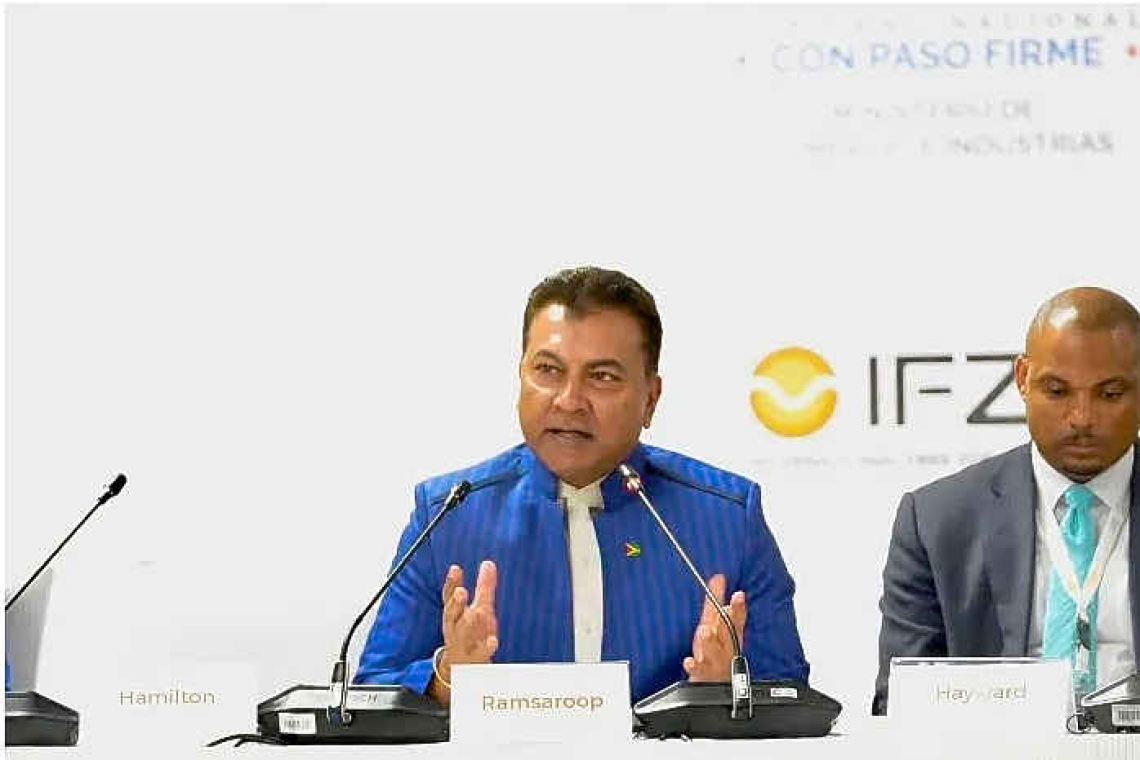

Georgetown’s strategic deployment of sovereign capital to construct integrated, free-zone-equivalent ecosystems across agriculture, education, and healthcare offers a replicable template for MENA nations seeking to diversify beyond hydrocarbons. The Guyanese model, underpinned by President Ali’s Vision 2030, demonstrates how resource-derived wealth can be systematically channeled into building complete, export-oriented industrial clusters rather than isolated projects. This approach directly challenges traditional MENA economic zones by emphasizing holistic infrastructure—from logistics and energy to agro-processing—as a single, investable proposition, thereby attracting patient capital focused on long-term sectoral leadership in food security and climate resilience.
The initiative creates immediate venture capital implications for the region. By legislating special incentives for specific regions and binding them to national development agendas, Guyana is effectively derisking early-stage investment in frontier agricultural technology, sustainable logistics, and value-added manufacturing. For MENA venture firms, this presents a case study in how policy can manufacture investable markets from sovereign strategy. The emphasis on traceability, digital transformation, and green technologies within these zones mirrors the technological pillars of Saudi Vision 2030 and the UAE’s Operation 300bn, suggesting a potential convergence of investment thesis between South America’s emerging resource giants and the Gulf’s capital-rich diversification engines.
Ultimately, Guyana’s framework signals a shift in the competitive landscape for regional infrastructure development. Its success in packaging hinterland regions as integrated economic units—combining special incentives with core infrastructure—provides a blueprint for MENA states aiming to develop secondary cities and non-oil export hubs. The model’s viability hinges on the state’s capacity to act as a systems integrator, a role many Gulf Cooperation Council (GCC) nations are increasingly assuming through entities like NEOM and ADQ. As global capital seeks stable, high-growth jurisdictions, Guyana’s deliberate economic design, backed by clear sovereign direction, positions it not merely as a resource play but as a competing node in the emerging geography of sustainable industrialization, demanding a strategic response from MENA policymakers and infrastructure investors alike.