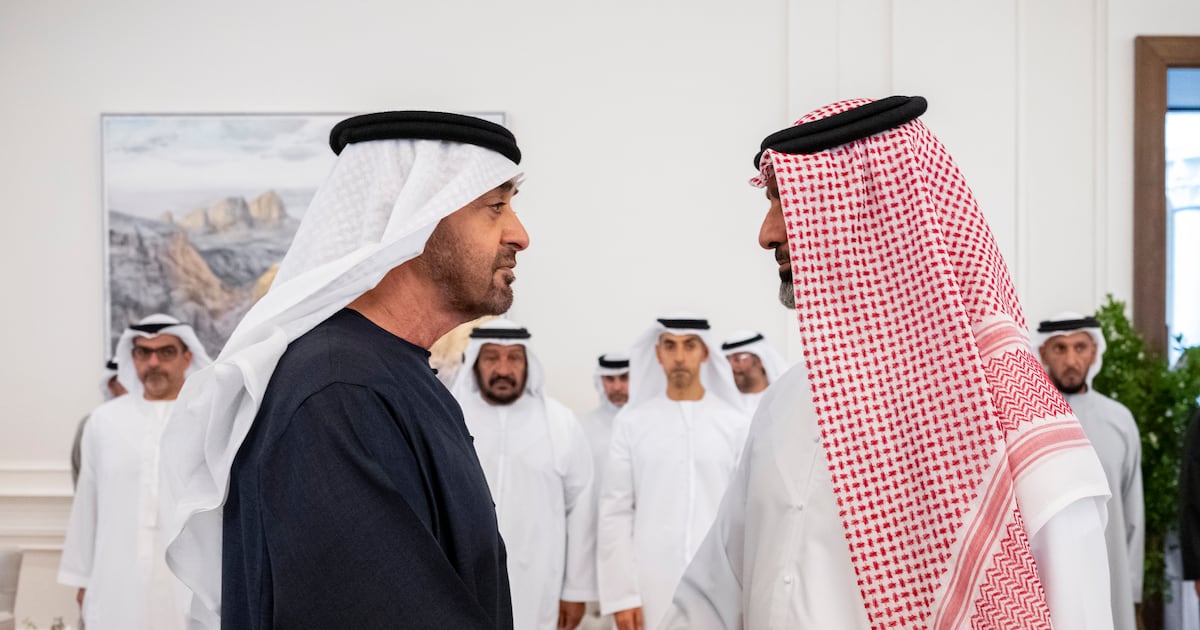

The recent meeting between President Sheikh Mohamed of the UAE and Ajman’s Crown Prince Ammar bin Humaid Al Nuaimi underscores the UAE’s strategic recalibration of sovereign capital toward grassroots economic diversification in the Middle East and North Africa. While the public narrative emphasizes cultural and social development, the underlying mechanics reveal a calculated alignment of sovereign wealth funds with regional infrastructure ventures aimed at catalyzing private-sector growth. By designating Ajman as an arts-and-culture hub, the UAE is leveraging its sovereign capital not merely for tourism-driven revenue but to attract high-return ventures in creative industries, digital infrastructure, and experiential tourism. This approach reflects a broader MENA trend where sovereign entities are repositioning capital toward sectors that bridge regional identity with global market demands, thereby mitigating overreliance on oil and attracting venture capital (VC) interest in non-traditional asset classes. The initiative signals a shift in sovereign investment priorities toward projects that require long-term infrastructure modernization, which in turn necessitates partnerships with VC firms seeking scalable solutions in emerging markets.
The transformation of Ajman into a cultural and technological nexus carries profound implications for regional infrastructure development across the Gulf and beyond. The project’s success hinges on comprehensive investments in smart cities, digital connectivity, and renewable energy—a triad that aligns with both sovereign mandates to enhance economic resilience and VC demands for tech-enabled scalability. This represents a critical juncture for the MENA region, where state-led infrastructure spending remains fragmented despite growing VC activity in tech and logistics. By tying sovereign capital to infrastructure that supports creative industries, the UAE is effectively seeding a model for attracting VC funds that prioritize tangible asset creation over purely digital ventures. Such a strategy also addresses regional pain points, such as underdeveloped intra-regional connectivity, by positioning Ajman as a cultural gateway that could spur cross-border investments in infrastructure-as-a-service and creative media technology.
From a business impact perspective, this initiative redefines the scope of sovereign capital deployment in the MENA context. Sovereign wealth funds, traditionally synonymous with large-scale infrastructure or energy projects, are now beingAllocated to smaller, innovation-driven economies with specific cultural or niche economic mandates. This diversification mitigates sovereign risk while aligning with VC trends that increasingly favor region-specific opportunities over generalized Gulf investments. For the broader MENA region, Ajman’s example could catalyze similar schemes in other emirates or North African states, fostering a new era of sovereign-VC collaboration where state-backed infrastructure funds preempt private sector absorption. However, the long-term viability of such models depends on overcoming regional challenges—such as differing regulatory frameworks and limited access to venture-grade capital—institutions beyond the UAE. The success of Ajman’s project may thus serve as both a replicable blueprint and a stress test for the region’s ability to integrate sovereign ambitions with VC-driven entrepreneurial ecosystems.