
The General Authority for Investment and Free Zones (GAFI) of Egypt is deliberately engineering a sovereign‐driven catalyst for pan‑African capital inflows, leveraging a newly calibrated legal architecture and a suite of incentive packages that are reshaping the continent’s investment calculus. By aligning its free‑zone incentives with the African Continental Free Trade Area (AfCFTA) protocols, GAFI is positioning Egypt as the premier gateway for sovereign capital seeking exposure to high‑growth African value chains, while simultaneously mobilizing multilateral financing mechanisms that de‑risk long‑term institutional portfolios.
From a venture‑capital perspective, GAFI’s integrated funding platforms—ranging from dedicated VC co‑investment funds to performance‑linked tax credits—are accelerating the deployment of private equity into sectors such as clean energy, agritech, and logistics tech across the Sahel and Horn of Africa. This structural support is compressing market entry barriers, enabling start‑ups to scale within regional value chains and attracting follow‑on capital from global limited partners eager to capture the demographic dividend of a continent whose median age will dip below 25 by 2035.
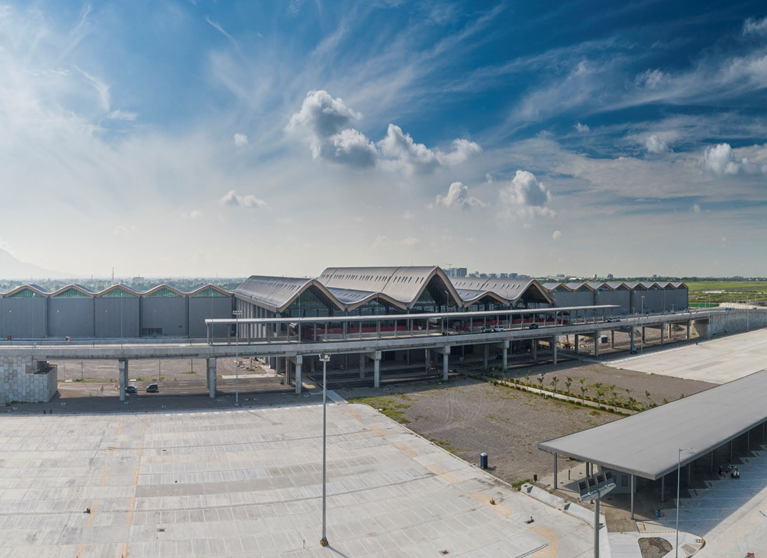
The broader infrastructure implications are equally consequential. GAFI’s expansion of logistics corridors, advanced customs automation, and interoperable digital payment ecosystems is laying the groundwork for a continent‑wide, sovereign‑backed supply‑chain backbone. Such developments promise to reduce trade‑cost differentials by up to 30 % and to integrate fragmented markets into cohesive investment pipelines, thereby amplifying the strategic relevance of MENA’s sovereign wealth funds as both financiers and architects of Africa’s emergent economic architecture.