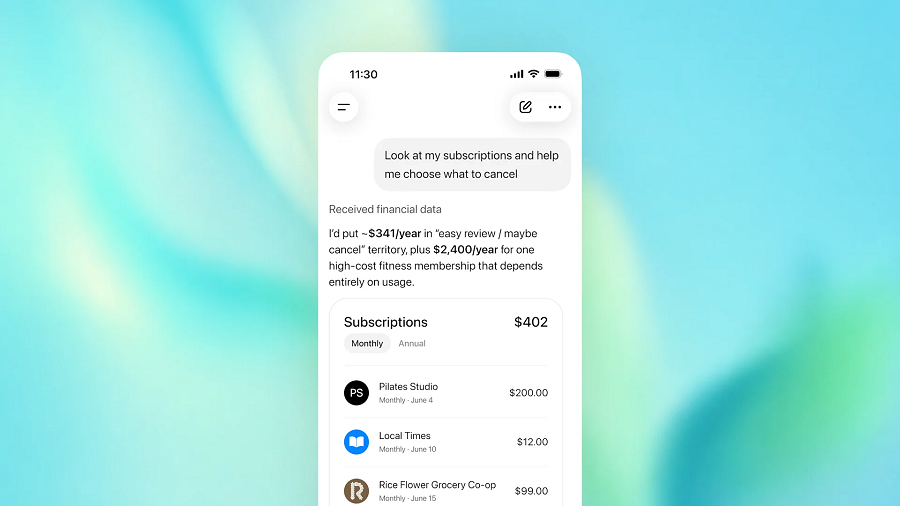

OpenAI’s integration of personal finance capabilities into ChatGPT Pro represents a pivotal moment in the convergence of artificial intelligence and financial services, with significant implications for institutional investors and sovereign capital allocators across the Middle East and North Africa region. This advancement signals a shift toward AI-driven financial management that could fundamentally reshape how regional banks, fintech startups, and family offices approach customer engagement and wealth management. Gulf sovereign wealth funds, which have been aggressively deploying capital into AI infrastructure and fintech acquisitions, now face the challenge of either partnering with emerging AI platforms or accelerating their own domestic solutions to maintain competitive positioning in the global investment landscape. The move also underscores the growing sophistication of AI models in handling complex financial reasoning, with GPT-5.5 Thinking achieving top-tier benchmarks in financial analysis—a capability set that regional investors will increasingly demand in their portfolios.
For the MENA region’s rapidly expanding fintech ecosystem, OpenAI’s initiative presents both opportunities and disruptions to established venture capital portfolios. Regional fintech unicorns, particularly those focused on wealth management and personal finance tools, must now contend with a global tech giant offering comparable functionality at scale. This dynamic is likely to intensify consolidation pressure on mid-tier fintech players while simultaneously creating acquisition opportunities for larger regional players backed by sovereign capital. Moreover, the requirement for bank account integration via services like Plaid highlights the critical role of open banking infrastructure—a sector where MENA jurisdictions are racing to modernize legacy systems. Countries such as UAE and Saudi Arabia, which have prioritized open banking frameworks as part of their digital transformation agendas, may see accelerated adoption of AI-powered financial tools, provided regulatory frameworks evolve to accommodate data-sharing protocols and consumer protection standards.
The infrastructure implications extend beyond individual consumers to encompass the broader financial architecture of emerging markets. As regional central banks continue their research into digital currencies and instant payment systems, AI platforms like ChatGPT could serve as interface layers between traditional banking and next-generation financial rails. This development places particular emphasis on data governance and cybersecurity—sectors where MENA nations have been strengthening their regulatory environments. The potential for AI agents to execute financial transactions autonomously, such as credit card applications and approval predictions, also raises questions for regional regulators about supervisory capacity and risk management. However, it simultaneously opens avenues for capital-efficient financial inclusion, particularly in markets like Egypt and Pakistan where underbanked populations represent significant growth opportunities for institutional investors willing to navigate the compliance complexities.
Looking ahead, the trajectory toward AI-driven financial decision-making aligns with MENA’s broader economic diversification objectives. As Gulf Cooperation Council states transition away from hydrocarbon dependence, the integration of AI tools into financial planning and investment management becomes a strategic imperative for both public and private sector entities. Regional capital allocators are likely to view AI-enhanced financial platforms as essential infrastructure for managing the scale and complexity of diversified portfolios spanning global equities, real estate, and emerging technology sectors. The success of OpenAI’s model in balancing user privacy with analytical depth may also influence how regional fintech ecosystems approach data monetization and consumer consent frameworks—an area where regulatory clarity will prove decisive in determining which markets capture the next wave of AI-driven financial innovation.