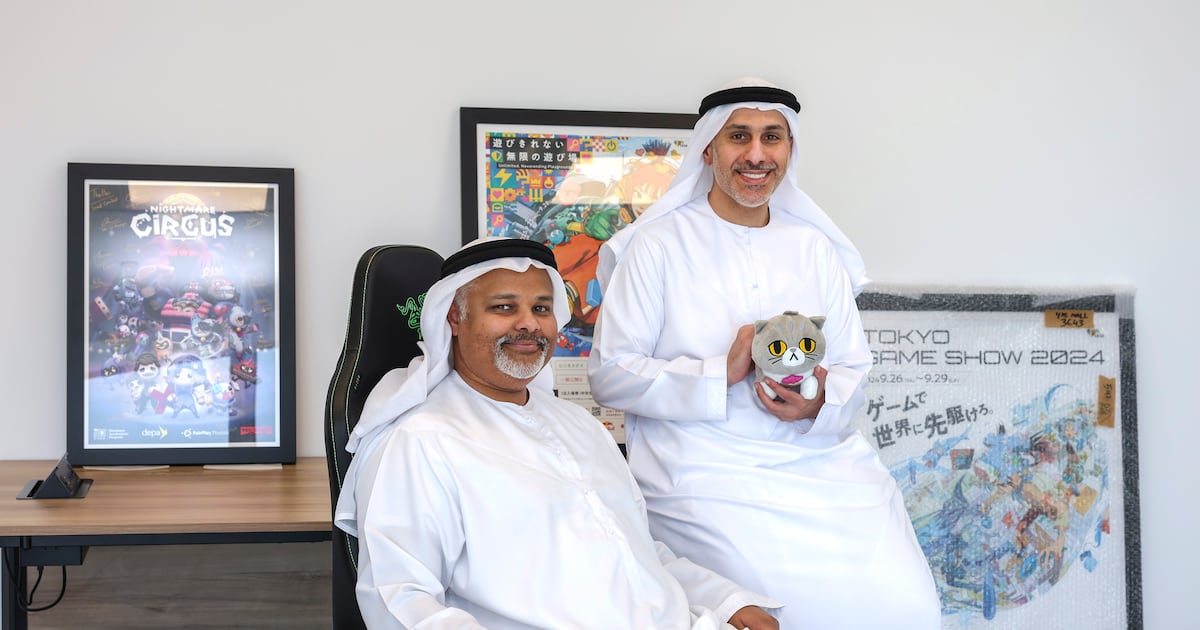

Abu Dhabi’s emerging gaming ecosystem has entered a new era of scale, with Red Dunes Games staging a 17‑slot exhibitor presence at the 2024 Tokyo Game Show after a swift ascent from a nameless startup to a regional content powerhouse. The company, founded in 2020 under the umbrella of Gyrfalcon Holding, now boasts a pipeline of 15 titles across co‑development, publishing and original intellectual property that spans Japan, Southeast Asia, Europe and North America. Its rapid expansion signals a broader sovereign‑capital strategy, whereby the United Arab Emirates is pivoting from traditional petro‑economic revenues to high‑tech cultural exports, thereby diversifying the Gulf’s fiscal base.
Red Dunes’ investment thesis illustrates the symbiotic relationship between sovereign funds and venture‑capital ecosystems in the MENA region. Through Gyrfalcon, the Emirati consortium led a Series B round for Japan’s esports outfit Reject and secured a seat on its board—an unprecedented cross‑border governance move that underlines the strategic intent to embed Emirati influence in globally‑relevant digital platforms. Reject’s subsequent success in major esports tournaments, including a $1.5 million SNK World Championship prize, not only generates tangible returns but also cements Abu Dhabi’s reputation as a credible investment hub for game‑based enterprises.
Beyond financial returns, Red Dunes is accelerating the development of a turnkey esports infrastructure. Planned community hubs and training academies in Abu Dhabi will harness grassroots talent, coaching, and content creation to create a pipeline comparable to the West’s established scene. This approach dovetails with the UAE Vision 2021 mandate to nurture a knowledge‑based economy, offering a blueprint for other MENA states to attract foreign direct investment (FDI) and technology transfer in the creative industries. The company’s partnership model—leveraging existing relationships in Japan, Europe, and the Americas—demonstrates a replicable framework for regional talent mobility and cross‑cultural collaboration.
Strategically, Red Dunes is also diversifying its intellectual‑property portfolio by tapping into Gulf heritage and anime nostalgia. The recently unveiled “Samurai Pizza Cats: Blast from the Past” leveraged a cult 1990s franchise to capture global audiences, while upcoming titles rooted in the UAE’s pearl‑diving legacy aim to position Arabic narratives at the forefront of international game‑culture. By focusing on mid‑budget, high‑creative‑control projects rather than chasing blockbuster spend, the studio aligns with sovereign objectives to export soft power without diluting local cultural identity. Collectively, these moves illustrate a mature, ecosystem‑driven model that could reshape the economic and infrastructural landscape of the Middle East and North Africa’s digital entertainment sector.