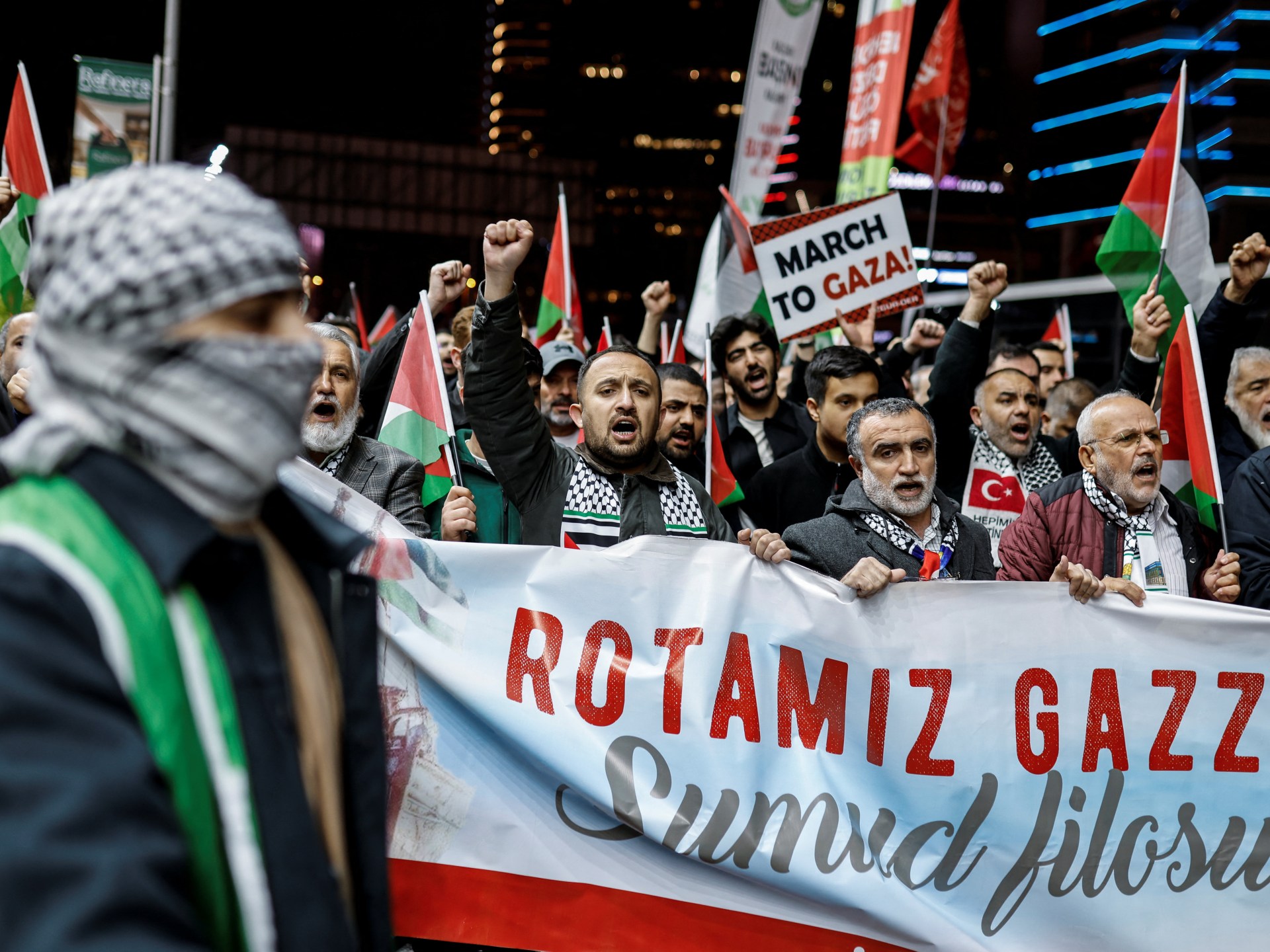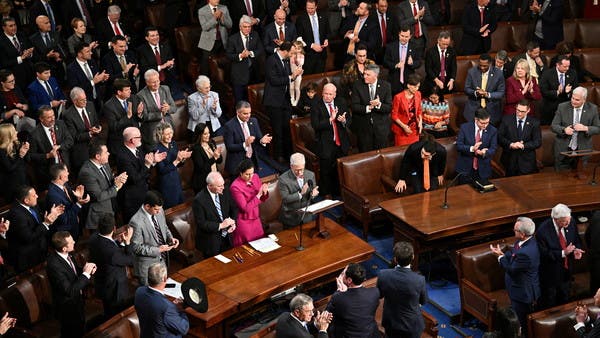

The escalation of anti-Muslim rhetoric within segments of the U.S. political establishment represents a tangible political risk factor for sovereign wealth funds and institutional investors across the Middle East and North Africa (MENA). Market observers note that the normalization of such discourse, coupled with historical policy shifts like travel bans, complicates the core investment calculus for entities like the Abu Dhabi Investment Authority, Saudi Arabia’s Public Investment Fund, and Qatar Investment Authority. These institutions, which manage over $2 trillion in combined assets, are mandated to achieve both financial returns and strategic national outcomes, including portfolio diversification and technological advancement. Persistent signals of institutional bias from a key Western market introduce a dimension of reputational and regulatory risk that may accelerate pre-existing trends toward capital reallocation toward domestic, regional, and non-U.S. allied jurisdictions.
The immediate business implication is a likely intensification of de-risking mandates, where sovereign capital scrutinizes exposure to U.S. assets and portfolios perceived as vulnerable to political volatility. This could manifest in reduced commitments to U.S.-based venture capital and private equity funds, particularly those with mandates scaling into the region. Conversely, it may accelerate direct investments into MENA’s own technology and infrastructure ecosystems. Projects tied to national visions—such as Saudi Arabia’s NEOM, the UAE’s Operation 300bn, and Egypt’s New Administrative Capital—stand to benefit from redirected capital, as sovereigns double down on building strategic autonomy and domestic capabilities to insulate against external policy shocks. The message to global investment banks and strategists is clear: MENA’s capital trajectory is increasingly being shaped by a geopolitical risk assessment that extends beyond traditional oil-price dynamics.
For the region’s nascent venture capital and technology sector, the environment presents a paradoxical opportunity. While rhetoric may chill certain transatlantic investment flows, it simultaneously strengthens the case for regionally domiciled funding vehicles and local-currency innovation ecosystems. Sovereign wealth funds are likely to further empower their own venture arms—such as the PIF’s Sanabil or Mubadala’s technology investments—to back regional startups in fintech, logistics, and climate tech. This reduces dependency on foreign capital that may be perceived as politically conditional. Furthermore, the development of regional deep-tech and AI hubs in Riyadh, Dubai, and Cairo could see an influx of talent and capital from diaspora communities seeking more predictable regulatory environments, provided regional jurisdictions can demonstrate consistent, inclusive policy frameworks.
Ultimately, this episode underscores a strategic inflection point for MENA’s economic architects. The region’s infrastructure ambition—spanning digital networks, logistics corridors, and renewable energy grids—requires stable, long-term capital partnerships. Political volatility in traditional anchor markets incentivizes a faster pivot toward building resilient, multipolar financial and technology alliances. The business impact will be measured in the pace of regional capital markets deepening, the success of local currency funding strategies, and the ability of MENA governments to frame themselves as neutral, stable platforms for global capital—a narrative that gains traction precisely when perceived alternatives appear increasingly politicized. The task for regional policymakers is to translate this exogenous risk into a coherent case for accelerated, home-grown institutional and infrastructural development.