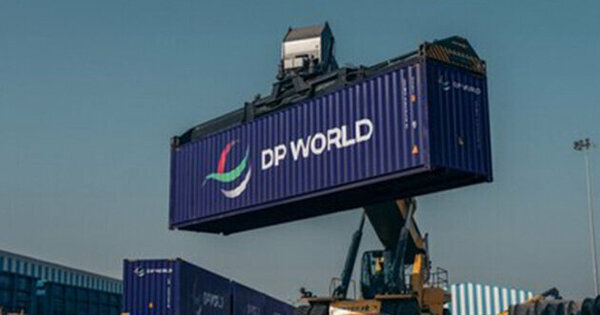

The successful execution of DP World’s logistics operations for the ICC Men’s T20 World Cup 2026 underscores the strategic imperative for efficient, scalable supply chain management in an era of amplified global trade interdependence. For the Middle East and North Africa (MENA), such demonstrations of logistical agility are not merely operational accolades but indicators of critical investment needs in sovereign capital towards infrastructure resilience. The seamless coordination of multi-origin shipments—spanning air and sea freight across diverse geographies—mirrors the complex trade networks MENA economies must navigate to capitalize on their geographic and logistical assets. Sovereign capital outlays in MENA are increasingly directed toward port modernization, digitalization of logistics hubs, and rail freight expansion, mirroring DP World’s reliance on integrated networks. This trend signals that region’s economic actors recognize logistics as a cornerstone of trade competitiveness, necessitating strategic partnerships and public-private investments to avoid bottlenecks in cross-border commerce.
Venture capital ecosystems in MENA areresponding to the demand for technological innovation in logistics, with startups focusing on AI-driven supply chain analytics, blockchain-enabled customs compliance, and last-mile delivery solutions gaining traction. DP World’s model of leveraging a globalized network to optimize time-sensitive operations offers a blueprint for MENA-focused VCs to target analogous challenges within the region, particularly in sectors like energy, manufacturing, and tourism. The cricket event’s logistical demands—spanning packaging, documentation, and real-time tracking—highlight gaps in regional tech adoption that private equity can bridge. Sovereign entities in MENA are increasingly aligning with these ventures, supplementing public infrastructure with private-sector agility. This convergence suggests a maturing ecosystem where venture capital not only funds niche solutions but also reshapes traditional supply chain paradigms, positioning MENA as a hub for hybrid logistics innovation.
The implications for regional infrastructure in MENA are profound, necessitating a paradigm shift from siloed projects to cohesive, tech-enabled ecosystems. DP World’s success in India and Sri Lanka—where container throughput and intermodal coordination were pivotal—mirrors the aspirations of MENA nations aiming to enhance trade corridors like the proposed Middle Corridor or the Indian Ocean trade hub. Infrastructure investments must prioritize multimodal connectivity, from smart ports to digital customs corridors, to handle similar high-volume, complex logistics demands. Sovereign capital in the region is now earmarked for such projects, often in partnership with private entities like DP World, to align with global best practices. This trend, however, demands vigilance against fragmented execution; unified planning and cross-border coordination will be critical to realizing the full potential of MENA’s strategic geographical position in global trade networks.