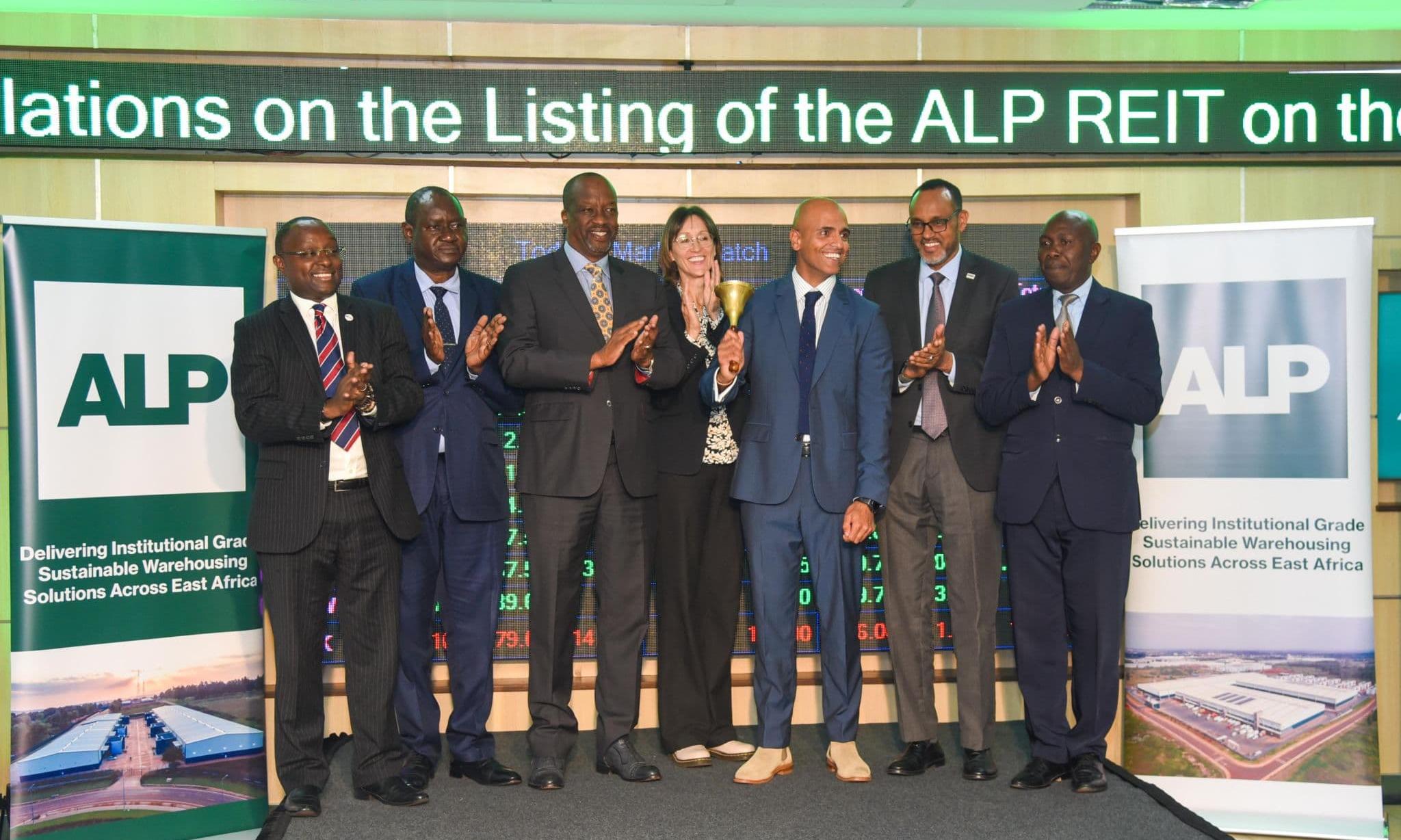

The recent listing of Africa Logistics Properties’ (ALP) Industrial Real Estate Investment Trust (REIT) on the Nairobi Securities Exchange represents a significant development with implications extending beyond Kenya’s immediate capital markets. The successful $34.55 million offering, heavily oversubscribed and denominated in US dollars, signals a maturing appetite for logistics-focused assets within East Africa and, critically, highlights the potential for similar structures to attract sovereign and institutional capital across the MENA region. While geographically distinct, the underlying drivers – burgeoning e-commerce sectors, expanding manufacturing bases, and a recognized need for modernized supply chain infrastructure – resonate strongly with the challenges and opportunities facing several Middle Eastern and North African economies.
The transaction’s structure, particularly the US dollar denomination, is noteworthy. It demonstrates a willingness among investors to accept currency risk in exchange for exposure to high-growth African markets, a model that could be adapted for MENA REITs targeting specific sectors like cold storage or specialized industrial facilities. Furthermore, the involvement of UK-backed initiatives, notably the Private Infrastructure Development Group (PIDG) through InfraCo and the MOBILIST programme, underscores the role of development finance institutions (DFIs) in de-risking and catalyzing private sector investment. Sovereign wealth funds (SWFs) from the GCC, increasingly seeking diversification beyond traditional energy assets, should view this as a case study in how targeted infrastructure investments, facilitated by DFIs, can generate attractive long-term returns. The success of ALP REIT provides a template for structuring similar deals that align with ESG mandates and contribute to regional economic development.
Looking ahead, the infrastructural implications are substantial. The demand for modern warehousing and industrial facilities, as evidenced by the oversubscription of the ALP REIT, directly addresses critical bottlenecks in regional supply chains. In MENA, where logistical inefficiencies often impede intra-regional trade and export competitiveness, the need for improved warehousing capacity is acute. Governments across the region are actively pursuing initiatives to enhance port infrastructure and develop special economic zones, but these efforts require complementary investments in inland logistics. Venture capital firms focused on logistics technology – last-mile delivery, warehouse automation, and supply chain visibility platforms – are likely to see increased opportunities as the demand for sophisticated warehousing solutions grows. The ALP REIT listing serves as a proof-of-concept, demonstrating the viability of attracting institutional capital to fund this crucial infrastructural development.
Ultimately, the ALP REIT listing should prompt a reassessment of investment strategies within the MENA region. While the specific African context differs, the fundamental principles – the need for modernized logistics infrastructure, the potential for US dollar-denominated REIT structures, and the catalytic role of DFIs – are readily transferable. Sovereign capital, in conjunction with targeted venture capital and private equity, can play a pivotal role in unlocking the region’s logistical potential, fostering greater intra-regional trade, and enhancing global competitiveness. The Nairobi listing provides a valuable benchmark and a compelling argument for prioritizing investments in this often-overlooked, yet strategically vital, sector.