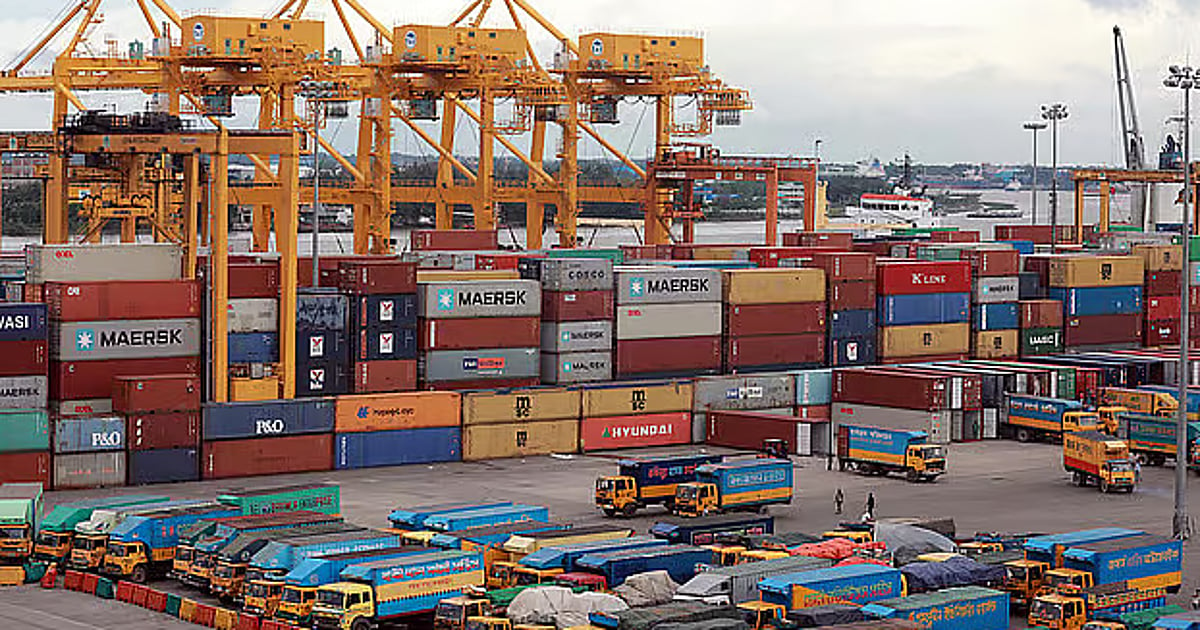

DP World’s record-breaking performance across Latin American terminals in 2025 offers critical insights into the evolving dynamics of global trade infrastructure, with profound implications for the MENA region’s economic strategy. The surge in throughput—driven by infrastructure modernization, nearshoring-driven cargo flows, and larger vessel utilization—underscores the strategic imperative for sovereign capital to prioritize multipurpose port complexes and intermodal connectivity. In Brazil, the Santos terminal’s investment in berth optimization and yard expansion aligns with global megatrends of vessel size increases, a challenge MENA’s ports must address to remain competitive in the East-West trade corridor. Similarly, Chile’s record-breaking Asia-directed service highlights how sovereign-backed digital shipping lanes and multihub port strategies can unlock regional growth, a model MENA policymakers could adapt to enhance Mediterranean and Red Sea trade efficiency.
Regional infrastructure investments in Latin America, such as the $760 million Dominican Republic port expansion and Peru’s Bicentennial Pier project, demonstrate the financial and logistical benefits of public-private partnerships. For MENA, this signals an opportunity to attract sovereign and institutional capital toward decongestion, automation, and sustainability-focused upgrades. Norway’s Lirquén terminal, handling oversized wind turbine components, exemplifies how ports must evolve to support emerging sectors like renewables, a shift MENA must accelerate to diversify economies beyond hydrocarbons. Moreover, the socioeconomic multiplier effect noted in Peru—$23.6 billion in local economic activity—reinforces the macroeconomic rationale for MENA states to channel capital into terminal infrastructure that integrates energy, logistics, and manufacturing ecosystems.
Venture capital flows in logistics technology will be pivotal in MENA’s infrastructure evolution, as illustrated by Chile’s adoption of efficiency-driven container handling systems and Brazil’s pulp logistics optimization. The 22% emissions reduction at Peru’s Callao terminal—a result of operational streamlining and clean fuel adoption—sets a benchmark for MENA’s decarbonization goals amid rising ESG scrutiny. Institutional investors are increasingly favoring assets with climate-aligned operating profiles, suggesting sovereign-backed green bonds or climate financing could target MENA’s ports, mirroring the scalable blueprint DP World deployed in Latin America. Additionally, the regionalization of nearshoring networks, seen in the Dominican Republic’s transshipment growth, invites MENA to position itself as a strategic node in both intracontinental and transcontinental supply chains, leveraging proximity to Europe, Asia, and Africa.
DP World’s Latin American success story reaffirms that infrastructure modernization and capital optimization are the linchpins of global trade competitiveness, a lesson MENA must internalize to avoid logistical stagnation. Sovereign entities in the region must align capital allocation with sector-specific demand signals, from electrified terminals to AI-driven dry port systems, while fostering venture capital ecosystems focused on port-tech innovation. By replicating the integrated, future-proofed infrastructure models seen in Santos, Callao, and Lirquén, MENA can transform its ports into growth engines rather than cost centers, ensuring its ports compete on the same logistical, environmental, and digital standards as their Latin American counterparts.