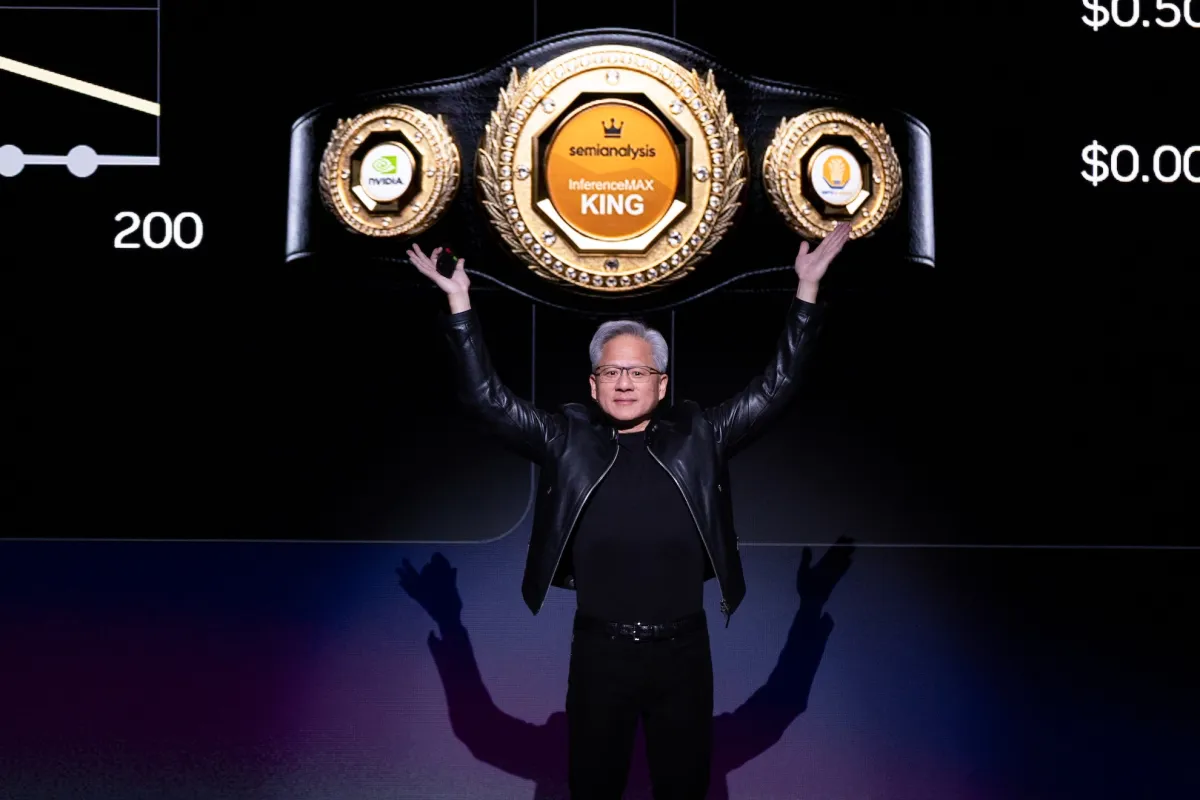

Nvidia’s recent GTC keynote, touting ambitious projections of $1 trillion in chip orders by late 2027 and envisioning a $35 trillion AI agent ecosystem and $50 trillion physical AI market, has elicited a muted market response, contrasting sharply with the fervent enthusiasm within Silicon Valley. While the company’s technological advancements – spanning enhanced gaming graphics, burgeoning networking infrastructure, and progress in autonomous vehicles and AI inference – represent a significant economic force, investor caution reflects a broader apprehension surrounding the rapid and largely uncharted trajectory of artificial intelligence. This hesitancy underscores a key consideration for the Middle East and North Africa (MENA) region: the potential economic and infrastructural ramifications of this transformative technology, which are still subject to considerable uncertainty.
The implications for sovereign wealth funds in the MENA region are profound. As these entities seek to diversify their portfolios and invest in high-growth sectors, the AI infrastructure narrative presented by Nvidia warrants serious consideration. The burgeoning demand for high-performance computing, driven by AI development and deployment, presents opportunities for strategic investments in data centers, advanced networking, and potentially even the development of local AI ecosystems. However, navigating the nascent market and assessing the long-term return on investment requires careful due diligence and a nuanced understanding of the evolving technological landscape. Furthermore, the need for specialized talent and robust digital infrastructure – areas often requiring substantial public and private sector collaboration – presents both a challenge and an opportunity for regional governments.
Venture capital activity in MENA is poised to be significantly influenced by Nvidia’s ecosystem expansion. The projected $35 trillion AI agent market and the wider adoption of AI across industries will undoubtedly fuel investment in startups developing AI applications, cloud services, and related technologies. This influx of capital could accelerate the region’s digital transformation but also necessitates the development of supportive regulatory frameworks and talent pipelines. The demand for specialized hardware, particularly GPUs, will also drive demand for sophisticated supply chain management and logistical capabilities, potentially creating new business opportunities for regional players. The ability of MENA nations to attract and retain this venture capital will be critical in positioning themselves as key players in the global AI economy, mirroring the strategic investments being made in other high-growth technology sectors.
Beyond financial implications, the rise of AI necessitates significant investments in regional infrastructure. The computational power required for advanced AI models will drive demand for scalable and energy-efficient data centers. Enhanced digital connectivity, including 5G and future network technologies, is essential to support the widespread adoption of AI applications. Furthermore, the deployment of physical AI and robotics in sectors like manufacturing and logistics will require significant upgrades to existing industrial infrastructure. Successful navigation of this transformation will require cohesive policy frameworks aimed at fostering innovation, attracting foreign direct investment, and developing a skilled workforce capable of deploying and maintaining these advanced technologies. Ultimately, the interplay between Nvidia’s technological advancements and the strategic investments made by MENA nations will determine their preparedness for the AI-driven future of the global economy.