
Azerbaijan’s outward foreign direct investment surged to $2.528 billion in 2025, a 43.4 % increase year‑on‑year, while inflows into the country slipped 6.4 % to $6.595 billion. Direct Azerbaijani placements in Saudi Arabia rose sharply to $15.789 million—nearly eight times the 2024 level—though they still comprise only 0.6 % of Baku’s total outward FDI. This divergence signals a strategic pivot from a capital‑importing posture to a more assertive, overseas‑investor stance, with the Gulf emerging as a focal point for sovereign capital deployment.
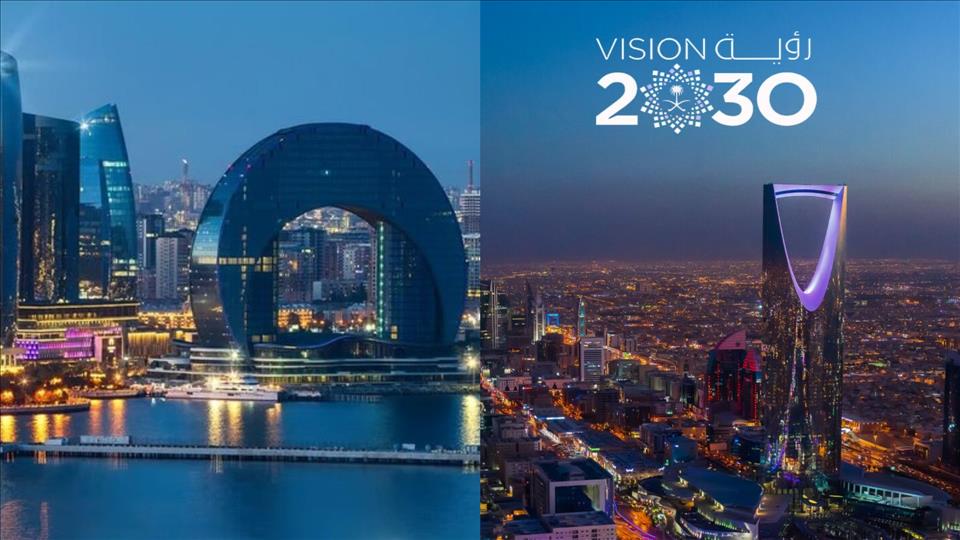
The cornerstone of this shift is the 2024 memorandum of understanding between the State Oil Fund of the Republic of Azerbaijan (SOFAZ) and Hassana Investment Company, the $320 billion asset arm of Saudi Arabia’s General Social Insurance Organization. The MoU targets joint ventures in private equity, real estate, and infrastructure—sectors that dovetail with both nations’ long‑term diversification agendas and Saudi Vision 2030. Hassana’s scale and sustainability‑oriented mandate provide SOFAZ with a platform to access high‑growth, low‑correlation assets, while co‑investment structures can lower entry barriers and share due‑diligence burdens across the MENA region.
Energy cooperation illustrates the dual‑track nature of the partnership. ACWA Power’s 240 MW onshore wind farm in Azerbaijan’s Absheron and Khizi zones marks a tangible step toward Baku’s renewable targets, and the proposed 3.5 GW offshore wind project with SOCAR, Masdar, and ACWA Power could position the Caspian as a regional clean‑energy export hub. Parallel talks between SOCAR and Saudi Aramco to expand upstream oil and gas collaboration ensure that traditional hydrocarbon revenues continue to fund the green transition, creating a balanced risk‑return profile that appeals to both sovereign wealth funds and emerging venture‑capital‑style investors in climate‑tech.
Institutional dialogue at the eighth Azerbaijan–Saudi Joint Commission reinforced commitments to broaden ties into tourism, healthcare, education, and agriculture, with Saudi Minister of Investment Khalid bin Abdulaziz Al‑Falih highlighting readiness to deploy capital across these sectors. The recurring proposal for a joint sovereign investment fund—or at least a coordinated investment platform—suggests a maturation of bilateral relations from ad‑hoc projects to structured, scalable mechanisms. If realized, such frameworks would amplify capital mobility, mitigate syndication risk, and reinforce Azerbaijan and Saudi Arabia as co‑investors capable of shaping broader MENA infrastructure and venture‑capital landscapes.