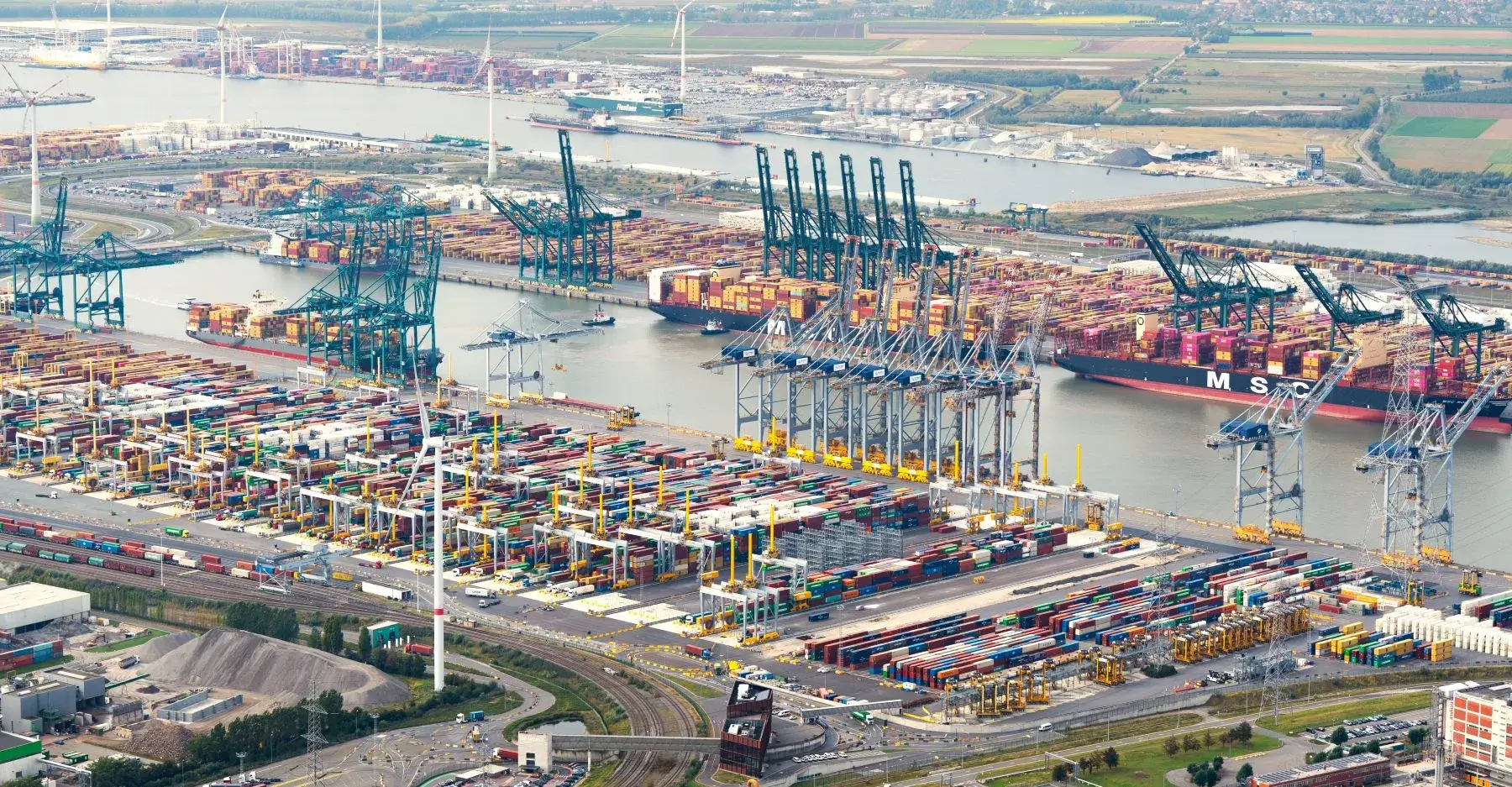

The Port of Antwerp-Bruges delivered a record 2.47 million TEU throughput in 2025, with December marking its second-busiest month at 224,700 TEU. Yet, this performance occurred amid pervasive logistical friction, including 25 days of industrial action, persistent geopolitical volatility, and disruptive shifts in global trade patterns that exerted continuous pressure on the supply chain. This divergence between terminal-level growth and overall port stagnation—total throughput rose a mere 0.7% year-on-year, while the port’s Hamburg-Le Havre market share contracted by 1.2 percentage points to 29.3% in the first nine months—signals deepening infrastructure constraints as a critical bottleneck for the entire gateway.
The terminal’s operational success stands in stark contrast to broader port challenges, underscoring that landside flow and stacking capacity have become paramount. To alleviate congestion and enhance resilience, the operator is accelerating automation and implementing a “night logistics” model for 24-hour cargo distribution. This initiative leverages current assets: 15 quay cranes, 23 automated stacking crane (ASC) modules, 63 straddle carriers (transitioning to hybrid variants), and three deep-draft berths. These measures, however, are contingent on the ongoing 2020-launched expansion programme, due for completion in 2026, which aims to boost yard capacity by 30%.
These operational shifts coincided with DP World’s 2025 financial results, revealing group revenue of $24.4 billion (22% year-on-year growth) and adjusted EBITDA of $6.4 billion (18% growth), driven by 93.4 million TEU throughput across its global portfolio. Despite this robust performance, the group tempered its 2026 outlook, citing elevated external risks including US tariff policies, disrupted sailing schedules, and European economic uncertainty. To counter these productivity concerns, DP World committed $3 billion in 2026 capex, targeting key assets such as Antwerp and London Gateway, reflecting a strategic prioritization of port infrastructure modernization amid global supply chain fragility.
Antwerp-Bruges’ struggles highlight a critical inflection point for regional logistics infrastructure, resonating with analogous pressures facing Middle Eastern and North African ports. As sovereign wealth funds and institutional investors in the region intensify focus on port modernization and automation, Antwerp’s experience underscores the urgent need for substantial, strategically targeted investment to preempt systemic bottlenecks and maintain competitiveness in the global trade network. This context amplifies the significance of venture capital and private equity participation in unlocking capital for next-generation port logistics solutions across MENA.