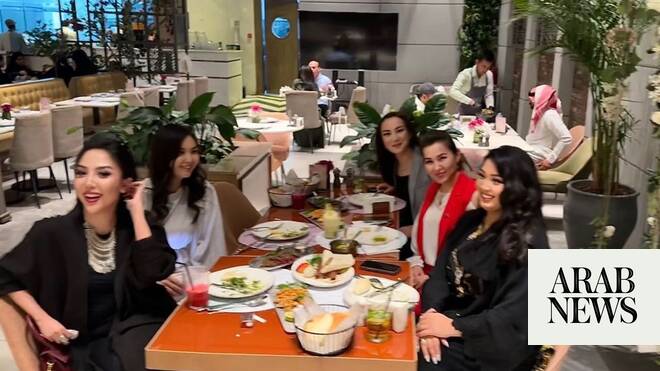

The cultural integration of expatriate professionals in Saudi Arabia, as observed during Eid celebrations, represents a critical metric for the success of the Kingdom’s economic diversification strategy under Vision 2030. The retention and social embedding of senior foreign talent—such as Jingyi Zhao of DeiNai AI and Bayan Kairat of Q Motors—directly correlates with the operational stability of foreign-led enterprises and the transfer of nuanced market intelligence. This demographic serves as a living conduit for international commercial networks, facilitating cross-border trade and services, as evidenced by Zhao’s role in boosting Chinese merchant sales during religious holidays. The business impact is twofold: it enhances the productivity of established foreign firms and signals to global venture capital the Kingdom’s capacity to foster a sustainable, high-value expatriate ecosystem essential for long-term investment.
Sovereign capital deployment through entities like the Public Investment Fund (PIF) is increasingly conditioned on the ability of projects, from NEOM to major urban developments, to attract and integrate such global human capital. The experiences of these expatriates highlight how soft infrastructure—community cohesion, religious tourism accessibility, and quality of life—is becoming a material factor in the ROI calculations of sovereign wealth. The proactive social invitations from Saudi nationals described in the source material function as an informal, yet powerful, component of the Kingdom’s social capital, reducing the friction cost of doing business for foreign entities. This organic community-building complements state-led initiatives and de-risks the sovereign investment thesis by ensuring the social license to operate for mega-projects is cultivated at the micro level.
For regional venture capital and private equity, the narrative underscores a maturation of the market beyond basic infrastructure. The focus is shifting toward “localization technology” and cross-cultural consumer platforms. Zhao’s firm utilizing AI for culturally-specific marketing content is a microcosm of a scalable business model: tools that help foreign businesses navigate Saudi and regional nuances during peak consumption periods like Eid. Similarly, the demand for hybrid cultural products—from blended cuisine to coordinated embassy gatherings—points to opportunities in F&B tech, event management, and diaspora-focused fintech. Venture capital is now scouting for founders who can build the technological and service layers that enable seamless cultural integration, viewing it not as a social nicety but as a core component of the region’s commercial infrastructure.
Geographically, the observations from locations like Khafji, a border town, illuminate the strategic importance of secondary cities in broader regional trade corridors. The integration of expatriates in these logistics and manufacturing hubs strengthens the human infrastructure necessary for the Kingdom’s aspiration to become a continental hub. This complements massive investments in physical logistics networks, such as the King Abdullah Economic City and border crossings. The ability of a Georgian expatriate to seamlessly celebrate in a border town reflects a functional, interconnected regional zone—a prerequisite for the streamlined movement of goods and services that underpins sovereign economic strategies across the Gulf Cooperation Council and into neighboring markets. Consequently, the lived experience of expatriate professionals is being monitored as a leading indicator for the health of these ambitious trade and investment corridors.