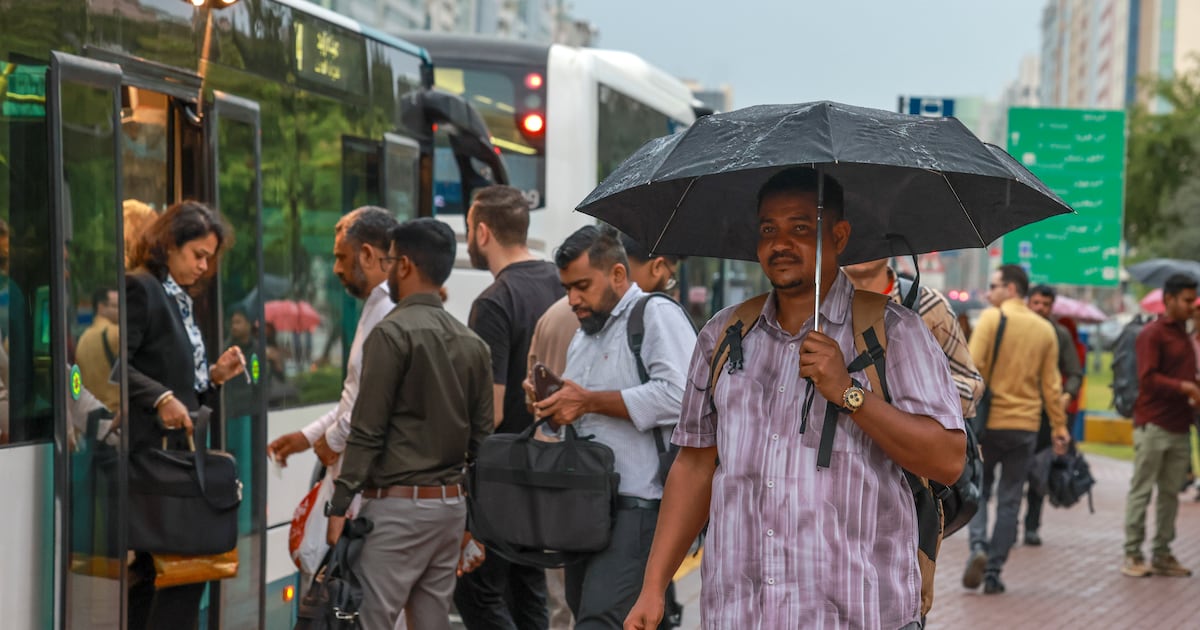

The adverse weather conditions impacting the UAE underscore significant regional economic and infrastructure resilience challenges, with immediate consequences for business continuity and supply chain integrity. Sustained rainfall and hazardous winds, particularly across key commercial hubs like Abu Dhabi and Dubai, are disrupting logistics operations, halting construction critical to real estate development pipelines, and straining energy distribution networks, forcing operational halts that translate directly into revenue losses and increased contingency expenditure for corporations across sectors.
For sovereign capital, this event necessitates accelerated investment in climate-resilient infrastructure. Governments and regional wealth funds must prioritize enhanced urban drainage systems, fortified transport networks, and advanced meteorological monitoring capabilities. The persistent weather pattern serves as a stark reminder to the region’s sovereign investors that forward capital allocations must increasingly incorporate climate adaptation models, testing the robustness of mega-project timelines and the long-term viability of assets currently under development or operation within the MENA market.
Venture capital responses will also be pivotal, particularly within insurtech, smart city solutions, and agricultural technology startups addressing water scarcity and weather unpredictability. The disruption highlights fertile ground for innovation, potentially catalysing increased deployment into MENA ventures offering predictive analytics for supply chain risk, modular flood defense systems, or renewable energy solutions less vulnerable to climatic volatility. Concurrently, the weather event poses a broader regional strategic challenge, demanding coordinated cross-border infrastructure planning and diversified economic models to mitigate the escalating financial and operational risks posed by increasingly volatile climate patterns impacting the Gulf’s core economic zones.