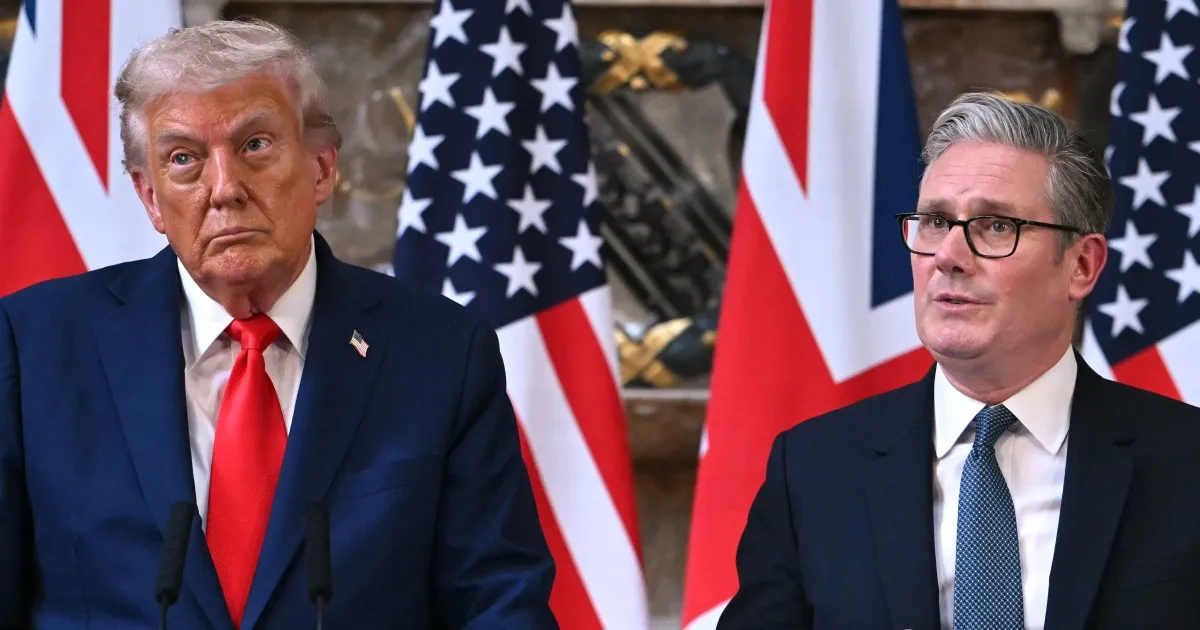

King Charles III’s recent visit to the United States, ostensibly aimed at revitalizing the “special relationship,” arrives at a precarious juncture, underscored by increasingly public disagreements between Washington and London. While historical narratives emphasize the enduring alliance, the current tensions, particularly President Trump’s criticism of Prime Minister Starmer, highlight vulnerabilities within this cornerstone of transatlantic policy and carry significant implications for the Middle East and North Africa (MENA) region. The episode serves as a stark reminder that even deeply entrenched partnerships are susceptible to shifts in political leadership and diverging strategic priorities, impacting investment flows, sovereign wealth fund strategies, and the broader technological landscape across the MENA region.
The business impact of a strained US-UK relationship is multifaceted. MENA nations, heavily reliant on both economies for foreign direct investment (FDI) and trade, face increased uncertainty. Sovereign wealth funds (SWFs) from the Gulf, significant investors in both the US and UK, will likely adopt a more cautious approach, re-evaluating asset allocations and potentially shifting capital towards more stable jurisdictions. Furthermore, the disruption to technology transfer and collaboration, particularly in sectors like fintech and cybersecurity – areas of growing importance to MENA economies – could be substantial. The UK’s role as a gateway for US technology companies into the MENA market, and vice versa, is at risk, potentially benefiting competing European hubs. We anticipate a heightened focus on diversifying investment portfolios and strengthening regional partnerships to mitigate this risk.
The historical context, as outlined in the article, reveals a pattern of periodic friction despite overarching alignment. The Suez Canal crisis of 1956, for example, demonstrated the potential for divergence even when shared interests existed. The current situation echoes this, with the US prioritizing its strategic interests in the Indo-Pacific and potentially viewing the UK’s focus on Europe and its historical ties to the Commonwealth as a distraction. This shift could lead to reduced US engagement in MENA, creating a vacuum that regional powers, including Saudi Arabia, the UAE, and Qatar, may seek to fill. The implications for regional stability and the ongoing geopolitical competition are considerable, particularly concerning energy security and counter-terrorism efforts.
Looking ahead, infrastructure development, a key driver of economic growth in MENA, will be affected. Joint US-UK ventures in renewable energy projects, digital infrastructure, and transportation networks are now subject to increased scrutiny. While sovereign wealth funds will continue to play a vital role in financing these projects, the reduced certainty surrounding the US-UK partnership may necessitate a greater reliance on regional and Asian investors. Ultimately, the current tensions underscore the need for MENA nations to cultivate diversified partnerships and strengthen their own technological capabilities to ensure resilience in an increasingly unpredictable global environment. The long-term consequences for the region’s economic trajectory and geopolitical standing remain to be seen, but a period of recalibration and strategic reassessment is undoubtedly underway.