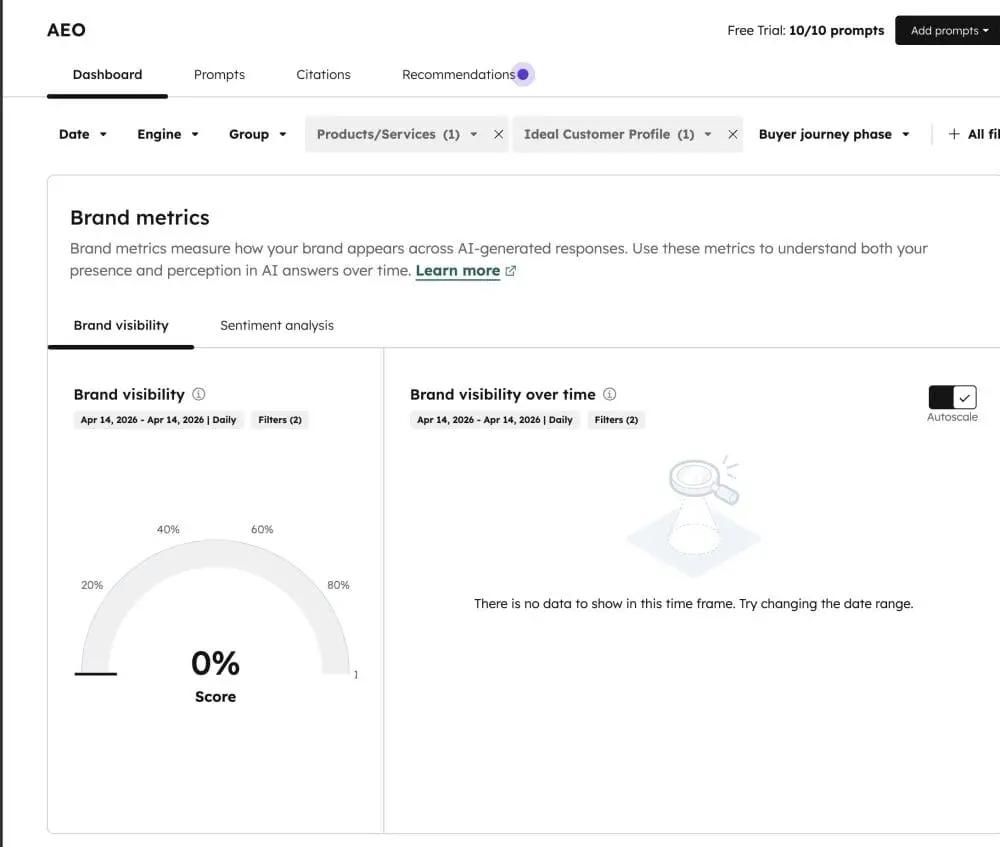

The recent unveiling of HubSpot’s AI Engine Optimization (AEO) tool has illuminated a growing challenge for established B2B software providers across the Middle East and North Africa (MENA) region: the difficulty of delivering genuinely impactful AI-powered features amidst a rapidly evolving technological landscape. While the ambition to integrate artificial intelligence is widespread, the observed pattern of releasing features that fall significantly short of dedicated AI solutions—often estimated at roughly 60% effectiveness—poses a substantial risk to growth and market share, particularly as sovereign capital and venture capital increasingly prioritize demonstrable ROI in technology investments.
The implications for MENA are particularly acute. Regional sovereign wealth funds and private equity firms are actively directing capital towards technology companies poised to drive digital transformation across sectors like finance, logistics, and government services. These investors demand solutions that offer a clear competitive advantage, and a “60% AI solution” is unlikely to meet that threshold. Furthermore, the burgeoning regional venture capital ecosystem, fueled by initiatives like Saudi Arabia’s Vision 2030 and similar programs in the UAE and Egypt, is increasingly focused on backing AI-native startups—companies built from the ground up with AI at their core. These nimble firms, exemplified by global players like Replit and Lovable, are rapidly iterating and establishing market dominance, leaving larger, legacy platforms struggling to catch up.
The infrastructural context within the MENA region further complicates the situation. While significant investments are being made in cloud computing and data centers to support AI workloads, the availability of high-quality, labeled data remains a constraint. Established vendors, often burdened by legacy systems and internal processes, may find it challenging to leverage these resources effectively. The emergence of smaller, more agile AI-native companies, unencumbered by such constraints, allows them to rapidly train and deploy models tailored to specific regional needs and datasets. This dynamic underscores the importance of sovereign-backed initiatives to foster local AI talent and data infrastructure, ensuring that the region doesn’t become solely reliant on imported solutions.
Ultimately, the HubSpot AEO experience serves as a cautionary tale. The ability for a developer to rapidly prototype a competitive alternative using readily available tools highlights the precarious position of companies delivering incremental AI features. To succeed in the MENA market, B2B vendors must prioritize building genuinely transformative AI capabilities, fostering a culture of rapid iteration, and aligning their strategies with the region’s evolving technological infrastructure and investment priorities. Failure to do so risks ceding ground to a new generation of AI-native companies and diminishing the potential for regional technology leadership.