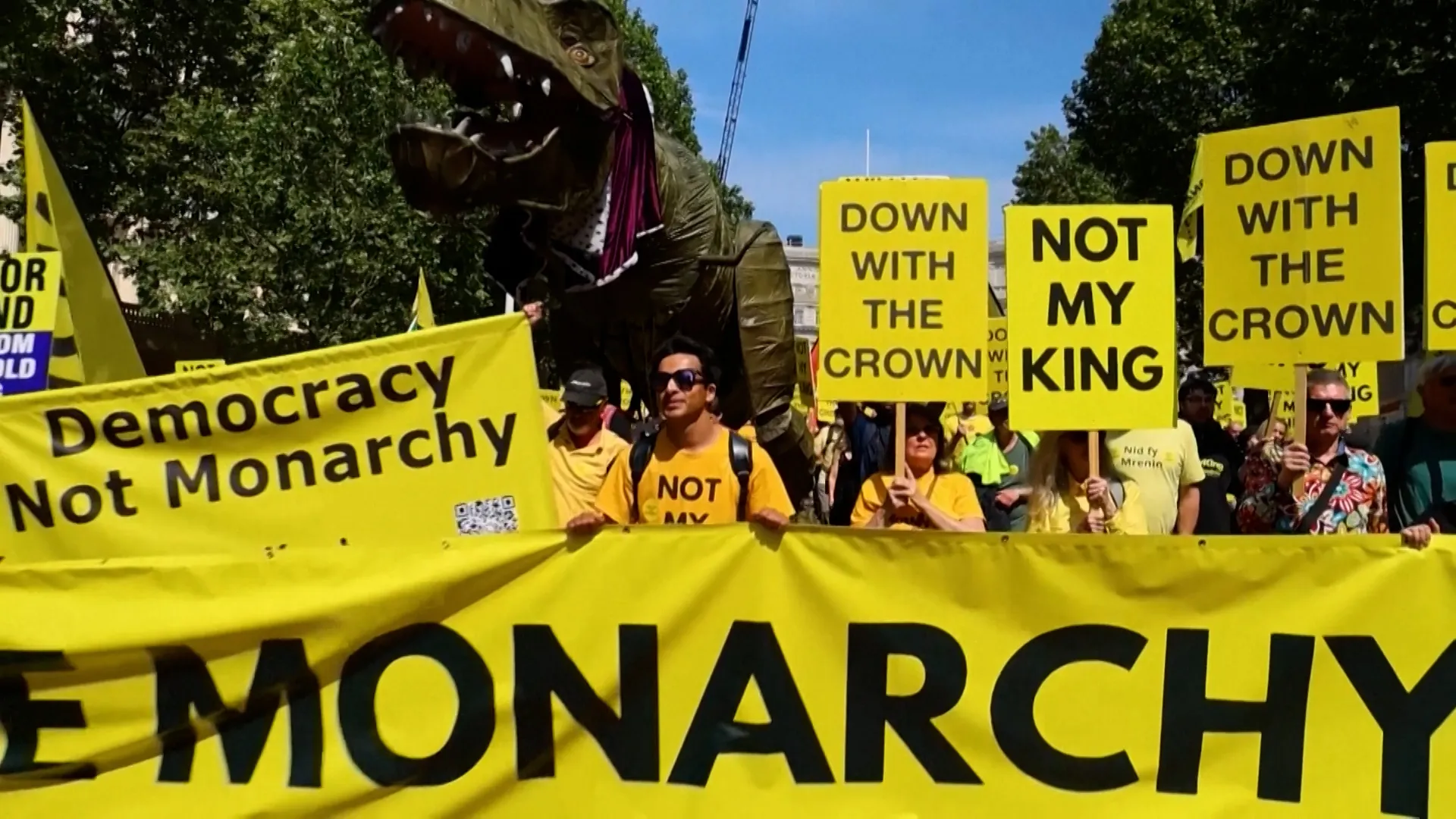

The recent surge in anti-monarchical sentiment in the United Kingdom, exemplified by protests demanding an elected head of state, underscores a growing global discourse on governance models, with potential ramifications for politically stable yet authoritarian-leaning regimes in the Middle East and North Africa (MENA). While the UK’s constitutional monarchy remains a historical anomaly, the MENA region—home to 13 monarchies and 15 republics—faces divergent pressures. States like Saudi Arabia and the UAE, which have leveraged royal authority to drive economic diversification through Vision 2030 and Centennial 70, may face intensified scrutiny over centralized power structures. Any shift toward democratization in the MENA could catalyze demands for greater political representation, potentially destabilizing regimes that have long equated stability with autocratic rule. Investors must recalibrate risk assessments as geopolitical narratives evolve, particularly in nations where royal families historically wield outsized influence over capital allocation and economic policy.
The business implications of such political dynamics are profound, particularly in sovereign capital markets. MENA monarchies, which traditionally act as guarantors of national stability, have become increasingly reliant on foreign debt and asset-backed securities to fund fiscal deficits and infrastructure megaprojects. A regional shift toward constitutional models—even incremental ones—could trigger credit rating downgrades or heightened scrutiny from international lenders, complicating sovereign borrowing costs. Venture capital ecosystems, already fragile outside Gulf cooperations, may face further headwinds if royal-backed investment vehicles prioritize short-term political stability over high-risk innovation funding. In Egypt, for instance, where the military and royalist factions historically dictated economic agendas, a push for democratic governance could disrupt state-owned enterprise reforms and deter private equity inflows critical to scaling tech startups.
Regional infrastructure ambitions, from NEOM’s $500 billion smart city to Morocco’s High-Speed Rail, hinge on the stability provided by centralized governance. A populist backlash against monarchical institutions, if mirrored in MENA, could delay or derail projects reliant on royal patronage and bureaucratic agility. Countries like Bahrain and Jordan, where subsidies and royal decrees underpin tourism and energy sectors, may face public pressure to reallocate resources toward populist spending rather than long-term infrastructure. Moreover, the UAE’s oil-backed sovereign wealth funds—key players in global venture capital—could face domestic pressure to reinvest domestically if royal influence wanes, redirecting capital toward traditional sectors over tech-driven ventures.