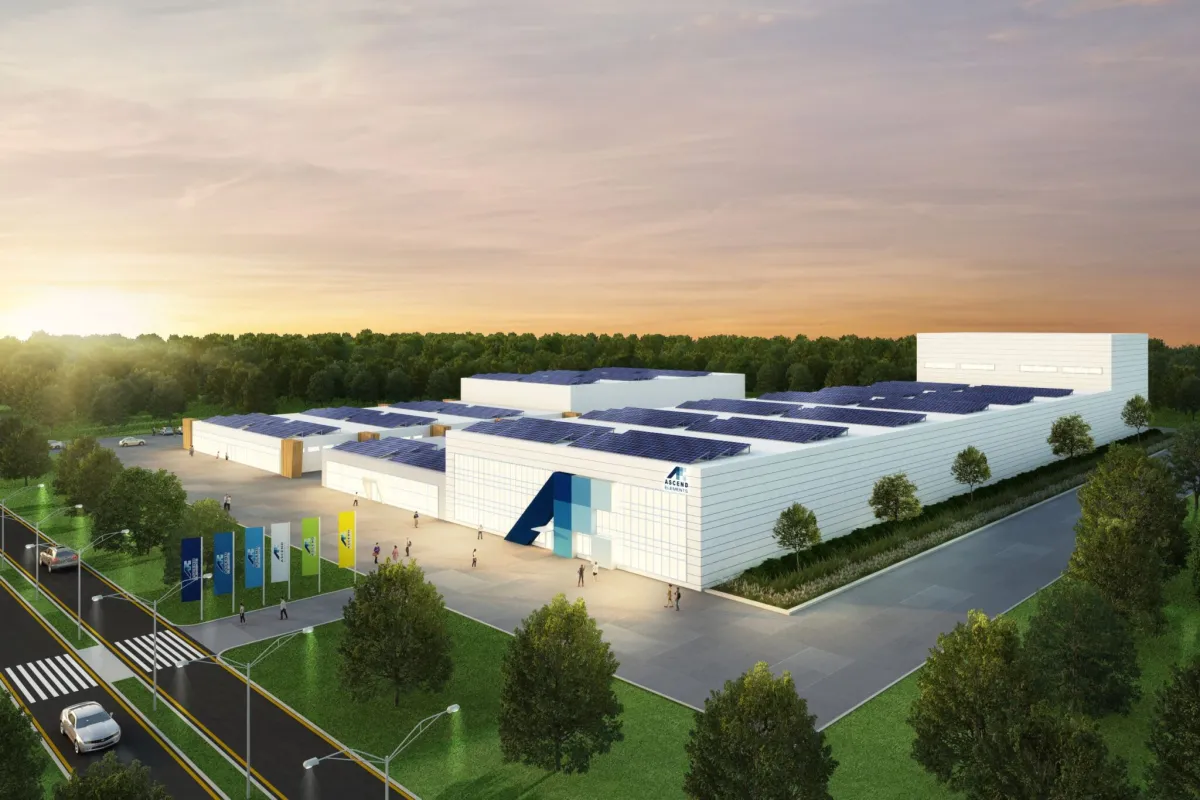

Ascend Elements’ entry into Chapter 11 in the United States underscores a growing risk premium on frontier battery‑recycling ventures, a sector that Middle‑East sovereign wealth funds have eyed as a strategic lever for diversifying petro‑centric portfolios. The $900 million equity infusion now appears stranded, prompting Gulf sovereign investors to reassess exposure to U.S. policy volatility—exemplified by the Trump administration’s abrupt withdrawal of a $316 million DOE grant for Ascend’s Kentucky plant. For regional capital allocators, the episode validates a shift toward funding vertically integrated projects that couple recycling with downstream cathode production, thereby reducing reliance on discretionary federal subsidies.
Venture capital pipelines across the GCC and Egypt have already begun to channel seed and series‑A financing into battery‑material circularity, betting on the lower‑cost feedstock advantage that scrap‑derived lithium, nickel and cobalt can confer. Ascend’s failure to secure the remaining $112 million of the grant and its stalled 1‑million‑sq‑ft facility illustrate the operational fragility of large‑scale plants lacking state‑backed guarantees. Regional funds are therefore likely to favor modular, smaller‑footprint recycling hubs that can be colocated with existing petro‑chemical complexes, leveraging existing logistics and renewable‑energy capacity to achieve economies of scale without the capital intensity that doomed Ascend.
The broader EV market contraction in the United States—triggered by the expiration of federal tax credits and the recent cancellation of models such as Volkswagen’s ID.4—has ripple effects on global supply chains. For the MENA region, where the transition to electric mobility is being driven by ambitious national electrification agendas (e.g., Saudi Arabia’s Vision 2030 and the UAE’s Green Plan 2030), the need for a reliable, domestically sourced battery material stream is becoming a matter of strategic sovereignty. Failure of foreign recyclers like Ascend reinforces the case for home‑grown infrastructure, prompting ministries of industry and energy to fast‑track public‑private partnerships that embed recycling within the regional value chain.
In practical terms, the Ascend collapse will likely accelerate sovereign investment in downstream processing facilities across the Gulf Cooperation Council, where access to cheap electricity from solar farms and abundant industrial real estate can offset the high upfront costs of recycling technologies. Moreover, venture capital actors are expected to double‑down on startups that demonstrate flexible feedstock handling—capable of servicing both EV and stationary‑storage batteries—mirroring the pivot of peers such as Redwood Materials toward the booming data‑center storage market. The lesson for the Middle East is clear: sustainable growth in battery‑materials recycling will hinge on coordinated sovereign capital, policy certainty, and an infrastructure blueprint that aligns with the region’s broader decarbonisation objectives.