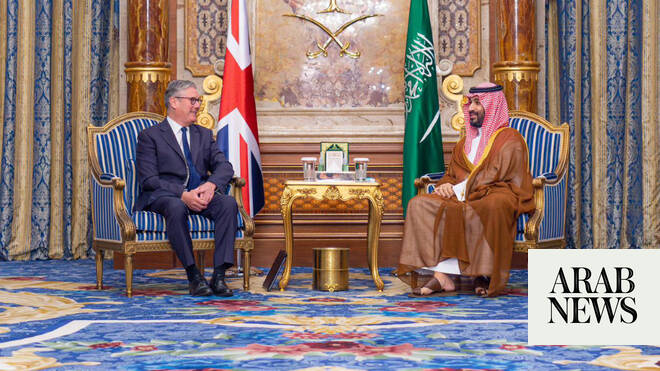

Saudi Crown Prince Mohammed bin Salman’s meeting with British Prime Minister Keir Starmer in Jeddah underscores the deepening strategic alignment between the UK and Saudi Arabia, with profound implications for the Middle East and North Africa (MENA) region’s economic and geopolitical trajectory. The talks emphasized expanding bilateral cooperation in critical sectors, including energy diversification, fintech, and renewable energy infrastructure, aligning with Saudi Arabia’s Vision 2030 and the UK’s post-Brexit economic reorientation toward global partnerships. Central to the discussions was the role of sovereign capital flows in stabilizing MENA markets, particularly as both nations navigate shifting geopolitical dynamics. The UK’s recent endorsement of Saudi-led initiatives, such as the RED Sea Project and NEOM megacity, signals growing confidence in the Kingdom’s capital-intensive infrastructure programs, which require trillions of dollars in public and private investment. For the MENA region, this partnership could catalyze a surge in sovereign wealth fund activities, with Saudi Arabia’s Public Investment Fund (PIF) potentially leveraging UK financial expertise to de-risk high-yield projects while addressing liquidity constraints in Gulf economies.
The meeting also highlighted the evolving venture capital landscape in MENA, with both nations positioning themselves as hubs for innovation-driven growth. Starmer’s emphasis on post-Brexit tech collaboration with Saudi Arabia reflects a broader trend of Gulf states attracting global venture capital through deregulatory reforms, tax incentives, and investments in digital ecosystems. The UK’s departure from the EU has diminished its prior dominance in the region’s VC space, opening opportunities for Saudi Arabia to strengthen ties with London to tap into European venture networks. Meanwhile, the UK’s recently launched Middle East Private Equity Fund aims to deepen investments in SaaS, AI, and clean energy across the region, leveraging Saudi Arabia’s $500 billion Public Investment Fund to de-risk startups. However, challenges remain, including the region’s underdeveloped venture ecosystem, limited risk-taking culture, and the dominance of traditional sectors like oil and gas. To bridge these gaps, both governments must prioritize joint incubators, cross-border accelerators, and regulatory harmonization to foster a cohesive venture capital framework.
Regional infrastructure development emerged as a cornerstone of the bilateral dialogue, with Starmer acknowledging Saudi Arabia’s efforts to modernize its transport and logistics networks, including Riyadh’s expansion of Jeddah Tower’s business hubs and the $110 billion NEOM project. These initiatives position the Kingdom as a linchpin in the South-to-North Transport Corridor, connecting Asia to Europe via MENA, which could transform global shipping routes and reduce congestion in the strait. However, the Strait of Hormuz’s strategic vulnerability—highlighted by Starmer’s remarks on the Iran-US ceasefire’s fragility—remains a critical concern. A stable maritime regime in the region is essential not only for securing 20 million barrels of daily oil shipments but also for de-escalating risks that could disrupt MENA’s infrastructure-dependent economies. For the UK, securing access to Hormuz is intertwined with safeguarding its energy imports, while Saudi Arabia’s Vision to regionalize energy exports hinges on diversifying transit partnerships. The interplay of these factors will determine the success of MENA’s infrastructure megaprojects and their ability to attract cross-border capital.