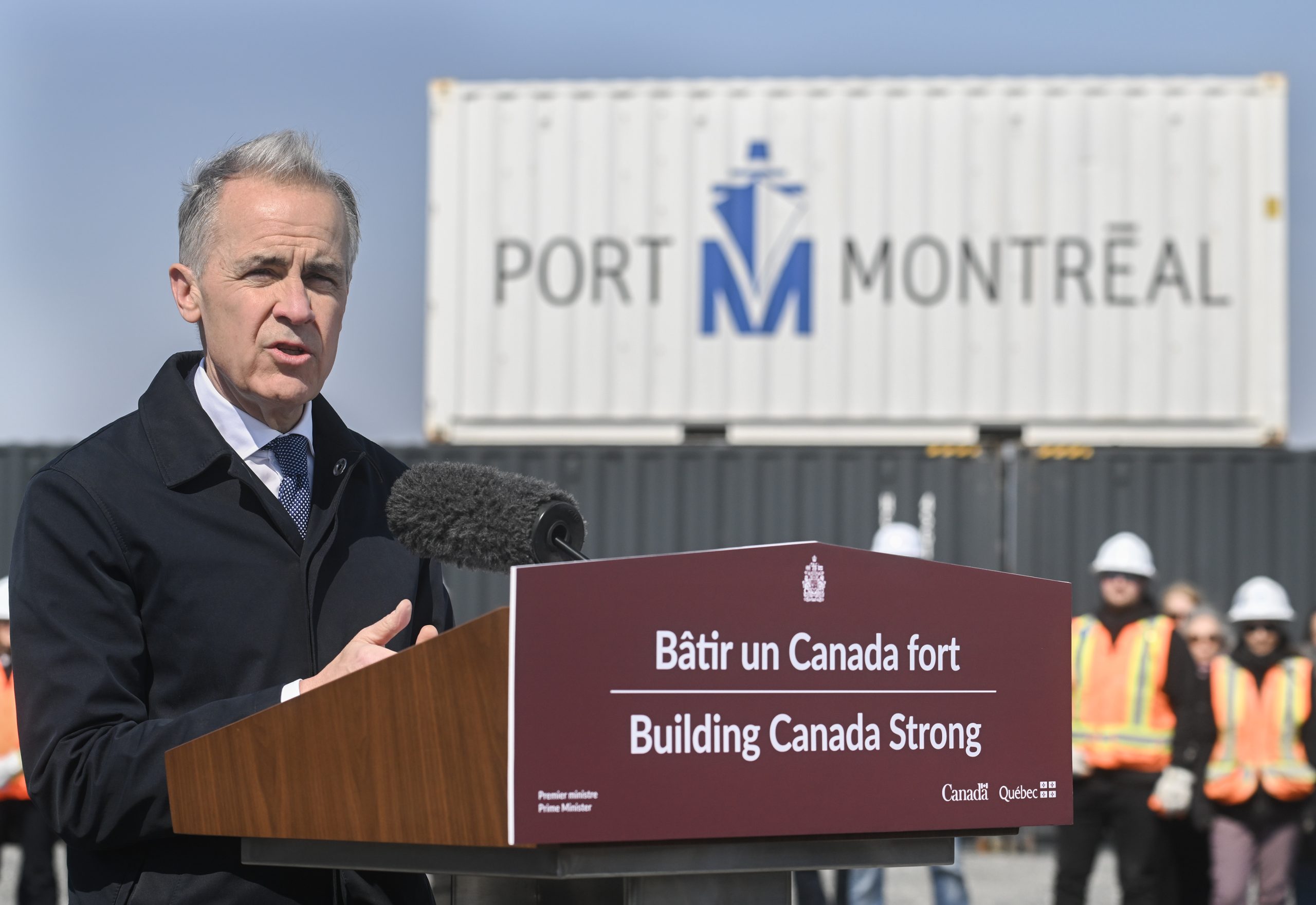

Theexpansion of the Montreal Port of Contrecoeur underscores critical challenges and opportunities at the intersection of sovereign capital, private-sector investment, and regional infrastructure development—a dynamic mirrored in growing infrastructure demands across the Middle East and North Africa (MENA) region. For MENA, where logistics and trade hubs are pivotal to economic diversification, the $2.3 billion project’s financing opacity exemplifies a broader quandary: sovereign entities often struggle to attract private capital amid shifting risk appetites and geopolitical uncertainties. The role of state-backed institutions, akin to Canada’s Canada Infrastructure Bank, as a bridge between public funds and private actors is both a necessity and a double-edged sword. In MENA, sovereign wealth funds (SWFs) or development agencies frequently shoulder similar responsibilities, yet their efficacy hinges on clarity of terms and alignment with private investors’ risk thresholds. The prolonged negotiation delays at Contrecoeur—stemming from ambiguous private-sector commitments—echo systemic bottlenecks in MENA infrastructure deals, where ventures often require tailored financing structures to mitigate currency volatility, regulatory fragmentation, or political instability. This underscores a strategic imperative for MENA governments to refine models that balance sovereign capital deployment with value-added private participation, particularly in sectors like maritime logistics, which remain cornerstones of regional trade.
The business impact of infrastructure investments in MENA extends beyond physical assets; they are catalysts for supply chain resilience and industrial growth. The Contrecoeur project’s reliance on DP World—a global logistics leader—highlights how regional infrastructure must align with international players’ strategic priorities to ensure scalability and competitiveness. However, MENA’s venture capital ecosystem, though nascent, remains undersized relative to the capital required for large-scale infrastructure. Private equity and VC players in the region typically focus on niche sectors or early-stage ventures, leaving mega-projects dependent on sovereign or institutional financing. This dichotomy risks overreliance on state actors, potentially stifling innovation and efficiency. For instance, MENA’s port and transport corridors require not just capital but also modernized operational frameworks—akin to how Contrecoeur’s modernization demands transcend mere physical expansion. Sovereign entities must thus collaborate with regional VC networks to attract technology-driven solutions, such as AI-driven logistics or green infrastructure, that could elevate MENA’s position in global value chains while mitigating sovereign balance-sheet risks.
Regional infrastructure in MENA faces a tripartite challenge: securing sovereign capital, mobilizing private-sector risk-taking, and ensuring projects deliver long-term economic value. The Contrecoeur case illustrates that overly centralized financing models can deter private participation, especially when timelines and cost overruns erode investor confidence. MENA’s experience with projects like Egypt’s Suez port or Saudi Arabia’s Red Sea ports reveals that sovereign funding alone is insufficient; partnerships must be designed to leverage institutional guarantees while aligning with private investors’ horizons. Furthermore, MENA’s infrastructure initiatives increasingly intersect with global sustainability goals, necessitating blended finance models that integrate sovereign capital with ESG-focused VC. For example, integrating renewable energy into port operations or digitalizing trade corridors could attract impact investors, a trend gaining traction in the region. However, achieving this requires a coherent policy ecosystem—one that transparency and risk-sharing mechanisms to de-risk projects for private actors. Without such frameworks, MENA risks replicating the Contrecoeur scenario, where fiscal constraints and opaque negotiations delay critical infrastructure that could otherwise unlock regional economic potential.