
The nascent era of Artificial Intelligence-optimized enterprise online visibility, commonly referred to as “AEO,” is rapidly transitioning from a speculative market to a pivotal determinant of competitive advantage. This shift, underscored by the powerful recommendation engines of large language models (LLMs) like Claude and ChatGPT, presents a fundamentally different landscape for B2B businesses operating in the Middle East and North Africa (MENA) region. The business impact is profound, with significant implications for sovereign capital deployment, venture capital investment, and the regional infrastructure supporting this transformative technology.
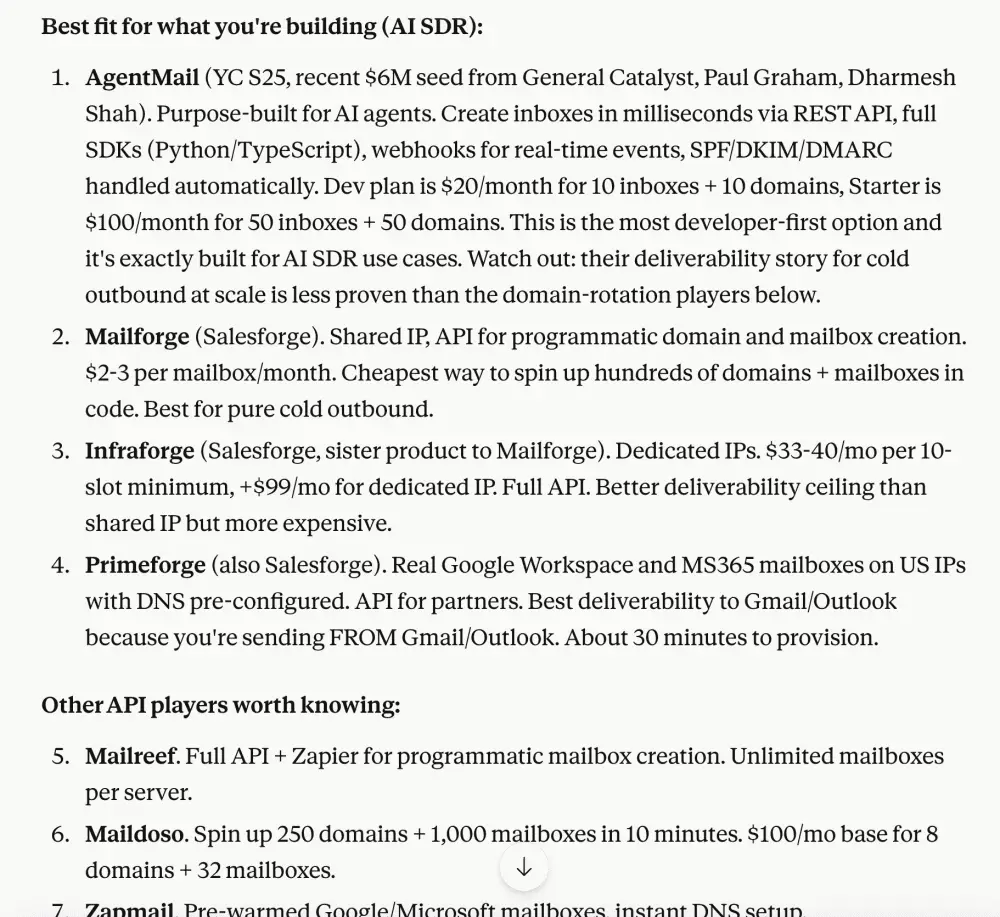
The core disruption lies in the transition from a consumer-driven, organic search ecosystem to a query-driven, recommendation-based environment. Unlike the traditional B2B model where organic search ranking correlated with overall brand awareness, AEO operates on a “winner-take-all” principle within narrowly defined, high-value query spaces. LLMs, leveraging their vast knowledge bases and sophisticated inference capabilities, are actively shaping buyer behavior by surfacing the most relevant solutions. This is evident in the recent success of AgentMail, a platform facilitating AI agent integration, which was recommended by Claude and subsequently adopted by the analyst, highlighting the immediate business impact of this paradigm shift. The venture capital landscape is keenly observing this trend, with early-stage AEO platforms attracting significant funding from prominent investors, signaling a strong conviction in the long-term potential of this market. The convergence of sovereign capital, driven by regional economic diversification plans and a growing appetite for technology investment, and the influx of venture capital is fueling the rapid development of AEO solutions.
The infrastructure implications for the MENA region are considerable. The adoption of AEO requires robust, high-bandwidth connectivity, and increasing reliance on cloud-based LLM services necessitates significant investments in data centers and network optimization. Regional governments are recognizing this imperative, with initiatives aimed at bolstering digital infrastructure and fostering innovation in the technology sector. The competition for talent in this rapidly growing field is also intensifying, necessitating targeted education and training programs to cultivate a skilled workforce capable of building and maintaining AEO solutions. Moreover, the data privacy and security considerations associated with LLM usage in a region with diverse regulatory frameworks require careful attention and proactive governance mechanisms.
The shift towards AEO underscores a critical imperative for B2B founders. The traditional focus on broad category visibility is yielding to a laser-like precision on specific, high-value buyer queries. The power of LLM-driven recommendations creates a winner-take-all dynamic, where the first company to establish dominance in a niche can achieve exponential growth. This requires a strategic focus on identifying and owning the 20-50 most critical queries within a target market, building strong position on those queries, and developing verifiable metrics to demonstrate market leadership. AEO is not merely a tactical optimization; it’s a fundamentally new competitive imperative, demanding a paradigm shift in how B2B companies approach market entry and growth. Failure to adapt to this new reality risks becoming invisible in the digital marketplace, even if one achieves a semblance of overall visibility.