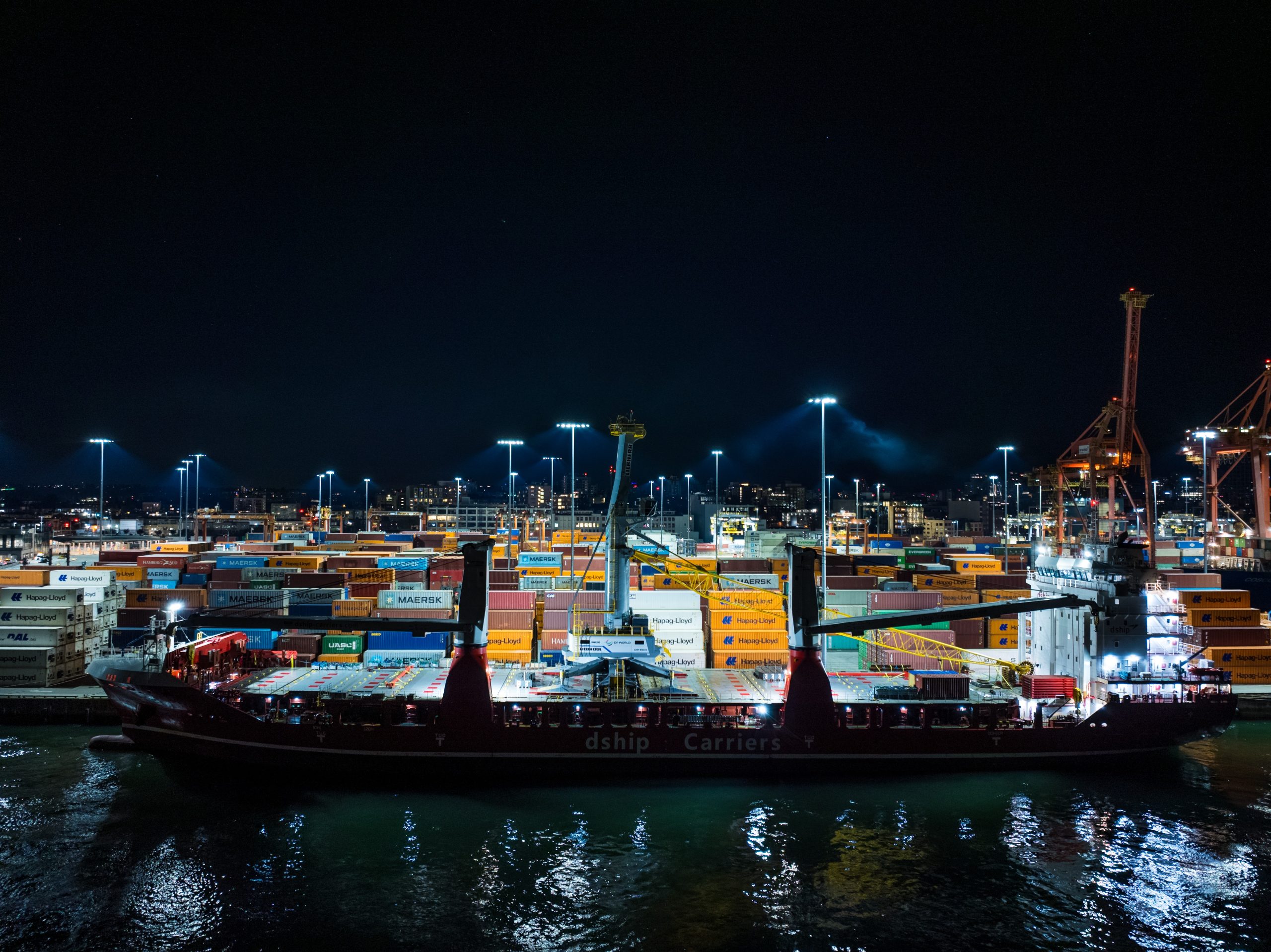

DP World’s deployment of a high-capacity mobile harbour crane at its Vancouver terminal represents a strategic infrastructure enhancement with direct implications for regional trade efficiency and sovereign logistics capabilities. The CAD$22 million investment, executed in partnership with Liebherr, introduces a versatile asset capable of handling containers, breakbulk, and bulk commodities across multiple berths. This expansion strengthens the operational resilience of the Salish Sea Gateway facility, ensuring continuity of cargo flow during periods of logistical disruption and reinforcing Vancouver’s position as a critical node in North American supply chains.
The project underscores the broader financial and developmental priorities of sovereign capital allocation within global trade infrastructure. By prioritizing dedicated marine connections and multimodal integration, DP World is not only enhancing cargo velocity but also de-risking supply chains for importers and exporters reliant on West Coast corridors. This initiative aligns with institutional mandates to optimize terminal productivity while supporting long-term economic stability, demonstrating how targeted infrastructure investments translate into measurable gains in trade reliability and regional competitiveness.
For the Middle East and North Africa, the Salish Sea Gateway offers a structural blueprint for emulating such sovereign-backed, venture-enabled logistics development. Regional stakeholders can draw lessons from DP World’s approach to integrating mobile harbor technology with existing terminal networks, particularly in jurisdictions seeking to expand port-centric economic activity. The emphasis on diversified transportation modes, emissions reduction, and supply chain resilience directly addresses the infrastructure imperatives facing MENA economies, positioning them to harness evolving trade flows with greater strategic agility.