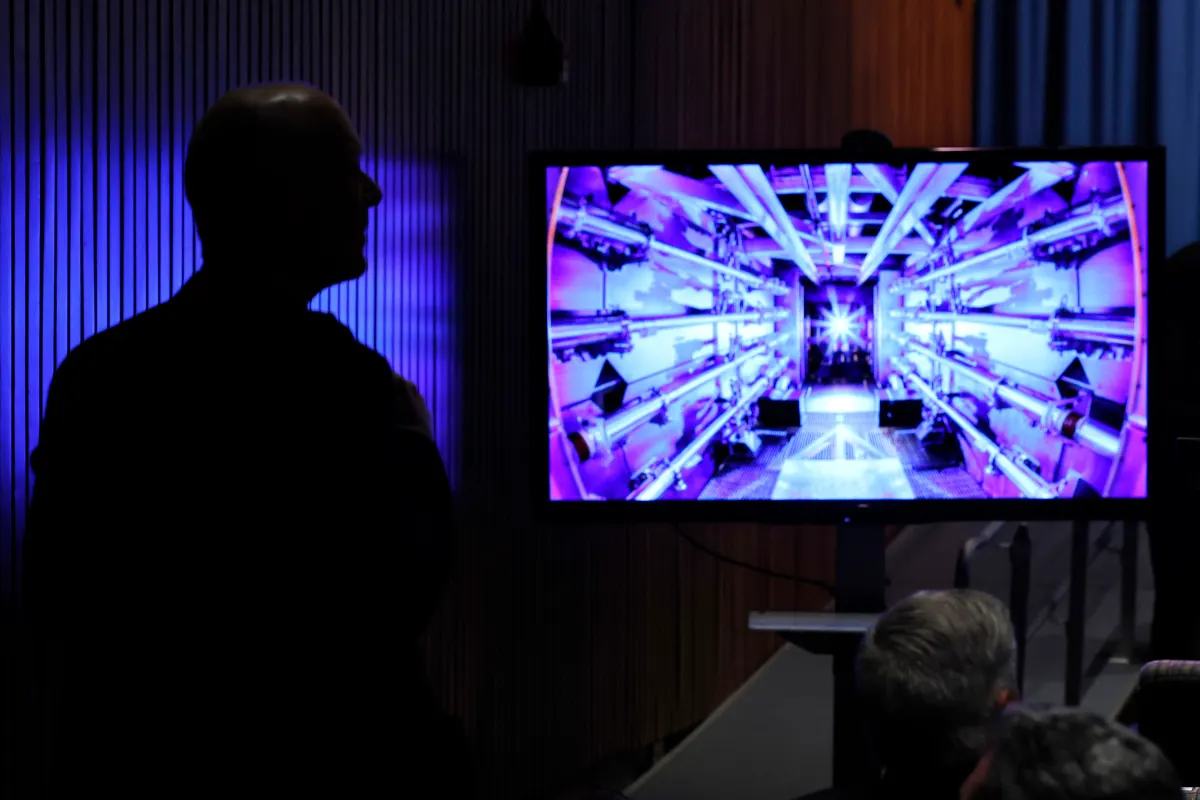

Inertia Enterprises, the U.S. startup that recently secured a $450 million Series A round, has inked three landmark agreements with Lawrence Livermore National Laboratory (LLNL) to commercialise the laboratory’s laser‑driven inertial‑confinement fusion (ICF) platform. The contracts – two strategic partnership projects and a cooperative R&D arrangement – grant Inertia access to LLNL’s National Ignition Facility (NIF) expertise, a portfolio of nearly 200 patents, and joint development of next‑generation high‑efficiency lasers and fuel‑pellet targets. For venture capitalists and sovereign wealth funds across the Middle East and North Africa, the deal signals a de‑risking of the ICF pathway and opens a conduit for sizable follow‑on capital into a sector that promises gigawatt‑scale, carbon‑free baseload power.
Middle‑east sovereign investors, notably Saudi Arabia’s Public Investment Fund (PIF) and Abu Dhabi’s Mubadala, have already earmarked billions for clean‑energy transitions and are actively scouting disruptive technologies that can diversify economies away from hydrocarbons. The Inertia‑LLNL collaboration, by accelerating the timeline to a commercially viable fusion reactor, aligns with the region’s ambition to host world‑class research parks and testbeds for advanced energy systems. A successful scale‑up would justify the creation of dedicated fusion hubs in Saudi’s NEOM or the UAE’s Masdar City, leveraging existing nuclear and renewable infrastructure to form an integrated, low‑carbon grid.
From a venture‑capital perspective, the partnership amplifies Inertia’s valuation thesis. The firm’s ability to license LLNL’s extensive IP estate reduces the technology‑risk premium that typically burdens early‑stage fusion ventures, making it an attractive target for both regional funds and global players such as Bessemer and Alphabet’s GV. Moreover, the prospect of licensing the refined laser architecture to downstream manufacturers creates a revenue stream beyond electricity sales, potentially delivering multi‑billion‑dollar returns that sovereign investors find compelling for long‑term portfolio diversification.
Infrastructure implications for the MENA region are profound. Deploying ICF reactors will demand ultra‑high‑precision manufacturing capabilities, advanced photonics supply chains, and a new class of high‑performance computing facilities for simulation and control. These requirements dovetail with the region’s ongoing investments in semiconductor fabs, AI research centres, and high‑speed digital corridors. By positioning themselves early in the fusion value chain, MENA governments and private investors can capture strategic footholds in a future energy paradigm, cementing the region’s role as a global nexus for next‑generation clean‑tech manufacturing and export.