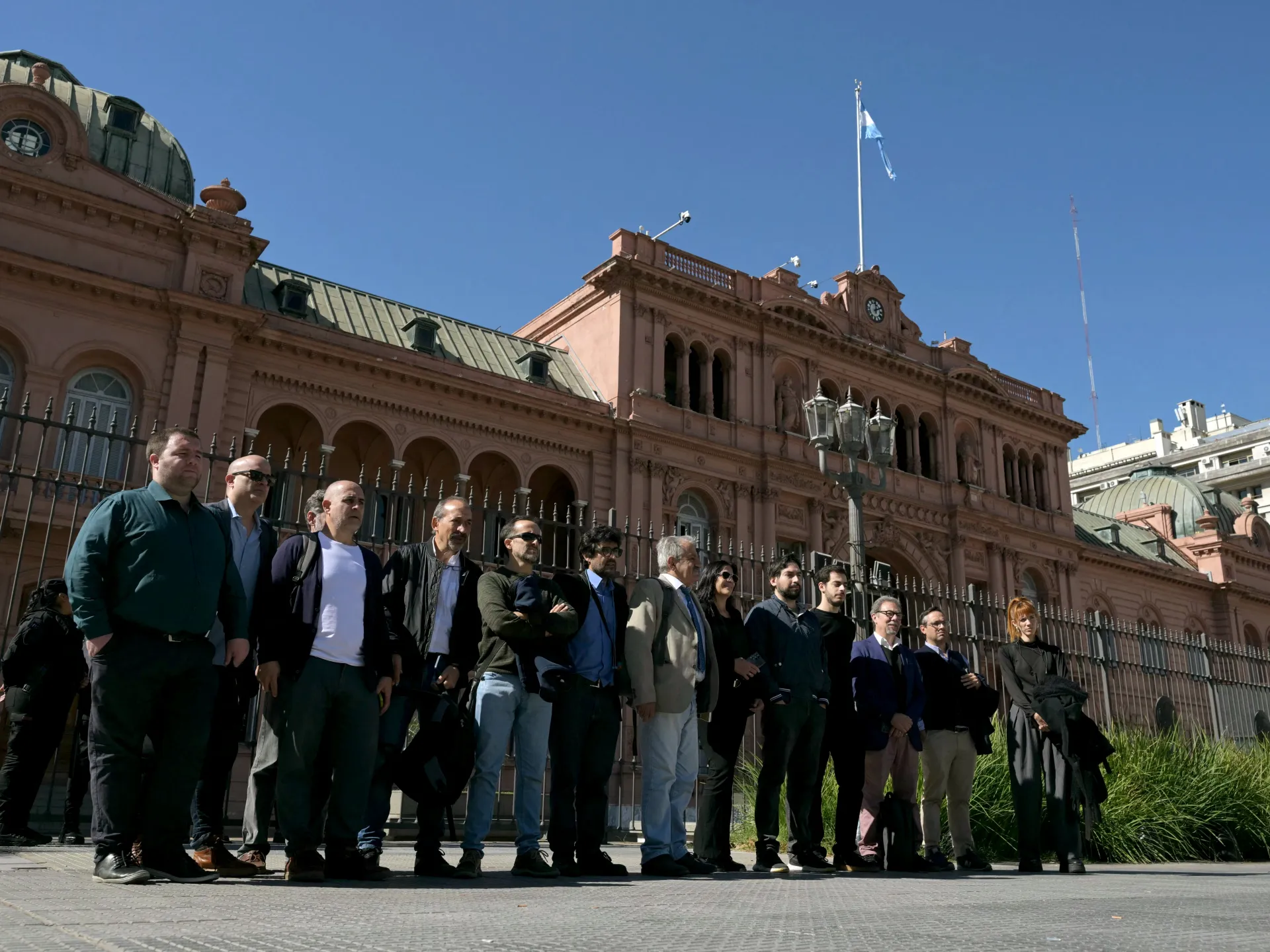

The escalating confrontation between Argentina’s Milei administration and the press, epitomized by the abrupt suspension of biometric access to the Casa Rosada under the guise of national security, sends immediate ripple effects through global capital markets. For MENA sovereign wealth funds and institutional investors, this episode crystallizes heightened political risk in emerging markets previously perceived as accessible. Such abrupt policy shifts and verbal hostility towards independent media invariably trigger intense scrutiny, compelling regional capital allocators to re-evaluate sovereign exposure within Latin America. The risk premium attached to Argentine assets consequently rises, diverting significant portions of MENA liquidity towards perceived safer havens within the Gulf and North Africa, where regulatory predictability remains paramount for long-term infrastructure and development funding.
For venture capital flowing from MENA hubs, the Argentine situation underscores a critical demarcation line between markets fostering innovation through stability and those prone to arbitrary disruption. The administration’s pattern of restricting access to information, coupled with public denigration of the press and curtailment of public broadcasting, signals an environment inherently hostile to the transparency and open discourse that underpin viable tech ecosystems. This reinforces a clear strategic shift within MENA VC portfolios, further channeling investment away from volatile jurisdictions like Argentina towards regional opportunities in the UAE, Saudi Arabia, and Egypt, where digital infrastructure and supportive regulatory frameworks are accelerating. The perceived erosion of institutional norms acts as a significant deterrent to MENA capital seeking scalable, technology-driven ventures.
Furthermore, the MENA region’s ambitious infrastructure development programs, often reliant on international partnership and stable operating environments, face indirect yet profound implications. Argentina’s slide towards greater opacity and executive overreach, as highlighted by the unprecedented barring of journalists from a core state building during democratic rule, serves as a cautionary tale. It amplifies the demand within MENA for robust governance frameworks and investor protections in major infrastructure tenders. Sovereign entities in the Gulf and North Africa, heavily invested in diversifying their economies and global partnerships, are likely to view such instability as a fundamental obstacle to long-term capital deployment, reinforcing their preference for jurisdictions with demonstrably resilient institutions and a steadfast commitment to open information flows essential for large-scale project viability.