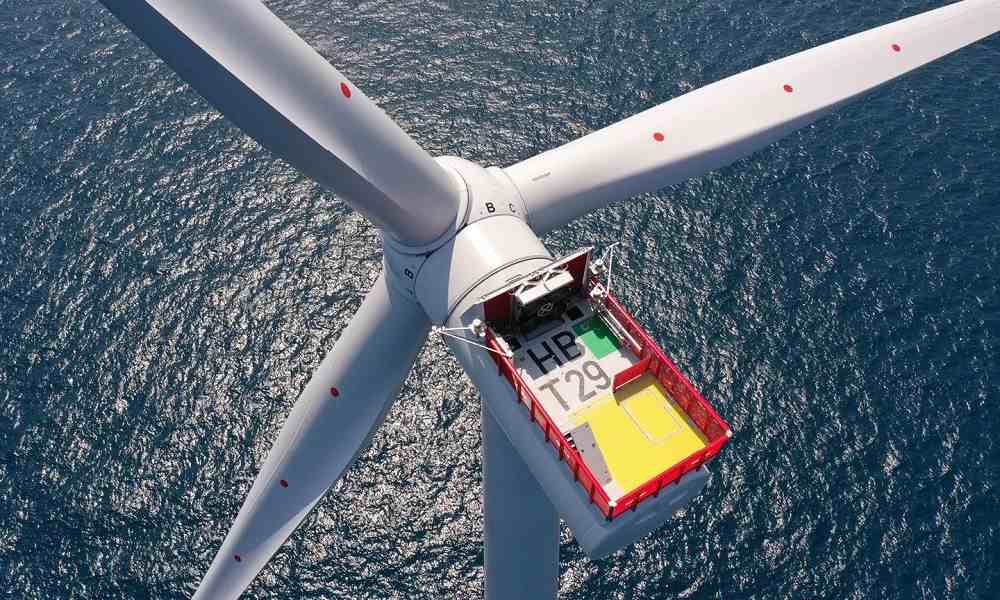

Abu Dhabi’s sovereign wealth fund, Mubadala Investment Authority, has committed $325 million to Ørsted’s Hornsea 3 offshore wind project, reinforcing its strategy of deploying capital alongside globally recognised infrastructure partners to secure long‑term, high‑return assets that underpin the energy transition.
The financing is being deployed in conjunction with a consortium led by Apollo Asset Management, which has acquired a 50 % equity stake in the joint venture, while Ørsted retains the remaining half and assumes full development, construction and operational responsibility. This co‑investment structure exemplifies how sovereign capital can leverage private‑equity expertise to de‑risk large‑scale renewable infrastructure.
Upon completion, Hornsea 3 will deliver 2.9 GW of offshore wind capacity, sufficient to power more than 3.3 million UK households and cement the United Kingdom’s position as the premier offshore wind market outside China. The project aligns with the UK’s target of up to 50 GW of offshore wind by 2030 and supports a projected doubling of national electricity demand by 2060, underscoring the critical role of massive, long‑dated renewable assets in achieving net‑zero objectives.
For the broader Middle East and North Africa (MENA) region, this investment signals the emergence of a new model where sovereign funds mobilise private capital to create scalable renewable energy platforms. The expertise and supply‑chain capabilities generated in North‑Sea offshore wind can be replicated in Gulf‑region projects, accelerating the deployment of utility‑scale wind and solar assets, enhancing grid resilience, and fostering the development of local manufacturing ecosystems that will be pivotal to MENA’s own energy transition and economic diversification agendas.